
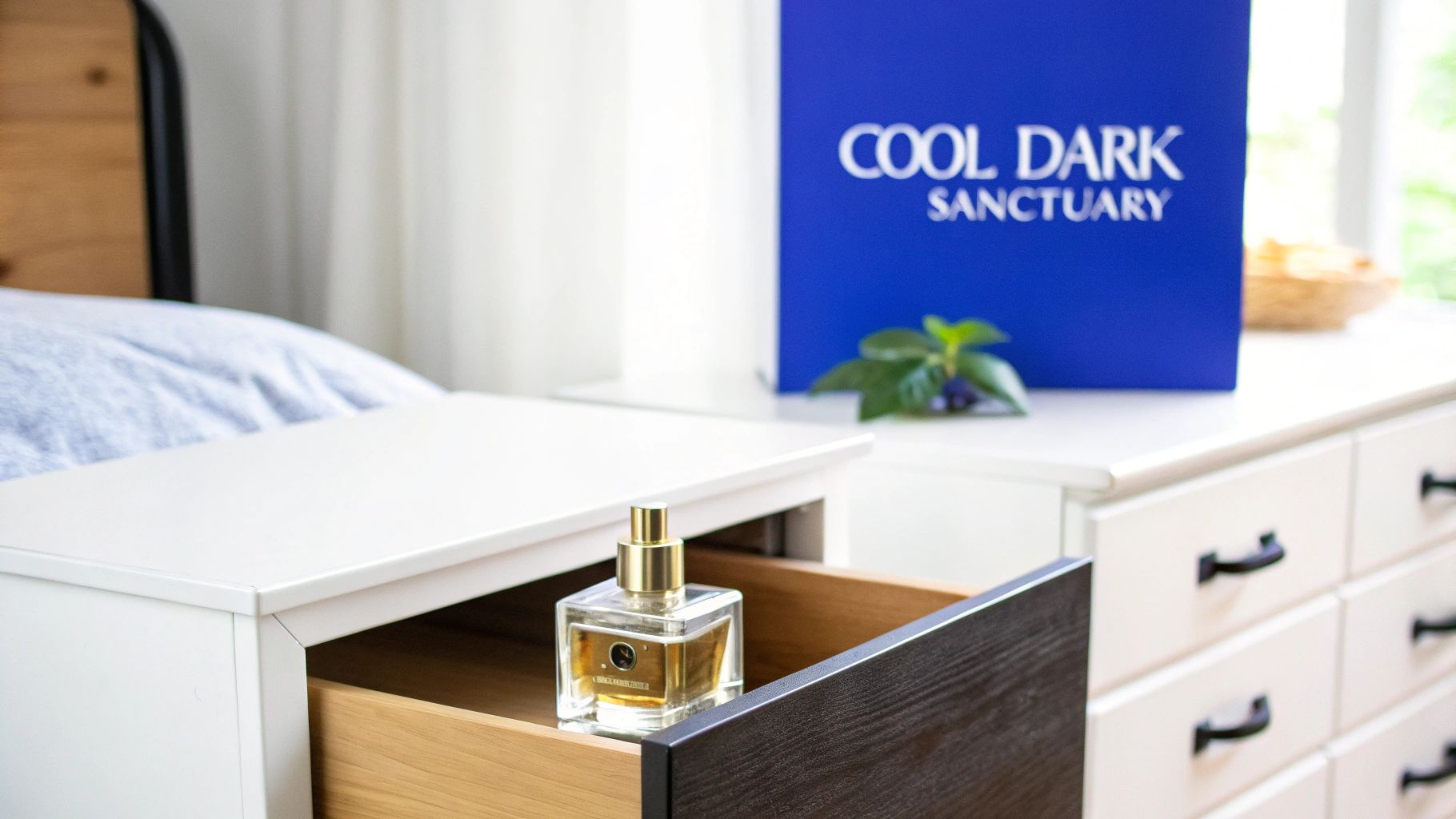
To keep your perfume smelling as intoxicating as the day you bought it, you have to treat it like a precious secret. The trick is surprisingly simple: tuck it away in a cool, dark, and dry place—think a bedroom closet or a dresser drawer.
Whatever you do, don't leave your liquid treasures exposed to heat, light, or humidity. Those are the three villains that will destroy their delicate allure faster than you can whisper "eau de toilette."
That stunning bottle of Dior J'adore or Tom Ford Oud Wood sitting on your vanity isn't just scented alcohol. It’s a bottled experience, a memory waiting to happen. It's an invisible accessory that speaks volumes before you even say a word. But just like a silk garment or a fine wine, this liquid luxury is delicate and demands a certain kind of care.
Let's start by busting the biggest, most tragic myth in the fragrance world: the bathroom shelf. It seems convenient, a natural home for everything in your morning ritual. In reality, the steamy, fluctuating environment of a bathroom is where vibrant scent molecules go to die. Every hot shower creates a humid, sauna-like atmosphere that suffocates your fragrance, while the bright vanity lights slowly bleach the life out of it.
Your perfume has three sworn enemies, and they're likely lurking where you least expect them. To truly master how to store your fragrances, you first need to know what you’re up against.
This little decision tree makes it crystal clear: the damaging environment of a bathroom is a definite "no," while a stable bedroom is the perfect boudoir for your collection. Getting this one choice right is the single most important step in preserving the integrity and passion of your favorite scents.
As you can see, the stable and controlled environment of a bedroom is the undisputed winner for keeping your fragrances pristine and ready for their close-up.
So, where is this mythical 'perfume sanctuary'? It's simpler and closer than you think. The perfect spot is likely a dresser drawer, the back of a closet, or a chic storage box on a shelf—anywhere that remains consistently cool, dark, and stable. Think of it as a protective cocoon for your liquid treasures.
The goal is to create an environment free from dramatic temperature swings and direct light. A stable room temperature, ideally between 60-70°F (15-21°C), is the sweet spot for preserving the integrity of your collection.
Did you know that improper storage can slash your perfume's lifespan by up to 50%? The main culprits are heat and light exposure. Fragrance experts have seen perfumes stored in bathrooms—where temperatures can fluctuate wildly from 70°F to over 100°F during a single shower—lose 30-50% of their top notes in just six to twelve months.
Those fresh, volatile citrus notes in a classic Chanel or Dior scent are the very first to evaporate, leaving the fragrance feeling flat and incomplete. You can dive deeper into how packaging and storage impact fragrance preservation to learn more.
By giving your fragrances the sanctuary they deserve, you're not just organizing bottles; you are preserving the art, the emotion, and the seduction captured within. Every spritz will remain as potent and perfect as the perfumer intended, ensuring your signature scent never loses its power to captivate.
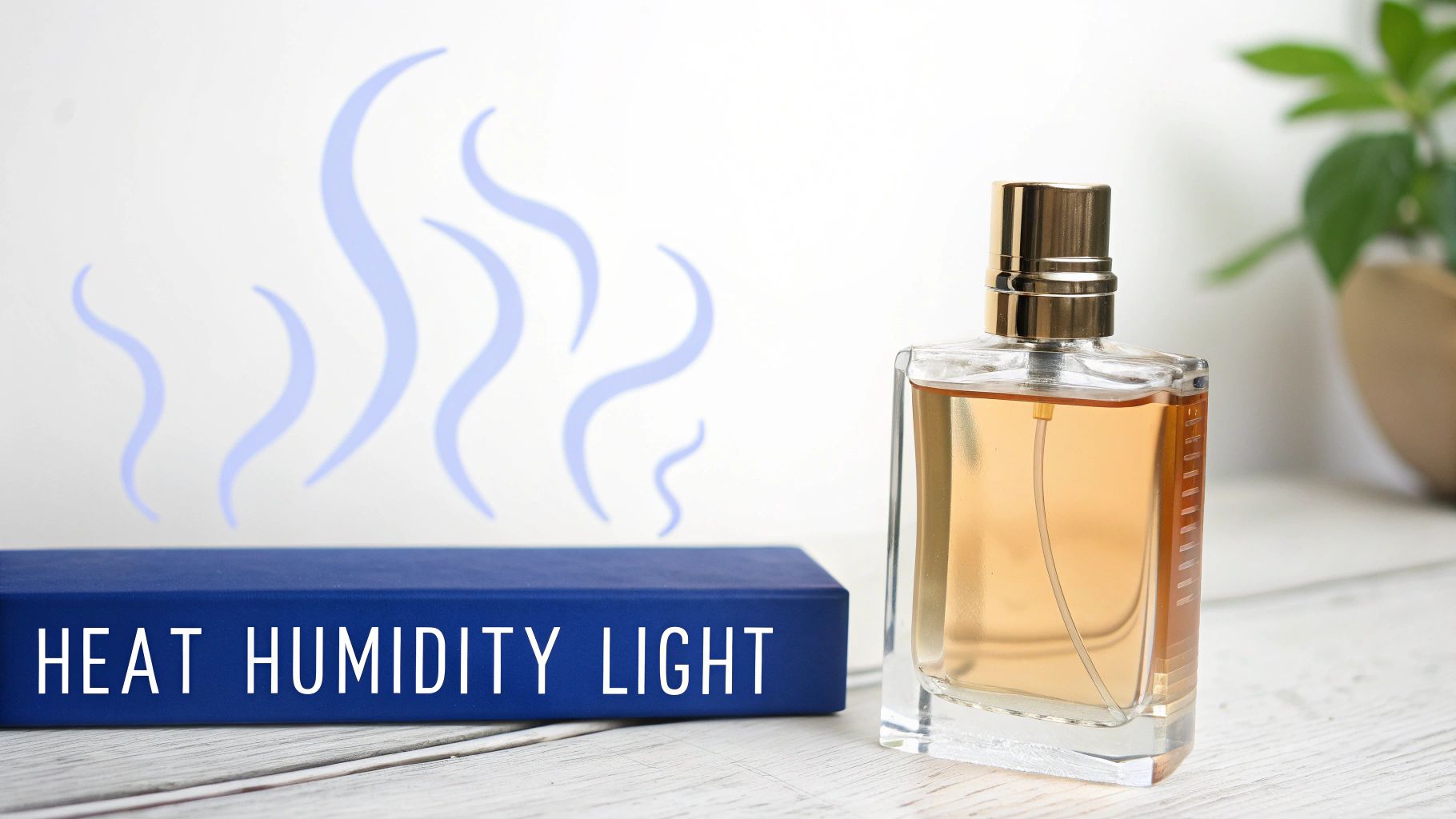
Think of your prized bottle of Tom Ford Black Orchid as more than just a fragrance. It's a delicate, complex symphony of notes, a living composition waiting to unfold on your skin. And like any work of art, it has its nemeses. To really understand how to store perfume, you first have to meet the three villains hell-bent on ruining its story: heat, humidity, and light.
These aren't just minor annoyances. They are silent assassins, actively working to break down the very structure of your favorite scent. Learning to outsmart them is the key to making sure every spritz is as perfect as the first.
Of the three enemies, heat is the most aggressive. It acts like a fever, rapidly accelerating the chemical reactions inside the bottle. This process, known as oxidation, essentially "cooks" the volatile compounds that give your perfume its personality.
The first casualties are always the bright, effervescent top notes—the sparkling citrus, the fresh florals, the crisp herbs. Imagine the zesty bergamot in your Dior Sauvage turning flat and lifeless, or the juicy pear in Viktor&Rolf's Flowerbomb becoming a syrupy, unrecognizable mess.
Key Takeaway: Consistent exposure to temperatures above 70°F (21°C) can permanently butcher a fragrance's composition. The ideal sanctuary for your collection is a cool, stable environment, far from radiators, heating vents, or sun-drenched windowsills.
Heat basically encourages the most enchanting parts of your fragrance to evaporate long before you ever get to enjoy them.
If heat is a fiery assassin, humidity is a slow, silent killer. It’s that unwanted admirer that drowns your perfume's spirit. High moisture in the air leads to a perfumer's worst nightmare: condensation.
Tiny water droplets can form inside the bottle, especially if it’s not perfectly sealed. This water then kicks off a destructive process called hydrolysis, breaking down the fragile aromatic molecules and diluting the alcohol base that preserves the scent. The result? A weak, watery ghost of the masterpiece you paid for.
This is exactly why the bathroom is a fragrance graveyard. The constant steam from showers creates a tropical microclimate that spells disaster for your collection. In fact, humidity is so damaging that it can degrade a fragrance's integrity by up to 40%. Old lab tests from the 1980s showed that colognes from iconic brands like Versace lost 25% of their strength in just three months when stored in bathrooms.
Finally, we meet the most deceptive villain: light. It seems harmless, illuminating that gorgeous bottle and the sparkling liquid inside. But behind that beauty lies a destructive force, particularly the ultraviolet (UV) rays in direct sunlight.
UV radiation is the ultimate betrayer. It snaps the chemical bonds of aromatic compounds, literally bleaching the life out of your fragrance. This can cause a number of devastating changes:
Even strong indoor lighting can contribute to this degradation, which is why storing your bottle in its original box provides a crucial layer of armor. For an extra line of defense, consider installing UV blocking window film to shield your living space from those harmful rays.
Protecting your perfume from these three enemies isn't just a chore; it’s an act of devotion. It’s about preserving the art, the memories, and the sheer pleasure captured in every bottle. By keeping them cool, dry, and in the dark, you ensure their story can be told for years to come.
Once you’ve found the perfect spot to store your fragrances, the way you physically handle the bottles is the next critical step. Think of it less as a chore and more as a sensual ritual. How you interact with your perfume is just as important as where you keep it, ensuring every spray is as vibrant and true as the first.
This isn't just about avoiding clumsy spills; it's about preserving the integrity of the scent. The delicate balance of molecules inside that beautiful glass is sensitive, and a little bit of care ensures the performance never disappoints.
That satisfying click when you replace the cap on your bottle? It’s more than just a sound—it’s a crucial step in preservation. Leaving a bottle uncapped is like leaving the lid off a pot of simmering soup; the best parts will simply evaporate into the air.
The alcohol that acts as the carrier for your fragrance is highly volatile. When you leave a bottle open, the alcohol escapes, taking the most delicate top notes along for the ride. This not only makes the remaining liquid more concentrated, throwing off the intended balance, but it also invites oxygen into the bottle.
Oxygen is the main culprit behind oxidation, a chemical reaction that degrades the aromatic oils and can make a beautiful fragrance smell off or sour. Keeping that cap on tight creates a seal, minimizing evaporation and protecting the precious liquid from its number one enemy. It’s the easiest thing you can do to prolong your perfume's life.
You've probably seen it in old movies: a character gives their perfume a vigorous shake before applying it. It might look dramatic, but in reality, it's one of the worst things you can do. Your perfume isn't a cocktail that needs mixing; it's a perfectly balanced composition that thrives on stillness.
Shaking a bottle of perfume really only accomplishes one thing: it forces air bubbles into the liquid. This aggressive aeration dramatically speeds up the oxidation process we just mentioned, essentially putting your fragrance on the fast track to aging.
Treat your perfume like a delicate potion, not a vinaigrette. Its molecules are already in perfect harmony. Shaking it only invites chaos and accelerates the breakdown of its beautiful structure.
Think of each shake as a tiny assault on the fragile top notes. Instead of "waking up the scent," you're actually damaging it. Just let the bottle rest and allow the fragrance to unfold exactly as the perfumer intended—gently and gracefully.
Your perfume bottles are designed to stand tall. Storing them on their side might seem like a clever way to save space in a drawer, but it can lead to a couple of heartbreaking problems: leaks and a damaged sprayer.
When a bottle lies on its side, the fragrance is in constant contact with the seal around the cap and neck. Over time, the potent liquid can slowly degrade that seal, causing your beloved perfume to leak out. This is not only a waste but can also damage the finish on your furniture.
More importantly, storing a bottle horizontally can ruin the sprayer mechanism.
Keeping your bottles upright ensures the sprayer stays clean and functional, ready to deliver that perfect, misty cloud every time. It’s a simple habit that makes a world of difference in your daily ritual.
Your signature scent is more than just a fragrance—it’s part of your story, a quiet announcement of who you are. So, why on earth would you leave it behind when adventure calls? Whether you're off on a spontaneous weekend trip or a month-long journey across the globe, your favorite perfume deserves to come along for the ride.
But let's be real: travel can be brutal on our little luxuries. The organized chaos of packing, the rough-and-tumble journey of a checked bag, and the fluctuating cabin pressure can spell disaster. No one wants to open their suitcase to find a tragic, sticky mess of Chanel No. 5 soaking their favorite silk shirt. Learning how to properly pack your perfume is the secret to ensuring it arrives as beautifully composed as you are.
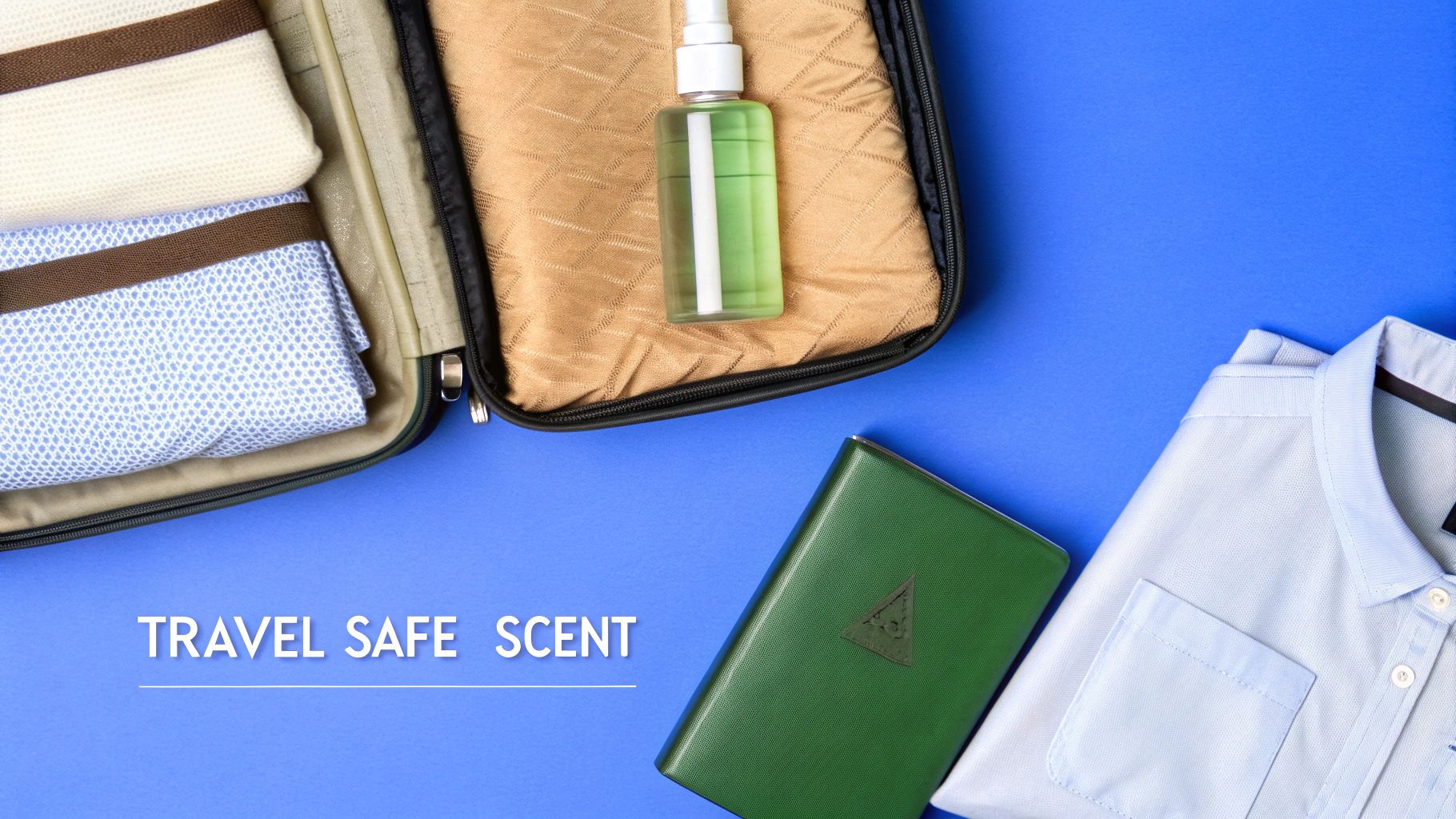
The absolute best way to take your fragrance on the road is by decanting it. Forget the idea of tossing that gorgeous, heavy 100ml glass bottle into your luggage; it's a heartbreaking accident just waiting to happen. Instead, your best bet is to invest in a high-quality, leak-proof travel atomizer. These chic little gadgets are designed to be your scent's personal bodyguard.
Filling one is a simple ritual. You'll want to avoid using funnels, as they expose the delicate liquid to way too much air, which can dull the scent. The best atomizers fill directly from the nozzle of your main bottle, pumping the perfume into the vial with almost no oxidation. This simple step preserves the integrity of those bright top notes, making sure your first spritz on vacation is just as dazzling as the one you left behind at home.
A Traveler's Secret: Once your atomizer is filled, wrap it in a soft cloth—a silk handkerchief or even a spare sock works perfectly—and tuck it right into the heart of your suitcase. Nestled amongst your clothes, it will be cushioned from every bump and shock along the journey.
This little bit of care provides crucial insulation from the dramatic temperature swings that can happen in a plane's cargo hold. And, of course, when you're preparing for air travel, it's always a good idea to brush up on mastering TSA liquid rules for toiletries to ensure a smooth trip through security.
Sometimes, even an atomizer feels like too much fuss, especially for a quick getaway. Luckily, modern perfumery has gifted us with some deliciously convenient—and completely spill-proof—alternatives.
By choosing the right method for your trip, you turn the challenge of traveling with perfume into just another seamless part of your adventure. Your scent is your story—and with these tips, you can be sure it follows you wherever you wander.
Even the most intoxicating romances can lose their spark, and sadly, your beloved fragrances are no different. That bottle you adored might not whisper the same sweet nothings it once did. Learning to spot the signs of a faded scent is a crucial skill, elevating you from a casual wearer to a true connoisseur curating a living, breathing collection.
It’s about recognizing when it’s time to lovingly let go. After all, a fragrance that has turned is like a record played too many times—the beautiful music is gone, replaced by static. Let's move beyond just saying "it smells bad" and tune into the subtle clues your perfume gives you when its story is coming to an end.
Before you even bring the bottle to your nose, your eyes can often spot the first sign of trouble. A change in appearance is a major red flag that something is amiss inside.
Take a close look at the liquid itself. A once-clear or pale-gold juice that has darkened to a deep amber or murky brown is telling you that oxidation has taken its toll. This chemical reaction, often sped up by light exposure, is a clear indicator that the fragrance's structure has started to break down.
Light exposure is a notorious heartbreaker for perfumes. It can fade vibrant colors by as much as 35% annually. With the luxury fragrance market being so highly valued, it’s a shame that UV rays can degrade 70% of aromatic compounds in clear bottles within just 18 months. Perfumers in 1970s France even mandated opaque glass after tests revealed a 40% loss of top notes in direct sunlight. You can find more insights about the global fragrance market on Statista.com.
If the visual check passes, the real test is the scent itself. This is where the most heartbreaking changes occur. A well-preserved perfume unfolds like a beautiful symphony of top, middle, and base notes. A fragrance that has turned tells a much different, disjointed story.
Keep your nose tuned for these tell-tale signs:
Think of it this way: Does your once-vibrant Chanel Chance now smell like bruised petals and stale air? Has the deep, seductive vanilla in your Tom Ford Tobacco Vanille been replaced by a faint, musty sweetness? These are the scent’s cries for help.
Ultimately, you are the expert on your own collection. If a fragrance no longer brings you joy or smells right on your skin, it’s time to say goodbye. Don't force a connection that’s no longer there.
Learning how to store perfume properly is your best defense against this inevitable heartbreak, dramatically extending the life and romance of your collection. But when a scent does fade, don't just mourn its loss. Celebrate the beautiful moments you had with it and make room for a new olfactory love affair to begin. Your fragrance journey is always evolving, and knowing when to close one chapter is the first step to starting a thrilling new one.
You've learned how to create the perfect sanctuary for your scents, but a few questions might still be lingering in the air. This is your personal Q&A session, where we tackle the most common curiosities every fragrance lover has. We’re pulling back the curtain to give you straightforward, honest answers that will turn you into a true perfume connoisseur.
Let's dive into the details and make sure your collection stays as captivating as the day you bought it.
While chilling your perfume sounds like a logical, even luxurious, idea, the kitchen fridge is a bit too dramatic for your delicate fragrances. The extreme cold isn't the main problem; the real villain here is condensation.
Every time you pull that chilled bottle out into warmer, room-temperature air, moisture forms. That constant shift from arctic cold to room temp can allow water to seep into the bottle, diluting the precious oils and breaking down the perfume's carefully crafted structure. Unless you live somewhere exceptionally hot and humid without A/C, your perfume will be much happier in a cool, dark closet. Let's save the fridge for the champagne, shall we?
A stable temperature is far more seductive to your perfume than a shocking cold spell. Drastic fluctuations are the enemy, so a dedicated beauty fridge set to a consistent, cool temperature is a niche exception, but a standard kitchen fridge is a definite no.
Absolutely. Think of that gorgeous box not just as pretty packaging, but as your perfume's personal bodyguard. It’s the first and most effective line of defense against its number one enemy: light.
The box provides an essential shield of darkness, protecting the delicate aromatic molecules from degrading. Tucking your bottle back into its box after each use and then placing it in a drawer or closet is the ultimate power move for preservation. It not only keeps your collection looking chic but, more importantly, preserves the scent’s integrity for years. It’s a simple ritual that pays off with every perfect spritz.
An unopened perfume, when stored correctly, is like a sleeping beauty waiting for your kiss. Since the bottle is sealed and has never been sprayed, oxidation—the process of air altering the scent—hasn't even started. It's perfectly preserved in its own little time capsule.
If you keep it tucked away from heat and light, an unopened bottle can stay pristine for many years, sometimes even decades for certain classic formulations. So, if you find an incredible deal on a backup of your signature scent, don't hesitate. Just give it a cool, dark home, and it will be ready and waiting for you. This is how you build a true fragrance wardrobe.
The moment you press that atomizer for the first time, the romance begins—and yes, the clock does start ticking a little faster. Each spray introduces a tiny bit of air into the bottle, kicking off the slow, natural process of oxidation. This is completely normal and just part of a fragrance's life cycle.
The more empty space in the bottle, the more oxygen is present, which can speed things up slightly. But please, don't panic and stop using your favorites! The whole point is to enjoy them.
With the proper storage we've discussed, you can still expect a fantastic lifespan of 3 to 5 years, and often much longer for high-quality Eau de Parfums. The key is to savor the experience while it's in full bloom, knowing you’re giving it the best care possible.
Ready to find your next signature scent or a timeless classic to add to your collection? At Gotham Fragrances, we believe luxury should be an everyday affair. Explore our curated selection of authentic designer fragrances at prices that invite you to indulge. Discover your new obsession today at https://www.gothamfragrances.com.