
✦ GOTHAM FRAGRANCES — All Name Brand Colognes & Perfumes!
Free Shipping on all orders over $80.00
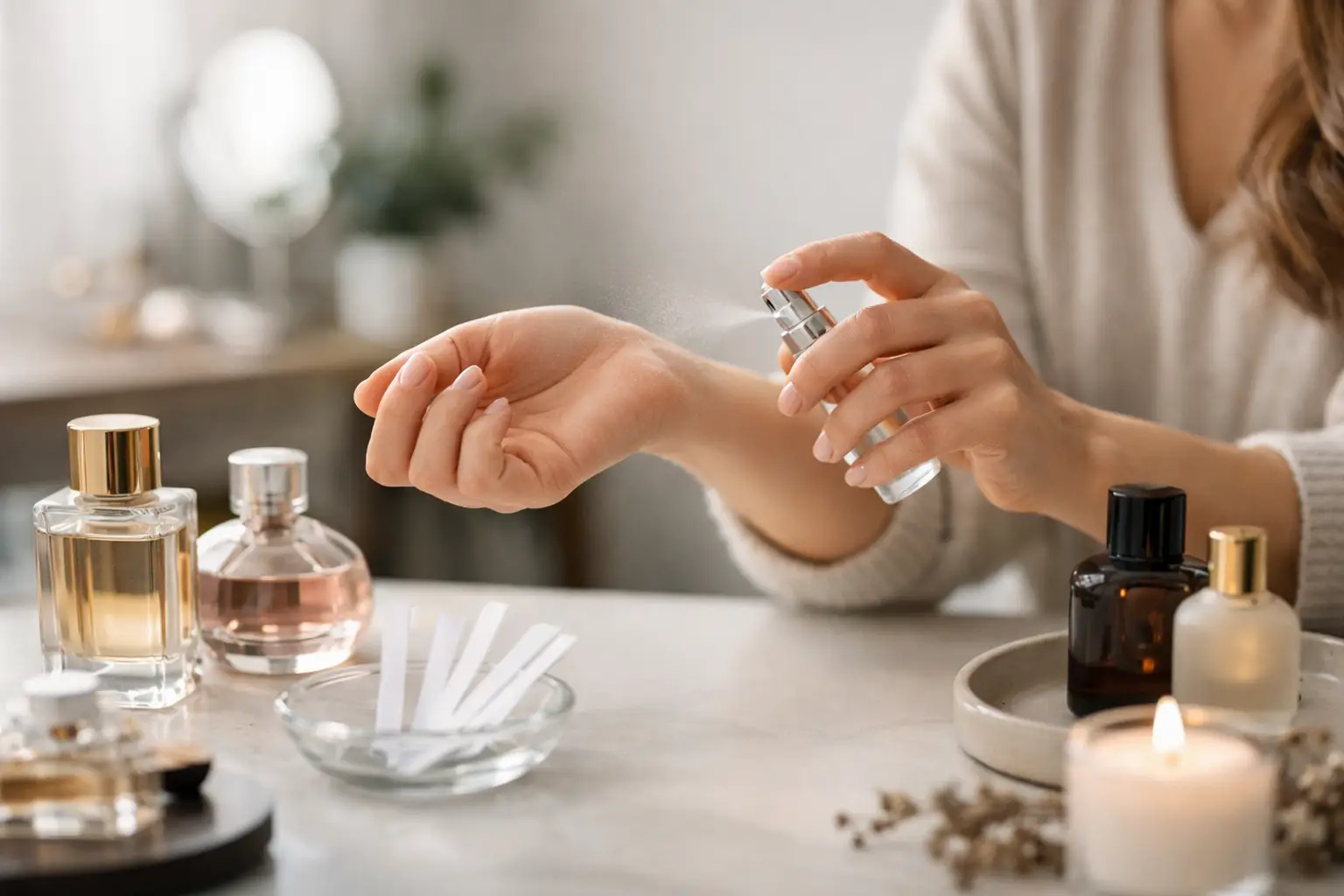
A fragrance can smell captivating for the first five minutes and feel completely different by lunch. That is why learning how to test perfumes at home is one of the smartest ways to shop for designer and niche scents with confidence. A proper at-home test reveals more than the opening notes: it shows how a perfume wears with your skin, your routine, your climate, and your personal style.
The goal is not to find the fragrance that smells best on paper. It is to find the one that feels like you – whether that means crisp and polished for the office, warm and magnetic for evenings out, or quietly luxurious for every day.
Perfume testing works best when your senses and skin are free from interference. Skip scented body lotion, heavily fragranced deodorant, hair products, candles, and room sprays on the day you plan to test. Even a favorite vanilla lotion or a strongly scented laundry detergent can blur your impression of a fragrance.
Shower as usual, then apply an unscented moisturizer if your skin is dry. Hydrated skin often helps a fragrance wear more evenly and can make delicate notes last longer. Avoid testing immediately after a very hot shower, though. Give your skin a little time to cool and settle before spraying.
Your environment matters, too. Test in a room with fresh air rather than beside a burning candle, a pot of food, or a diffuser. You want to notice the perfume, not everything around it.
Begin with one perfume per wear test. This may seem restrained, especially when a new discovery set arrives, but it gives each scent the attention it deserves. If you test several fragrances directly on skin at once, their dry-downs can mingle and make it difficult to tell which one is creating the impression you love.
Spray once or twice on a pulse point, such as the inner wrist or the bend of the elbow. The inner elbow is especially useful because it is less likely to be washed away during the day. Keep the bottle about four to six inches from your skin, then let the mist settle naturally.
Do not rub your wrists together. Friction can disturb the opening of a fragrance and cause top notes to disappear more quickly. You are not ruining the perfume permanently, but you are making it harder to experience the composition as its creator intended.
Give the scent a few quiet minutes before making a decision. The first impression is only the introduction. Citrus, airy fruits, sparkling pepper, aromatic herbs, and bright florals often make an immediate statement, but they may soften quickly. A perfume that feels too sharp at first can become beautifully smooth within 20 minutes.
A well-made perfume is designed to evolve. Paying attention at key moments helps you understand whether its character suits your taste and the occasions you have in mind.
This is where you meet the top notes. You may notice bergamot, grapefruit, pear, pink pepper, lavender, aquatic accords, or a rush of fresh flowers. Ask yourself whether the opening feels inviting, but do not let it make the entire decision. Some of the most sophisticated fragrances are deliberately dramatic at the start before settling into something more intimate.
The heart is usually where the perfume reveals its true personality. Florals such as rose, jasmine, iris, orange blossom, and tuberose become clearer here. In masculine and unisex fragrances, you may notice spices, woods, aromatic herbs, leather, or a refined mineral quality.
This is an excellent time to consider fit. Does the fragrance feel aligned with your wardrobe and presence? A crisp citrus-wood scent may feel ideal for professional settings, while a creamy white floral or amber may be better reserved for dinner, celebrations, and date nights. Neither is better. It depends on how and when you want to wear it.
The dry-down is the fragrance that stays closest to your skin. It is often shaped by base notes such as sandalwood, cedar, vanilla, musk, patchouli, amber, tonka bean, oud, or soft resins. This stage can be the deciding factor because it is what you and the people close to you will experience for most of the day.
A perfume may open with bright fruit and finish in a warm skin scent. Another may begin with clean lavender and evolve into smoky woods. Write down what you smell at each stage, especially if you are comparing a few options over several days. A simple note on your phone is enough: opening, one-hour impression, dry-down, longevity, and how it made you feel.
Skin is the final authority, but blotter strips still have a place in a thoughtful fragrance test. They are useful for narrowing down several candidates without overloading your nose. Label each strip immediately, spray once, and smell them from a slight distance rather than pressing them against your nose.
Use blotters to identify broad preferences. You may discover that you are drawn to clean musks, rich gourmands, crisp woods, or luminous florals. Then choose your top two or three and test each on skin on different days.
A blotter cannot replicate your body chemistry, skin warmth, or natural scent, so do not reject a perfume solely because it seems ordinary on paper. Conversely, a stunning blotter test does not guarantee a perfect skin match. The contrast is part of the discovery process.
These three terms are often used interchangeably, but they describe different parts of a fragrance experience. Longevity is how long the perfume remains detectable on your skin. Projection is how far it radiates in the first part of the wear. Sillage is the soft trail it leaves as you move.
For a realistic longevity test, check in at regular intervals rather than smelling your wrist every few minutes. Too much sniffing can lead to nose fatigue, where your brain starts filtering out the fragrance even though others can still smell it. Step outside, smell a clean fabric, or take a break before checking again.
Try the fragrance in your real life. Wear it during a workday, an errand run, a dinner reservation, or a relaxed weekend at home. Notice whether it feels elegant in close quarters, whether it holds up through warm weather, and whether it remains pleasant after several hours. A scent with moderate projection may be perfect for an office. A bolder amber, spice, or oud may shine best on a cool evening when you want more presence.
Do not assume eau de parfum always lasts longer than eau de toilette. Concentration matters, but formula, skin type, temperature, and the notes themselves matter too. Citrus-forward fragrances may be naturally lighter, while vanilla, woods, musks, and resins often cling to skin and fabric for longer.
Testing too many perfumes in one sitting turns luxury discovery into sensory confusion. Most people can evaluate two or three scents before their impressions become less reliable. Coffee beans are sometimes offered as a reset, but fresh air or the scent of your own clean, unsprayed skin is usually more helpful.
If you are deciding between several fragrances, create a small testing schedule. Try one on Monday, another on Wednesday, and revisit your favorite on the weekend. This gives each scent room to become familiar without being influenced by the one you wore an hour earlier.
It can also reveal a useful distinction: the perfume you admire versus the perfume you reach for. Some fragrances are artful and memorable but do not fit your everyday life. Others may feel less dramatic at first, then become indispensable because they make you feel polished every time you wear them.
Temperature changes fragrance. Heat can amplify sweet, spicy, and resinous notes, while cold weather can make them feel softer and more inviting. A fragrance that feels exquisitely cozy in December may be overwhelming during a humid July afternoon. Fresh citrus, green tea, airy florals, and clean woods often feel especially effortless in warmer months, though personal preference always comes first.
Consider your setting as carefully as the season. For a shared office, classroom, airplane, or intimate event, a few sprays of a refined skin scent can feel more sophisticated than a powerful cloud of perfume. For an evening out or a special occasion, you may prefer a fragrance with richer projection and a memorable dry-down.
A quick wear test on clothing can help, but use care. Spray an inconspicuous area first, especially on silk, light fabrics, or delicate materials, because some formulas can stain. Fabric may preserve a scent longer than skin, but it will not show the same evolution, so treat this as an extra check rather than the main test.
The right fragrance does not need to be universally loved. It needs to feel compelling on you. Perhaps you catch a trace of it hours later and immediately want another moment with it. Perhaps it earns a compliment, or perhaps it simply changes the way you carry yourself. The most satisfying perfumes become part of your presence rather than competing with it.
Before buying a full bottle, wear a sample or travel size more than once if possible. You will learn whether the scent is truly versatile, whether it suits your skin on different days, and whether its price feels worthwhile for how often you will reach for it. Curated retailers such as Gotham Fragrances make it easier to explore authentic luxury options without treating every discovery like a full-price commitment.
Give a promising fragrance enough time to tell its story. The one that begins beautifully, wears comfortably, and still feels unmistakably yours at the end of the day is worth keeping close.
Post Tags :
Share :