
✦ GOTHAM FRAGRANCES — All Name Brand Colognes & Perfumes!
Free Shipping on all orders over $80.00
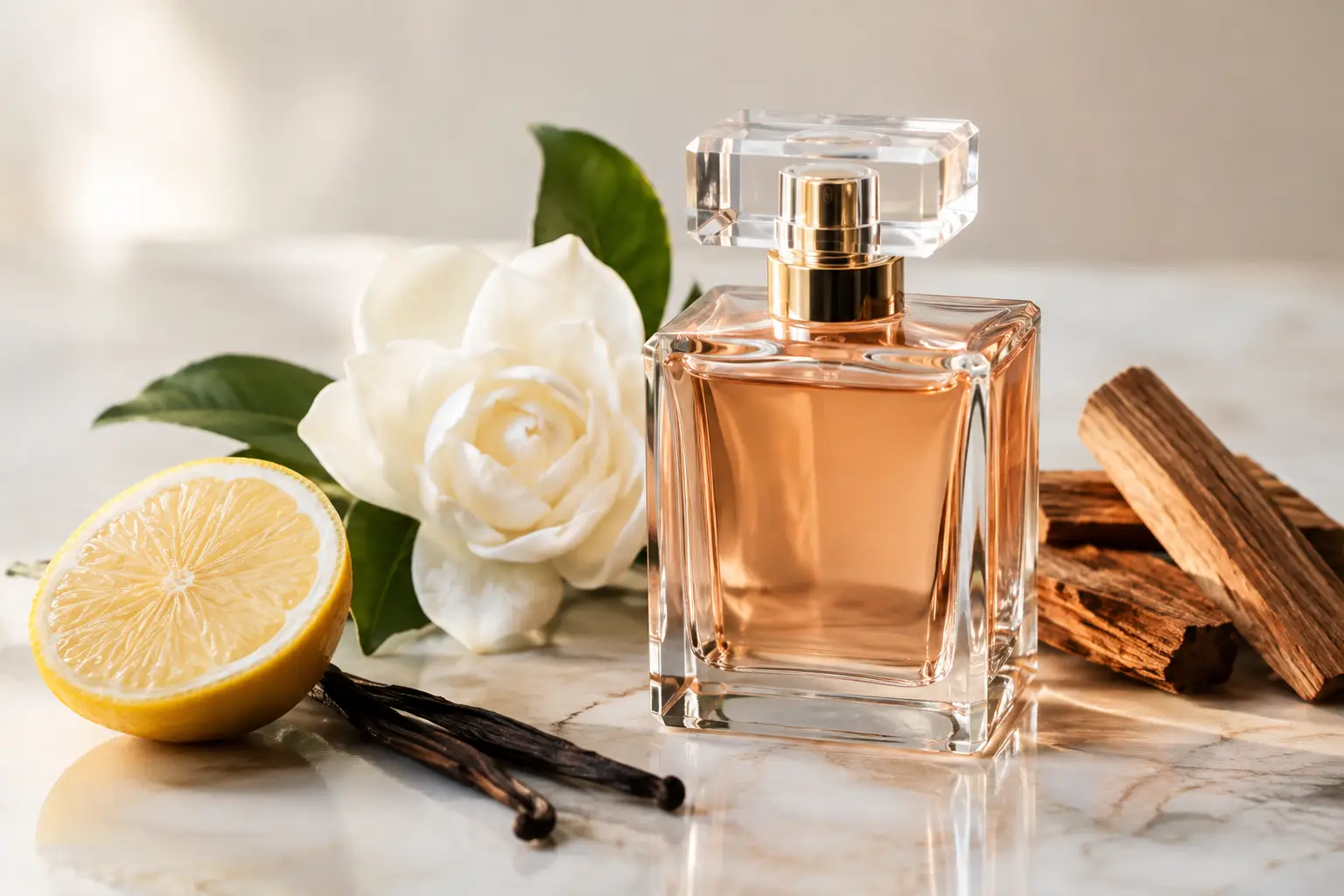
A fragrance can smell expensive before you know a single note. It has a certain polish: the citrus feels bright rather than sharp, the florals feel dimensional rather than sugary, and the dry-down stays close enough to invite someone in. So, what makes perfume smell expensive is rarely one flashy ingredient or a higher price tag. It is the way materials, composition, performance, and personal chemistry come together.
Luxury is often felt in the transitions. A well-made scent does not simply announce itself and disappear. It evolves with confidence, revealing texture and warmth over hours in a way that feels intentional, elegant, and uniquely yours.
The most convincing expensive-smelling perfumes tend to have balance. Every element has a role, whether it is a sparkling bergamot opening, a soft iris heart, or a smooth amber base. Nothing feels as though it was added only to make the fragrance louder.
That balance is especially noticeable after the first 15 to 30 minutes. Many perfumes open beautifully, but a more refined composition retains its character as the top notes fade. The scent develops rather than collapsing into a single sweet, woody, or musky accord. This sense of progression gives fragrance its memorable, polished quality.
Skin chemistry also matters. A vanilla perfume may smell plush and sophisticated on one person, then overly sweet on another. Clean musk can feel airy and expensive on warm skin but nearly disappear on dry skin. The same bottle can create different impressions, which is why a fragrance deserves time before it earns a place in your collection.
Fine ingredients are part of the story, but they are not the whole story. Certain materials can bring an immediate sense of luxury because they have natural complexity. Rose, jasmine, neroli, sandalwood, patchouli, saffron, vanilla, and iris are often associated with prestige perfumery, particularly when they are handled with restraint and skill.
Iris is a classic example. Its powdery, suede-like character can make a fragrance feel tailored and serene rather than overtly floral. Natural rose can add freshness, spice, fruitiness, and a subtle shadow all at once. Resins such as frankincense, myrrh, and labdanum can lend warmth that feels deep instead of simply sweet.
Yet synthetic ingredients should not be dismissed. Modern perfumery relies on them for clean musks, radiant woods, transparent florals, and lasting diffusion. A sophisticated fragrance may combine naturals and aroma molecules to create an effect that is difficult to achieve with either alone. The question is not whether every ingredient is rare or natural. It is whether the finished composition feels smooth, distinctive, and complete.
An expensive-smelling fragrance often feels seamless. You may be able to identify vanilla, cedar, or orange blossom, but the notes are woven together instead of competing for attention. This is where experienced perfumery becomes apparent.
Harsh edges can make a scent feel less polished. An overly piercing alcohol opening, a rough synthetic sweetness, or an aggressive woody base can interrupt the experience. Of course, boldness is not a flaw. Leather, incense, pepper, and oud-inspired accords are meant to have presence. In a refined formula, however, their intensity is balanced by softness, brightness, or warmth.
Think of it like a beautifully dressed room. One statement piece can be striking. A room filled with statement pieces can feel crowded. In fragrance, contrast needs breathing room. A dark amber feels more luxurious when a touch of spice or citrus lifts it. A clean floral becomes more interesting when soft woods or musk give it a graceful foundation.
The opening is the first impression, but the dry-down is where a perfume proves its quality. This is the stage when base notes such as woods, balsams, musks, amber, vanilla, and patchouli settle into the skin.
A beautiful dry-down often feels warm, intimate, and quietly persistent. It should not become flat or smell exactly the same from morning to evening. Instead, it may move from sparkling fruit to creamy woods, or from petals and spice to soft skin musk. That gradual shift creates the impression of depth, which many people instinctively read as luxury.
Eau de parfum is often richer than eau de toilette, but concentration alone does not decide whether a perfume smells expensive. A light eau de toilette can be exquisitely composed, especially for warm weather, office settings, or anyone who prefers an understated trail. Likewise, a highly concentrated fragrance can feel heavy if its formula lacks balance.
What matters is the fragrance’s structure and how it performs on your skin. A quality scent may project clearly for the first hour, then stay noticeable in a more personal way. Others are designed for a stronger presence, leaving a warm, elegant trail on a coat or scarf.
Longevity is valuable, but more is not always better. A perfume that lasts twelve hours but becomes cloying is less versatile than one that wears beautifully for six. The most expensive-smelling choice is often the one that matches the occasion: crisp citrus and aromatic woods for daytime, luminous florals for dinner, or amber and spice for an evening with more allure.
There are no rules that say a fresh fragrance cannot smell expensive or that every luxury scent must be dark and intense. Still, some styles are frequently associated with sophistication because of their texture and complexity.
Woody scents with sandalwood, cedar, vetiver, and cashmeran often feel polished and assured. Amber fragrances can feel sensual and enveloping when sweetness is controlled. Floral compositions built around rose, tuberose, jasmine, or orange blossom can feel elegant when they retain a natural, airy quality. Chypre-inspired fragrances, with their interplay of citrus, mossy tones, patchouli, and woods, have a distinctly tailored presence.
Gourmand scents can also smell exceptionally luxurious, but they require finesse. A whisper of vanilla, cocoa, tonka bean, coffee, or praline can be irresistible when supported by woods, spice, or amber. When sweetness overwhelms every other facet, the perfume may feel more playful than polished. Neither approach is wrong – it depends on the mood you want to create.
A heavy glass bottle, a famous name, and a high retail price can signal prestige, but they do not automatically make a fragrance smell expensive. Some accessible designer scents offer remarkable quality, excellent performance, and a finish that feels far more elevated than their price suggests. On the other hand, some niche fragrances are intentionally challenging, minimal, or unconventional. Their value may be artistic rather than traditionally glamorous.
This is good news for fragrance lovers who want to build a refined wardrobe without treating every purchase like a splurge. Shopping authentic designer and niche scents at a strong value lets you compare different styles and discover what luxury means on your own skin. It might be a crisp, immaculate white floral, a tailored vetiver, a smoky vanilla, or a clean musk that smells like your favorite cashmere sweater.
Test fragrance beyond the first spray. Apply it to clean skin, avoid rubbing your wrists together, and give it at least a few hours. Notice whether the opening feels natural, whether the heart has dimension, and whether the base remains pleasant when it sits close to the skin.
Pay attention to how a scent makes you feel, too. The most luxurious perfume is not necessarily the rarest or strongest one. It is the one that adds confidence without asking for attention, suits your style without feeling predictable, and leaves behind a trace of elegance long after you have left the room.
A carefully chosen fragrance can make an ordinary errand, dinner reservation, or important meeting feel more intentional. Find the composition that wears beautifully on you, and its sense of luxury will be unmistakable.
Post Tags :
Share :