
It's late, your left wrist smells like bergamot, your right wrist smells like vanilla and leather, and you can no longer remember which vial went where. That's how most sampler sets get used. Five or ten little bottles arrive, you spray everything in one enthusiastic sitting, and by morning the only firm conclusion is that one of them was nice. Maybe two.
The failure isn't the format. U.S. mini and discovery fragrance-set sales grew 41% from January through September 2025, according to Circana data reported by Scento, so plenty of people are buying them. What's missing is a method. Run the set as a series of timed tests with recorded checkpoints and a verdict at the end, and you'll finish with a shortlist you trust plus a clear sense of which concentration and scent family you reach for on a Tuesday versus a Saturday night.
Start with the number that decides everything else: volume per vial. A cologne sampler set is defined by how much liquid sits in each bottle, not by the box it ships in. A miniature collector's interview published by Fragrantica separates the categories cleanly: a typical miniature stands under 3 inches tall and generally holds under 5 milliliters, or about 0.17 fluid ounces, while bottles under 1 inch holding roughly 1 to 3 milliliters are micro-minis. Samples and testers occupy the same liquid range but serve a different job, since they exist for wearing and judging rather than display.
| Format | Volume per vial | Typical role | Best use |
|---|---|---|---|
| Micro-mini | 1-3 ml | Compact bottle under 1 inch tall | Screening many scents at once |
| Sample or tester | Under 5 ml (about 0.17 fl oz) | Built for testing | Trying a scent before buying |
| True miniature | Under 5 ml, under 3 inches tall | Copies full-size branding and bottle shape | Gifting and collecting |
| First-size bottle | Above the miniature range, under a full bottle | Larger than a miniature | Stepping up before a full bottle |
The distinction between a sample and a true miniature matters more than it sounds. A sample exists to be worn on skin and timed. A miniature reproduces the branding, bottle shape and decorative character of the full-size product, which is why minis end up on shelves and in gifts rather than in a testing rotation. Collecting has been part of this format for a long time, and perfume museums hold large holdings of bottles, miniatures, catalogues and advertising material.
Now do the arithmetic a listing usually hides. Five 2 ml samples total 10 ml. Five 1 ml samples total 5 ml. The same five-slot box can hold twice as much scent depending on vial size, and neither total approaches a 50 ml or 100 ml bottle. That is the point. You are buying comparison, not volume, and each vial only needs to survive three or four timed wears before it earns a verdict.
Practical rule: count the vials, multiply by the stated volume, then divide the set price by that total. If the set costs more per milliliter than a bottle you'd actually wear, accept that you're paying for the trial and ask whether you need ten scents or four.
Small vessels carrying small amounts of scent is an old idea. The Metropolitan Museum of Art records a Roman miniature perfume bottle in blown glass from the 1st to 2nd centuries CE, plus a miniature perfume vase measuring just 0.8 by 0.9 centimeters. Your sample vial is the same principle in plastic. For a look at how one discovery kit is assembled end to end, from vial count through wear notes, Comredix's review of the discovery kit is a useful read alongside those numbers.
The label on each vial is a prediction about intensity, not a verdict on quality. Concentration is measured as aromatic compounds in the formula, and the National Center for Biotechnology Information gives the usual ranges: 15 to 30% for parfum, 8 to 15% for eau de parfum, 4 to 8% for eau de toilette and 2 to 5% for eau de cologne. Higher concentration generally means a stronger scent and longer wear, though formula, skin type, climate and application all move the result.
| Concentration | Aromatic compounds | Expected character | Best wear |
|---|---|---|---|
| Parfum | 15-30% | Richest and most lasting | Evenings and special occasions |
| Eau de parfum | 8-15% | Strong presence and longer wear | Evenings and cold weather |
| Eau de toilette | 4-8% | Versatile and airy | Daily office wear |
| Eau de cologne | 2-5% | Bright and easygoing | Warm days and light introductions |
Read each row as a scenario rather than a grade. A parfum is the richest option and the one most likely to still be there when you take your jacket off at midnight. An eau de parfum gives you presence for a dinner where you want to be noticed across a table. An eau de toilette is the versatile, airy choice that survives a shared office without colonizing it, and an eau de cologne is the bright, easygoing splash you reach for on a hot morning when anything heavier feels like a coat.
A cologne-strength vial can smell thin on a dry February morning and still be exactly the right bottle for a July office, because the strength you want in heat is lower than the strength you want in a cold car at night. Write the concentration next to each vial's name before you spray anything. If a scent is gone in 90 minutes, you want to know whether that's a 3% formula doing its job or an eau de parfum failing on your skin.
Application moves the number too. Two sprays on moisturized skin will outperform four sprays on skin still tight from a winter commute, and the same vial tested straight out of the shower reads differently from one tested on the way out the door.
A vial that spent July riding in a glove box is a different fragrance than the one you opened in December, and your test notes will show it. Published research on commercial perfume stability found that exposure to 40°C promotes oxidation of essential oils and pushes a formula toward more intense, rancid-smelling notes, while temperatures above 50°C compromise chemical stability.
Oxidation also changes what the scent does on skin. Oxidized fragrance terpenes such as limonene, linalool and linalyl acetate can act as skin sensitizers, so keep vials tightly capped, out of direct sunlight and ultraviolet exposure, and at stable room temperature. Not the car. Not the bathroom shelf. Not the windowsill display you built because the bottles looked good there.
Two habits protect the comparison. Write the opening date on each vial, and uncap as little as possible. Small-volume samples carry a relatively high surface-area-to-volume ratio, so every unnecessary opening evaporates a little of the scent you're trying to judge, and every warm day in storage speeds that loss along.
| Checkpoint | What to note | Red flag |
|---|---|---|
| 15 minutes | Top notes and first impression | Harsh alcohol sting that does not fade |
| 2 hours | Heart notes and character | Sour or flat note that was absent when fresh |
| 6 hours | Base notes and dry-down | Sudden rancid or sharp smell |
| Next day | Skin reaction and lasting impression | Redness, itching or rash |
Run all four checkpoints on the same day, under similar conditions, from vials stored the same way. Otherwise you're measuring your shelf rather than the perfume. A vial that smells sour or flat at the 2-hour mark may be oxidized rather than weak, especially if it's been open for months, and that's a storage problem you can fix before you write off the scent.
Skin is the one variable a vial can't control, so a good test controls it deliberately. Allergy risk depends on area dose, vehicle, exposure duration and frequency, skin location, occlusion and the condition of the skin underneath, rather than the concentration printed on the label. A review of fragrance allergy evidence summarizing European Commission figures reports that repeated open application testing in ethanol produced reactions in 61 to 89% of already-sensitized subjects at doses of 15.3 to 126.2 µg/cm². Where you spray, how much you spread and how long it sits matter at least as much as which scent it is.
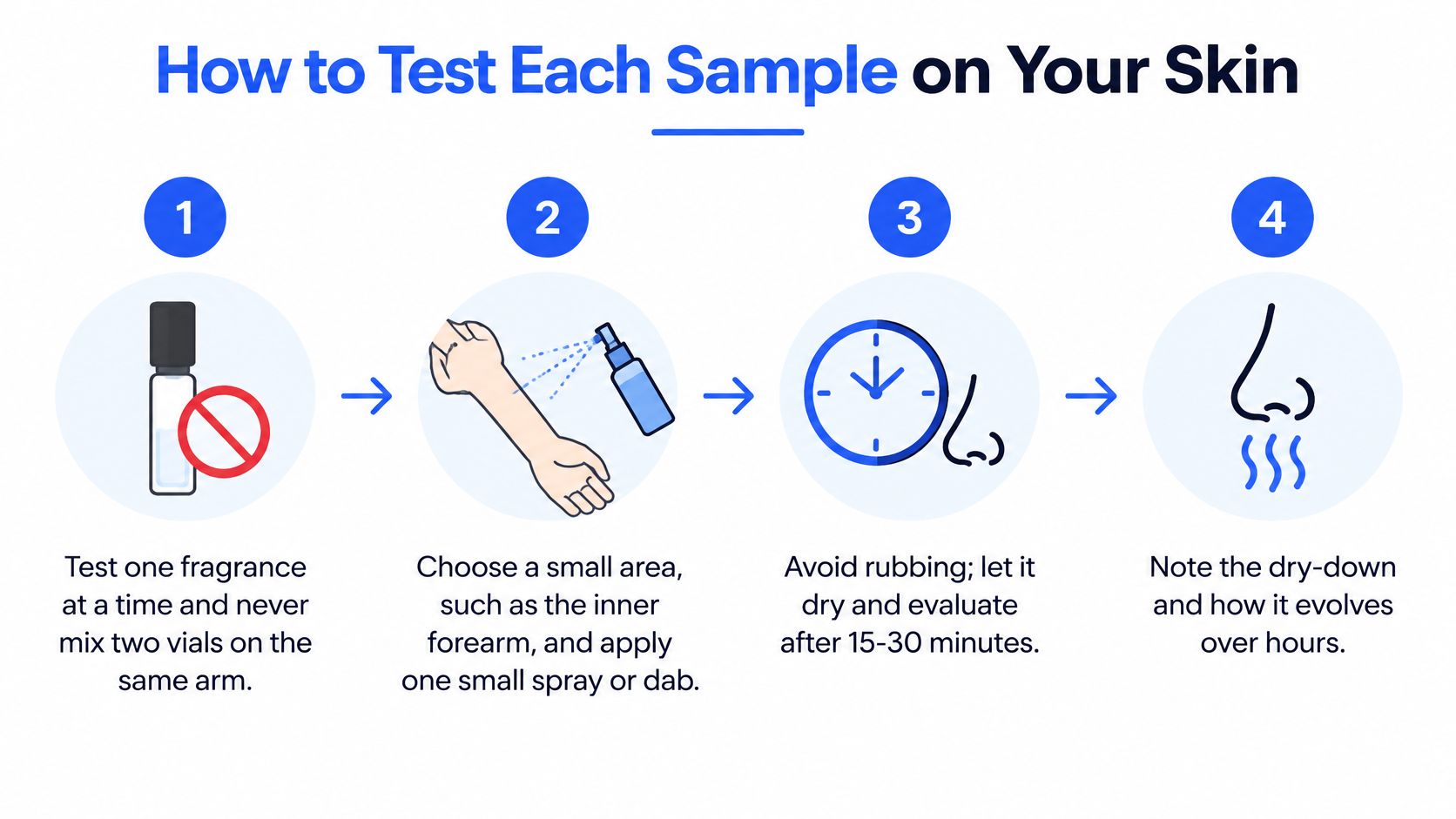
A pleasant opening says nothing about delayed sensitization. Someone already sensitized to fragrance can react to an amount far smaller than a heavy application delivers, so a comfortable first afternoon does not rule out a flare-up on the second or third wear. If you have a known fragrance allergy or eczema, read the ingredient and allergen labeling on the product page or insert before anything touches your arm, and talk to a clinician about which materials to avoid. A sampler earns its price by screening scent profiles before you buy a bottle. It was never designed as a medical patch test.
A favorable first wear earns a maybe, nothing more.
A finished trial looks small and unglamorous: one scent, one area, one timed note, and a clear yes, maybe or no written down while the impression is still fresh.
Layering is where a sampler set turns playful, and where four vials can disappear in a single evening. Before anything touches your skin, sort the set by what each scent does in a blend instead of the men's or women's shelf it came from. Gender tells you who a bottle was marketed to; function tells you how it will behave on your arm. Younger shoppers already buy across those lines, with Grand View Research reporting that 60% of Gen Z consumers favor gender-neutral scents. Treating your vials as roles gives you far more combinations to test than treating them as labels.
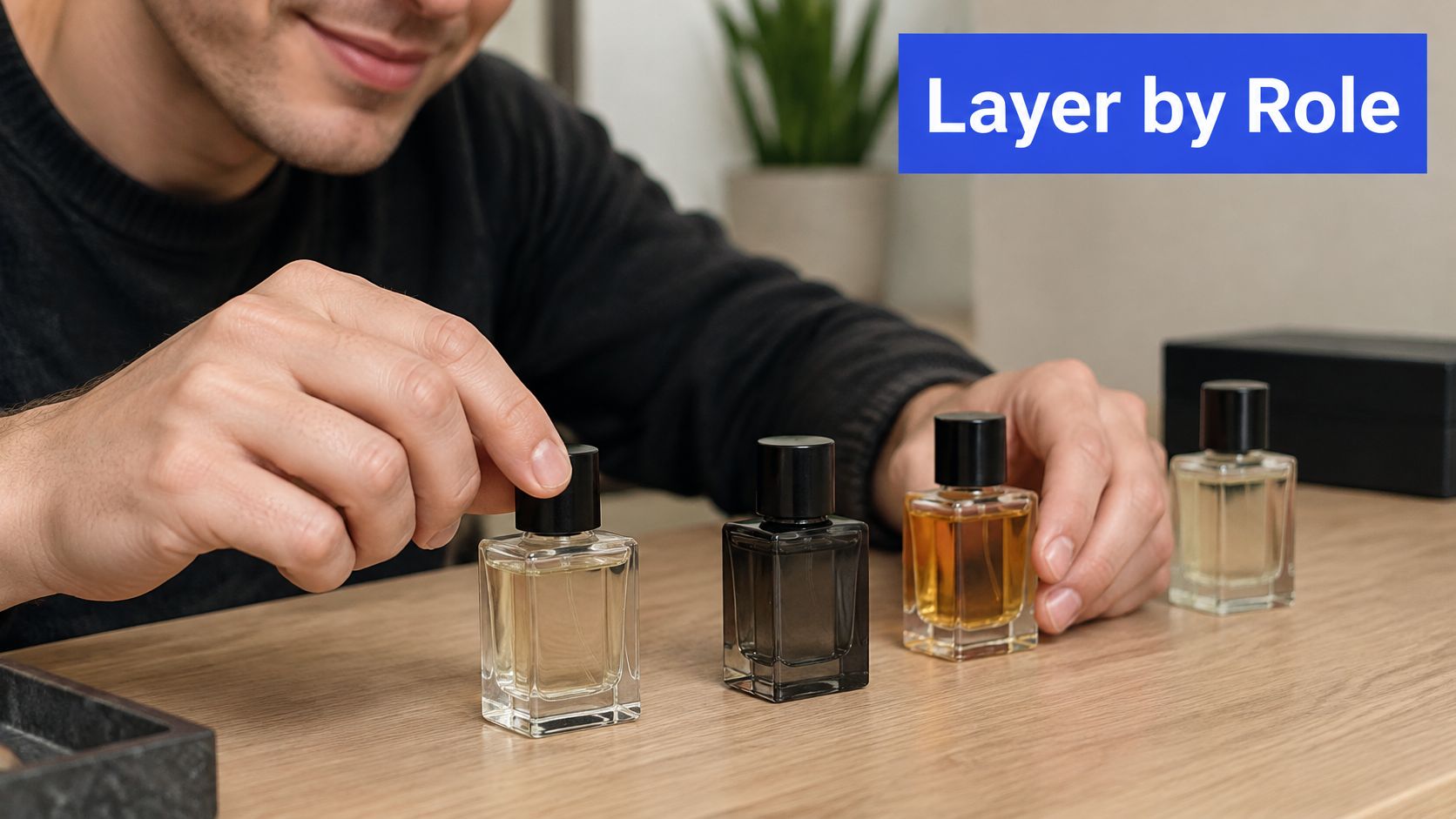
Group your vials into four roles. Fresheners are citrus, aromatic and light, the ones that read clean and lift a blend. Enhancers bring spice, tea or soft musk and change the character of what's underneath. Anchors are woods, amber and vanilla, the base notes that hold everything down and extend wear. Evening accents are dense, sweet or resinous, and a little goes a long way.
Pick one freshener and one anchor. Apply the anchor first, wait ten minutes, then add a single spray of the freshener to a different spot, ideally the other arm. Judge the pairing at 15 minutes and again at 2 hours, comparing both readings against the timed notes you already recorded for each scent alone. Cap it at two scents per test, and log which vial went on first, because order can change the outcome as much as the pairing itself.
Two vials per test keeps the evidence clean.
If the pairing smells muddy, thin or cloying, write it off and move on. Proportions and skin chemistry decide the result more than the notes list does, which is why a combination that goes viral for someone else can sit dense and sweet on your skin. Layer only after each scent has passed its own solo trial. A pairing that rescues a mediocre vial is a pleasant surprise; a pairing built on an untested vial tells you nothing about either one.
Start with a Tuesday. You're out the door at 7:40 with a commute, a desk and a queue for coffee, and the right vial is a bright citrus or aromatic eau de toilette that stays close to the skin. Something in the 4 to 8% range behaves in a shared office: present when someone leans in, invisible three feet away. By mid-afternoon it may be faint, and that's the correct outcome for daylight.
That kind of trial begins when the strip comes out at the counter.
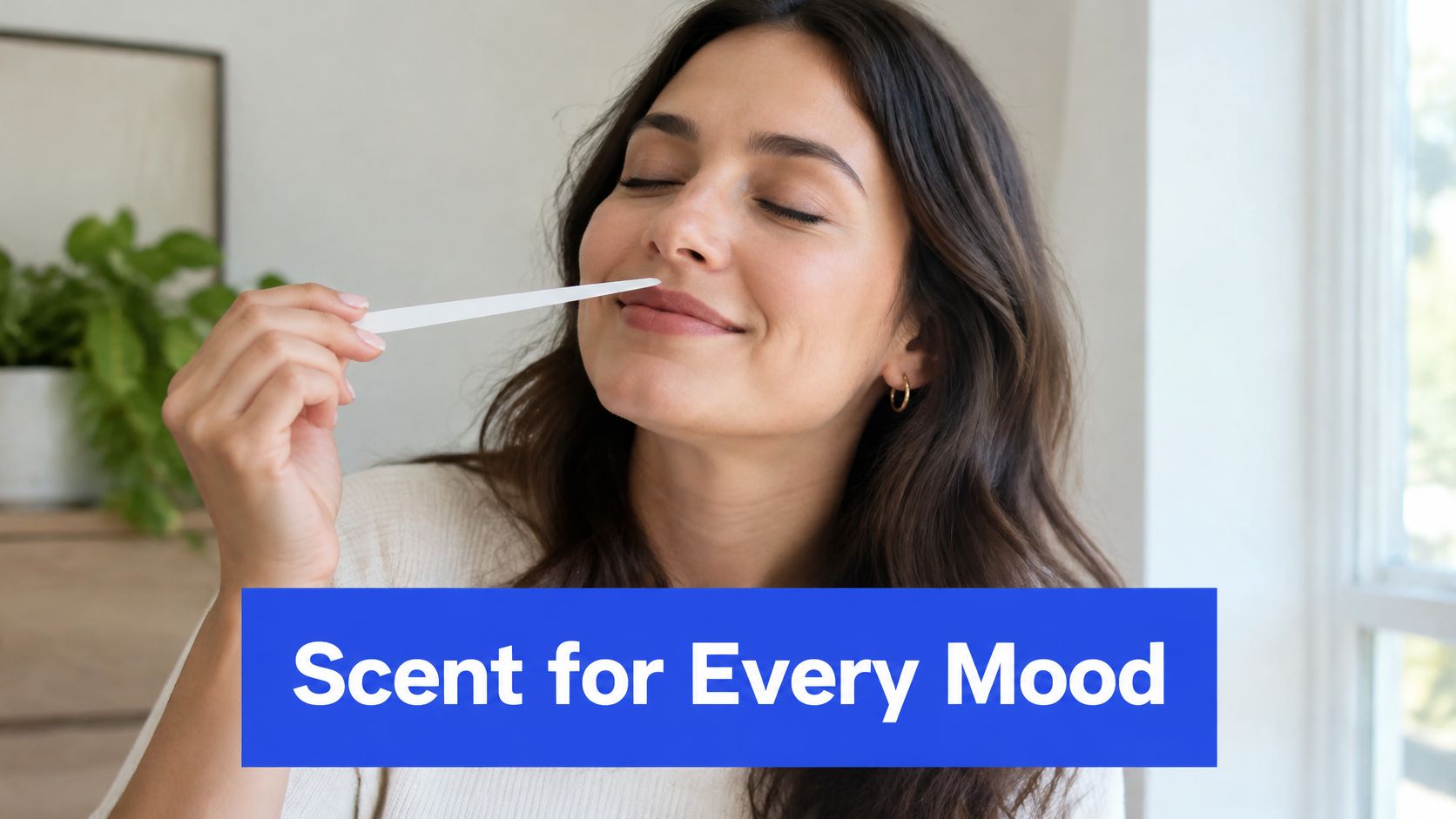
The premise holds because few shoppers stay loyal to a single bottle. A survey of consumers who had bought fragrance in the previous six months found 71% did not have a signature scent and 83% said they enjoyed experimenting, as WWD's reporting on fragrance experimentation describes it. A sampler set is the natural format for that behavior: separate vials for separate moods rather than one bottle asked to cover everything.
Now take a warm-weather date. Fresh, light scents project less in heat, which is a feature, not a compromise, because you want someone close enough to notice. Fragrance does real social work in those moments: 72.5% of the general population say they use perfumed personal-care products to feel more attractive, according to a population study of fragrance use. The effect depends heavily on context, though. In a controlled study, a pleasant fragrance shifted ratings of male faces by roughly 5%, and moderately attractive faces scored significantly higher when paired with a gender-congruent perfume than a gender-incongruent one, per the research on fragrance and attractiveness. There's no universally seductive bottle waiting in your sampler box.
Then a cold Saturday in January. Woods, amber and spice gain presence in cold air, and an eau de parfum earns its place at a dim restaurant table. The same dense scent on a crowded 8 a.m. train is a different experience for everyone in the car, which is the trade-off worth testing rather than guessing.
Build a three-card plan: one everyday scent, one date scent, one travel scent, each with its concentration noted. That way the bottle you buy later matches the wear time you actually need.
Score each vial on three things: opening appeal, how it wears at 6 hours, and how it feels the next morning. Keep only the samples that passed the skin test and were stored properly, then cut the shortlist to two. Check concentration against intended wear, an eau de parfum for evenings and an eau de toilette for daily rotation. A beautiful opening that goes flat by lunchtime fails the test, no matter how good the first spray felt.
Buying online adds its own checks. Direct sampling still dominates discovery: in a 2025 YouGov survey of 800 U.S. perfume users, 60% said they usually discover fragrances through in-store sampling, compared with 29% through samples included with other purchases and 14% through online reviews, per YouGov's perfume buying factors survey. Reviews supplement your timed results; they cannot replace them. Read them for longevity complaints and skin-reaction reports rather than star averages.
Then do the math. Confirm the set contains the scents you already tested, count the vials, multiply by volume for total milliliters, and divide the price by that total to compare against a full bottle. Pick the bottle size that matches how often you will wear it: a 1.7 oz you reach for twice a week makes more sense than a 3.4 oz bought on opening-spray excitement.
Gotham Fragrances carries authentic name brand bottles from Chanel, Dior, Tom Ford, Gucci, Prada and Versace, and first-time buyers can claim complimentary product samples with a first purchase. Use the site search to pull up a shortlisted scent by name, or narrow the field through the Bestsellers and Night/Evening Scents collections. Buy the bottle that survived your 6 hour checkpoint, and let the vial that didn't stay a vial.