
✦ GOTHAM FRAGRANCES — All Name Brand Colognes & Perfumes!
Free Shipping on all orders over $80.00
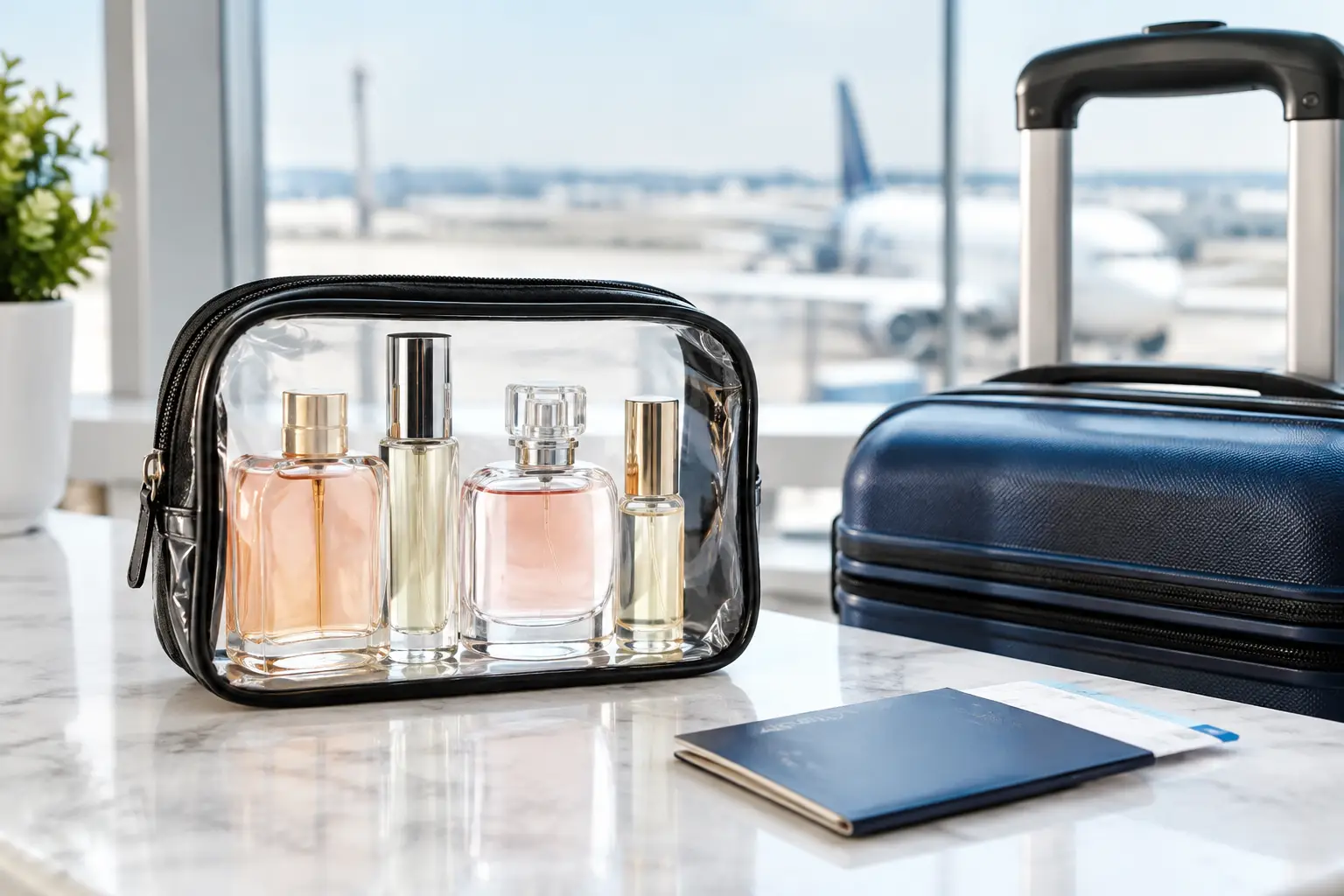
A beautiful fragrance can make an unfamiliar hotel room feel more like your own, but a favorite bottle is not always as easy to fly with as it is to wear. This guide to perfume travel rules helps you pack with confidence, whether you are bringing a fresh daytime scent for a weekend away or a rich eau de parfum for a special evening abroad.
For flights departing from the United States, perfume is treated as a liquid at the security checkpoint. That means every fragrance bottle in your carry-on must hold 3.4 fluid ounces, or 100 milliliters, or less. The bottles must also fit inside your one quart-sized bag of liquids, gels, creams, and aerosols.
The bottle size is what matters, not how much fragrance remains inside it. A nearly empty 6.7-ounce bottle will not qualify for your carry-on liquid bag simply because it contains only a few sprays. Security officers see the container size, so leave oversized bottles at home or place them in checked luggage when appropriate.
A 50 ml or 100 ml bottle is usually easy to travel with, provided it fits in your quart-sized bag alongside essentials such as skincare, toothpaste, and makeup. Still, the most elegant option for carry-on-only travel is often a travel spray. A 5 ml, 7.5 ml, or 10 ml atomizer takes up very little room, gives you plenty of wear for a short trip, and lets you bring a signature scent without carrying a full glass bottle.
If you have several fragrances in mind, be selective. One versatile scent can carry you from airport lounge to dinner reservation. A clean citrus, soft floral, warm amber, or refined woody fragrance can be chosen around your destination, wardrobe, and plans without consuming all the space in your liquids bag.
Eau de parfum, eau de toilette, cologne, body mist, fragrance oil, and perfume samples are all generally subject to the liquid rule when packed in a carry-on. Rollerballs and travel atomizers count too. Solid perfume is often easier to travel with because it is not typically treated as a liquid, but its treatment can still depend on the individual security officer and airport procedures.
Aerosol deodorant and fragrance sprays belong in the same quart-sized bag when carried on. If you are close to the limit, choosing a non-aerosol atomizer or a solid fragrance can make packing simpler.
Yes, perfume can generally go in checked luggage, and this is the practical choice for bottles larger than 100 ml. However, checked baggage is not a consequence-free alternative. Bags may be tossed, compressed, exposed to temperature changes, or delayed, so thoughtful packing matters as much as knowing the rule.
Fragrance contains alcohol, which is flammable. Airline and hazardous-material regulations typically permit toiletries and personal-care products in checked baggage in limited amounts. In general, individual containers should not exceed 500 ml or 0.5 kg, and the combined amount of these articles per traveler should not exceed 2 liters or 2 kg. Aerosol products should have a protective cap to prevent accidental release.
Those limits cover far more fragrance than most travelers will reasonably need. Even so, individual airlines can set stricter policies, especially on international routes. Check your airline’s current baggage guidance before packing an unusually large collection, a presentation bottle, or multiple backup bottles.
For one precious bottle, carry-on travel may still be preferable if its size allows. You keep it with you, avoid the chance of a broken cap or cracked glass, and can reapply after landing. The trade-off is the strict 100 ml container limit and the precious space it occupies in your liquids bag.
A luxury fragrance deserves better than being dropped loose into a suitcase. Keep the original cap on the bottle, then place it in a small zippered plastic bag. If a sprayer leaks because of cabin pressure or handling, the bag helps protect clothing, shoes, and other belongings.
For checked baggage, wrap the bottle in soft clothing or place it in a padded cosmetic case, then position it near the center of the suitcase. Avoid packing it against hard shoes, the suitcase frame, or the outer edge of the bag. A rigid travel case is particularly worthwhile for a heavy glass bottle or a fragrance you would be disappointed to replace.
For carry-ons, an atomizer is more practical than transferring perfume into an unmarked container. If you do decant, use a purpose-made refillable travel atomizer that seals securely. Label it with the fragrance name if possible. This prevents mix-ups and makes it easier to identify your scent when you are getting ready on the road.
Before you leave, consider this compact fragrance packing routine:
The 100 ml liquid limit is common internationally, but rules can vary by country, airport, and connection. Your departure airport’s screening rules apply when you start your trip, while a connecting airport may require you to pass through security again. This is where travelers can run into trouble with a perfectly legitimate purchase.
Duty-free perfume purchased after security is usually allowed onto the aircraft, often in a sealed tamper-evident bag with proof of purchase. But if you have a connection where you must clear security again, that larger bottle may be subject to the next airport’s liquid rules. Do not assume a duty-free bag guarantees passage through every connecting checkpoint.
If you are buying fragrance overseas, customs rules matter separately from airport security. Bringing a bottle home for personal use is common, but travelers should understand their destination country’s declaration requirements and allowances. Keep receipts for expensive purchases, especially for a niche fragrance or a limited-edition bottle.
The best travel fragrance strategy is less about bringing every option and more about bringing the right one. For a business trip, a polished woody aromatic or subtle musk offers versatility without overwhelming close quarters. For a warm-weather escape, a bright citrus, aquatic scent, or airy floral feels natural in heat and humidity. For an evening-focused trip, a compact spray of amber, vanilla, leather, or spice creates a more memorable presence without adding weight to your bag.
Travel sprays also make it easy to match fragrance to the occasion. They are discreet, economical, and ideal for refreshing after a long flight. Apply lightly in airport lounges, planes, and shared transportation. Fragrance is personal, but travel puts everyone in closer proximity, and a few well-placed sprays deliver more sophistication than an overpowering cloud.
When choosing a bottle to bring, authenticity and condition matter. A secure atomizer, intact cap, and properly stored fragrance are more likely to perform as intended when you arrive. Gotham Fragrances makes it easier to build a travel-ready fragrance wardrobe with recognizable designer favorites and elevated scents at accessible prices.
A well-packed fragrance does more than survive a flight. It becomes part of the memory of the trip: the scent you wore at a new restaurant, on a long-awaited getaway, or when you stepped back into your own life feeling refreshed. Pack thoughtfully, follow the rules of your route, and let your signature scent arrive ready for the moment.
Post Tags :
Share :