
✦ GOTHAM FRAGRANCES — All Name Brand Colognes & Perfumes!
Free Shipping on all orders over $80.00
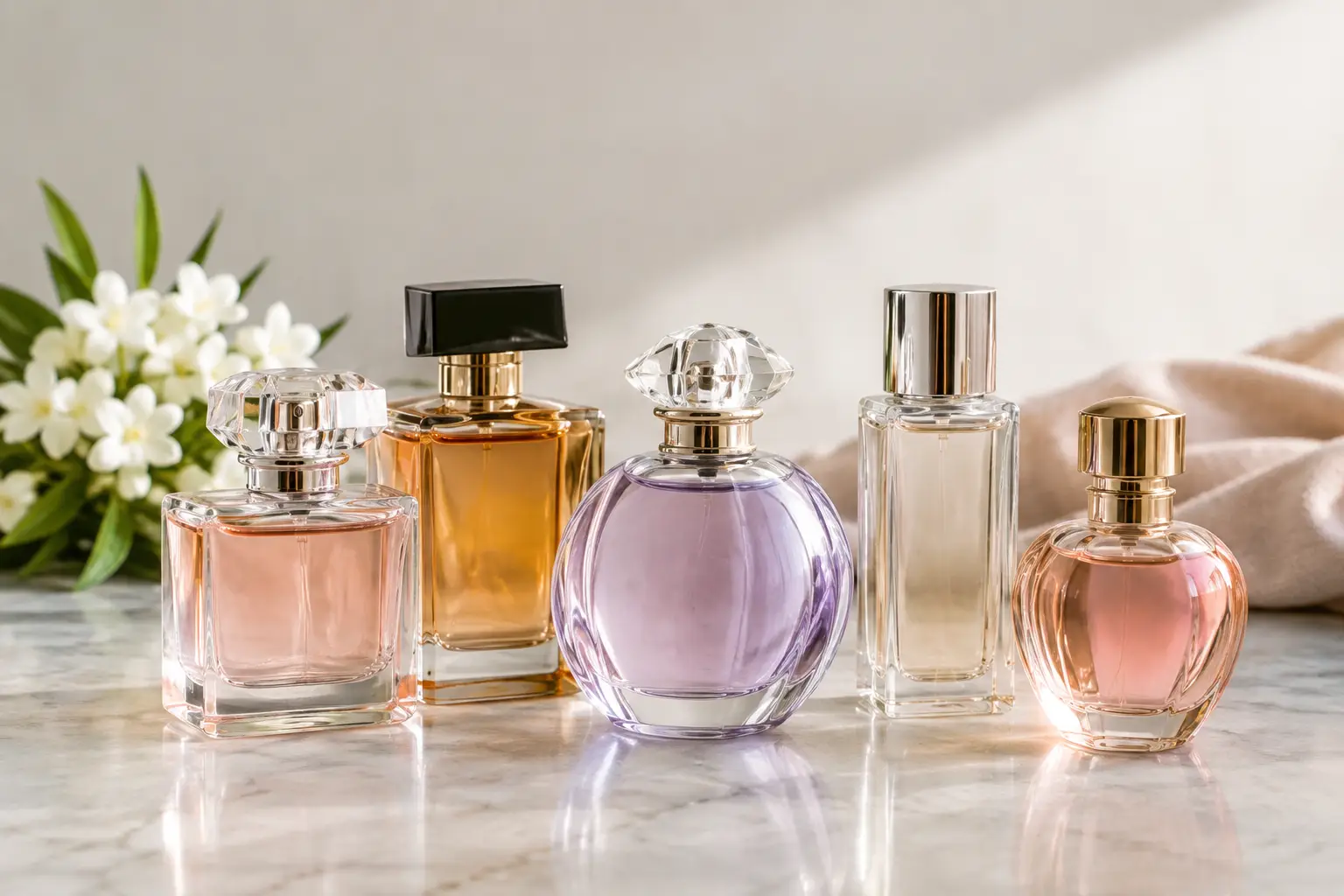
A beautiful fragrance can feel completely different depending on its concentration. This guide to women’s perfume strengths helps you look beyond the bottle and choose a scent that suits your style, schedule, and the impression you want to leave behind. Whether you prefer a soft floral that stays close to the skin or a rich amber that lingers through dinner, understanding strength makes every fragrance purchase more intentional.
Perfume strength refers to the concentration of aromatic oils diluted in alcohol, water, or both. In general, a higher concentration means a fragrance lasts longer and develops more slowly on the skin. It does not automatically mean it will smell better, project farther, or be the right choice for every occasion.
The formula, ingredient quality, your skin chemistry, temperature, and even how generously you spray all affect performance. A bright citrus eau de parfum may wear more lightly than a warm vanilla eau de toilette. Think of concentration as a helpful starting point, not a promise written in stone.
Parfum, sometimes called extrait de parfum or pure perfume, is the most concentrated category. It often contains roughly 20% to 30% fragrance oil, though formulas vary by house. These scents tend to feel rich, refined, and close to the skin, with impressive staying power that can reach eight hours or more.
Because parfum develops gradually, it rewards patience. The opening may be quiet, but the heart and base notes can become exceptionally dimensional over time. This strength is ideal for evenings, special occasions, cooler weather, and anyone who enjoys a more intimate signature scent.
A few dabs or sprays are usually enough. Wearing too much can overwhelm delicate notes and make an otherwise elegant composition feel heavy. Parfum also commonly comes with a higher price tag, but the smaller amount needed per wear can make it a worthwhile luxury.
Eau de parfum, often abbreviated EDP, is a favorite for good reason. With a typical concentration around 15% to 20%, it offers depth and longevity without requiring the restraint of a true parfum. Many eau de parfums wear for five to eight hours, although this depends greatly on the scent family.
For many women, EDP is the most versatile choice in a fragrance wardrobe. It has enough presence for work, date nights, celebrations, and everyday polish, while still feeling easy to wear. A sophisticated rose, creamy sandalwood, warm gourmand, or polished white floral often shines in this format.
If you want one bottle that can move from morning meetings to evening plans, eau de parfum is usually the best place to start. Apply lightly for the office, then refresh before dinner if desired.
Eau de toilette, or EDT, is lighter in concentration, generally falling between 5% and 15%. It often lasts three to six hours and opens with more immediate freshness than an eau de parfum. That makes it especially appealing when you want fragrance to feel effortless rather than dramatic.
Fresh citrus, green florals, crisp fruits, clean musk, and airy aquatic notes are particularly at home in eau de toilette. It is an excellent choice for warm weather, casual weekends, gym-to-brunch plans, and offices where you want to be noticed only at close range.
Do not mistake lighter for lesser. An EDT can be beautifully composed and luxurious, and some iconic designer fragrances are beloved precisely because of their sparkling, breezy character. The trade-off is simple: you may need to reapply later in the day.
Eau de cologne usually contains around 2% to 5% fragrance oil. Despite the name, it is not reserved for men. Modern colognes can feature citrus, neroli, tea, herbs, florals, and soft woods that feel wonderfully chic on women. Expect a refreshing burst that may last one to three hours.
Eau fraiche is typically the lightest category, often with 1% to 3% fragrance oil and more water in the base. It wears like a fragrant veil rather than a long-lasting statement. These formulas are lovely after a shower, on very hot days, or when you prefer a subtle finish.
Both options are about immediacy and ease. They are less suited to a long formal event, but perfect for a quick mood lift or a relaxed, clean-skin effect.
Start with the moment you are dressing for. For a wedding, a candlelit dinner, or a winter event, parfum and eau de parfum bring warmth, texture, and a more memorable trail. For commuting, shared workspaces, daytime errands, and summer travel, eau de toilette or cologne can feel more appropriate.
Your preferred scent family matters just as much as concentration. Vanilla, patchouli, amber, oud, leather, and dense white florals often have natural staying power, even in lighter formulas. Citrus, watery notes, delicate petals, and green accords tend to fade faster because they are built around more volatile materials.
Skin type can shift the experience, too. Fragrance may disappear faster on dry skin, while moisturized skin often helps it cling longer. Applying an unscented lotion first can extend wear without changing the fragrance’s character. Clothing and hair can hold scent well, but spray from a distance and use care around delicate fabrics, silk, and jewelry.
The best test is time. Try a fragrance on your skin, then check in after 15 minutes, two hours, and several more hours. The first spray introduces the top notes, but the dry-down reveals the personality you will actually live with.
Longevity describes how long a fragrance remains detectable. Sillage describes the scent trail it leaves in the air. Projection is how far the fragrance travels from your skin. These qualities overlap, but they are not interchangeable.
A concentrated musk parfum may last all day while staying personal and discreet. A lively floral eau de toilette can project brightly for the first hour, then settle into a soft skin scent. If you want a fragrance that feels polished in close conversation, look for smooth musks, woods, iris, or soft amber notes rather than choosing solely by the strongest concentration.
For a more expressive entrance, consider an eau de parfum with radiant florals, fruity accords, spice, or warm woods. The goal is not to fill every room. It is to create an aura that feels distinctly yours.
Apply fragrance to clean, moisturized skin at pulse points such as the wrists, inner elbows, and the base of the throat. Heat helps release the scent gradually. Two or three sprays are enough for most eau de parfums; lighter eau de toilettes may welcome an additional spray.
Avoid rubbing your wrists together. That friction can disturb the top notes and alter how the fragrance unfolds. Instead, let it settle naturally. Store bottles away from sunlight, humidity, and heat, since a steamy bathroom windowsill is not kind to a fine perfume.
When choosing a new bottle, consider how you will truly wear it. A dramatic parfum may be extraordinary for nights out but unnecessary for a casual daytime routine. A versatile EDP may offer the best value if it becomes your daily signature, while an EDT can be the fragrance you reach for when elegance should feel light, fresh, and uncomplicated.
A fragrance should complement your presence, not compete with it. Choose the strength that gives you confidence at the distance you want to be remembered.
Post Tags :
Share :