
✦ GOTHAM FRAGRANCES — All Name Brand Colognes & Perfumes!
Free Shipping on all orders over $80.00
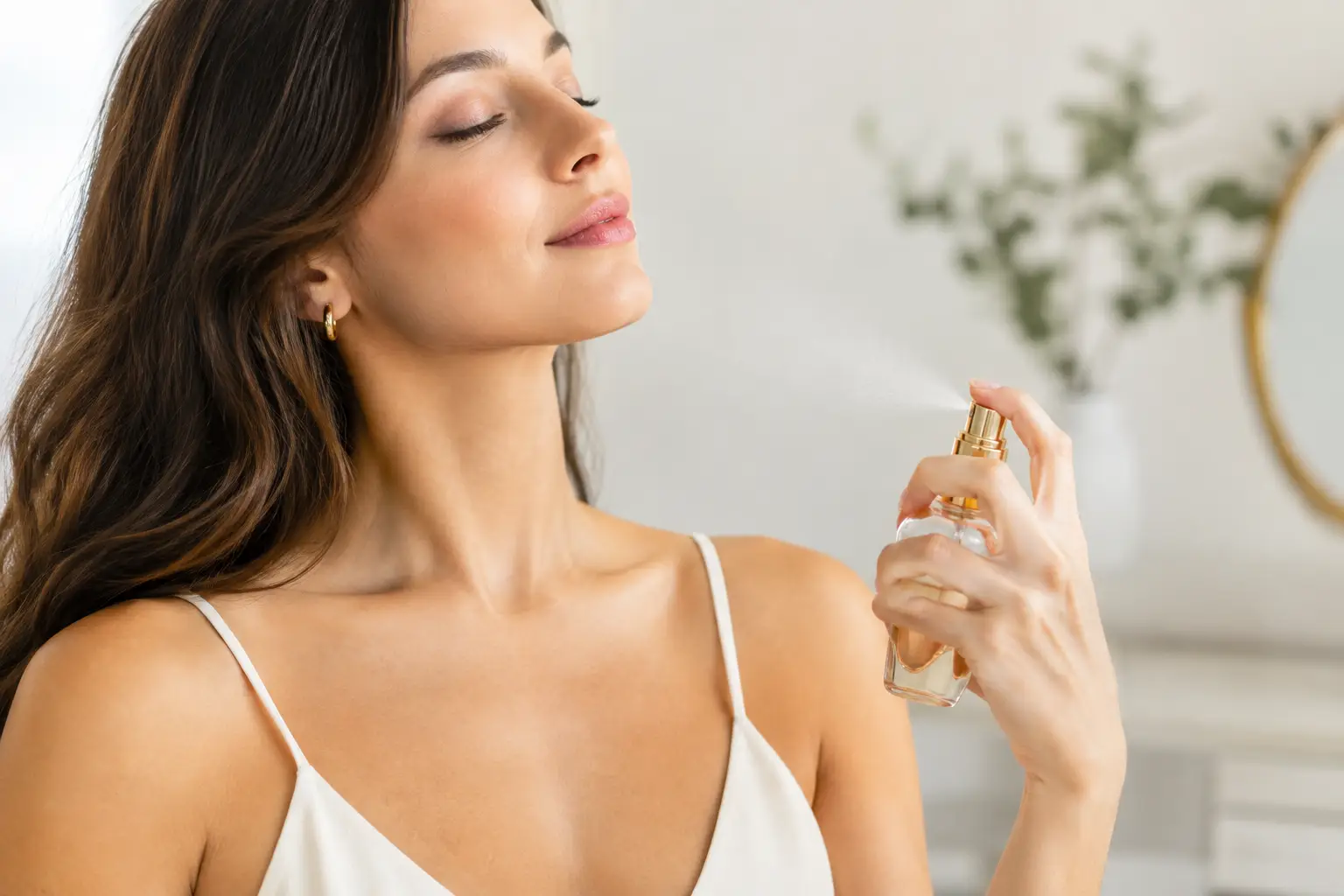
A beautiful fragrance should be noticed at the right distance, not announced before you enter the room. So, how many sprays of perfume should you wear? For most people, two to four sprays is the polished everyday range. But the real answer depends on the fragrance concentration, the weather, your skin, and where the day takes you.
Perfume is personal expression, and the goal is not simply to make it last. It is to create an elegant scent trail that feels like part of your presence: close enough for someone beside you to appreciate, never so heavy that it overwhelms a conversation, a restaurant table, or an elevator.
For a typical workday, lunch date, errand run, or casual gathering, start with two or three sprays. Apply one spray on each side of the neck or behind the ears, then add one to the chest, inner elbow, or wrist if the fragrance is light.
This approach gives a fragrance room to develop naturally. The opening notes make the first impression, but the heart and base notes are what stay with you. A thoughtful application lets the scent reveal itself gradually rather than arriving all at once.
If you are wearing a fresh citrus, clean musk, airy floral, or classic eau de toilette, three to four sprays may feel entirely appropriate. If your bottle contains a dense amber, sweet vanilla, powerful oud, spicy leather, or rich white floral composition, two sprays can be more than enough. Luxury is often about restraint.
An eau de cologne is generally lighter and may call for four to six sprays, especially in warm weather. An eau de toilette usually performs well with three to five sprays. Eau de parfum is often best at two to four sprays, while parfum or extrait can require only one or two.
These ranges are useful, not absolute. Concentration affects longevity, but ingredients and formula matter just as much. A bright eau de toilette with strong musks may last longer than expected, while a soft eau de parfum built around delicate florals may stay close to the skin.
Pulse points are popular because the warmth of the body helps fragrance bloom. The sides of the neck, wrists, inner elbows, and upper chest are reliable choices. Still, applying perfume to every pulse point at once is usually unnecessary.
For a refined, close-to-the-skin effect, use the neck and chest. This creates a gentle aura that rises naturally as you move. For more projection, especially outdoors or at an evening event, add the inner elbows or one wrist. Avoid rubbing your wrists together after spraying. Friction can disturb the opening notes and makes the ritual less precise.
Clothing can extend the life of a scent, but it deserves care. One light spray on a jacket lining, scarf, or the lower portion of a shirt can create a beautiful lingering effect. Test delicate fabrics first, since perfume oils may stain silk, pale materials, or certain synthetics. Fragrance also tends to cling to natural fibers, so a single spray on wool or cotton can remain long after it fades from skin.
Hair holds scent beautifully as well, though direct alcohol-heavy spraying can be drying if done often. Spray once into the air and walk through the mist, or apply to a hairbrush before styling for a softer result.
Temperature changes everything. In summer, heat amplifies fragrance and can make even a favorite scent feel more intense. Use one to three sprays of a warm, sweet, spicy, or woody perfume, particularly when you will be indoors, traveling, or close to others. Fresh aquatic, citrus, and green scents are naturally easier to wear more generously, but begin modestly and reassess.
Cool weather gives fragrance more room to breathe. Four sprays of a cozy gourmand, amber, sandalwood, or tobacco scent may feel inviting on a crisp evening when the same amount would be too much in July. Cold air can mute projection, while sweaters and coats help retain the fragrance near your body.
Your setting should guide you too. At the office, in a classroom, at a medical appointment, or on a flight, keep your application discreet. One or two sprays is considerate and still allows you to enjoy your scent. For dinner, a wedding, a night out, or an outdoor event, three to five sprays can create more presence without sacrificing elegance.
There is also a difference between projecting and lingering. Projection is how far a fragrance travels during its first few hours. Sillage is the trail it leaves as you move. Longevity is how long it remains detectable. More sprays may increase projection at first, but they do not always deliver a more beautiful or longer-lasting experience. The formula, your skin, and where you apply it do much of that work.
The same perfume can wear differently on two people. Dry skin may absorb fragrance quickly, making it seem as though a scent disappears. Moisturized skin generally holds perfume longer, so applying an unscented lotion before fragrance can be more effective than adding several extra sprays.
Oily skin may amplify certain notes, particularly sweet, woody, and musky accords. If this sounds familiar, start with fewer sprays and give the fragrance 20 to 30 minutes to settle before deciding whether you need more. The first burst from an atomizer is rarely the full story.
Nose fatigue is another reason people overapply. Once your brain becomes accustomed to a fragrance, you may stop noticing it even though others still can. Rather than reapplying immediately, ask a trusted friend or notice whether the scent remains on your clothing. Rotating fragrances can also help keep your nose more perceptive.
Reapplication is best reserved for fragrances that genuinely fade or for plans that stretch from day into evening. A light citrus eau de toilette may welcome one or two additional sprays after four to six hours. A long-lasting eau de parfum may need nothing at all.
Before reapplying, consider the scent’s dry-down. If the base notes are still present on your skin, adding more can create a muddled effect, where fresh top notes sit on top of an already warm, sweet foundation. If you do refresh, spray a different location, such as the inner elbow or the back of the neck, rather than saturating the original application points.
Travel atomizers make this easier without carrying a full bottle. They are especially useful for event days, business trips, and gifting a fragrance experience to someone who may want to test how a scent wears before committing to a larger size.
The most common mistake is treating every fragrance the same. A crisp bergamot-and-neroli scent and a deep saffron-oud extrait do not deserve identical application. Let the scent family lead your decision.
Another is spraying too close to the skin. Hold the bottle about four to six inches away for a more even mist. And resist the temptation to spray directly into the air and walk through a cloud of perfume. Much of the fragrance settles onto the floor instead of your skin, which is not a great use of a finely composed scent.
Finally, do not judge performance solely by how loudly a fragrance projects. Some of the most sophisticated scents are designed as intimate pleasures. A soft iris, skin musk, tea accord, or sheer floral can be memorable precisely because it invites someone closer.
If you are trying a new fragrance, wear two sprays on a normal day before deciding it is too weak or too strong. Notice it in different rooms, outdoors, and after several hours on your skin. That small experiment will tell you more than the number printed in any application rule.
Your perfume should complement your style, mood, and occasion with confidence. Begin lightly, let the composition speak, and add only when the moment truly calls for it.
Post Tags :
Share :