

Spotting a fake fragrance is a delicious game of details. It’s all about a sensual inspection of the price, the packaging, and the seller’s reputation. An absurdly low price on a high-end scent from some shadow-dwelling online vendor? Darling, that’s your first and loudest alarm bell. A genuine perfume's quality is obvious from the moment you lay eyes on it, from the flawless cellophane wrap to the satisfying heft of the glass bottle in your hand.
That intoxicating pull of a designer fragrance is hard to resist, but the counterfeit market is a sneaky trap, ready to fool even the most discerning noses. Think of this guide as your little black book of secrets. We’re skipping the stuffy, technical jargon and getting right into the playful, hands-on advice that will turn you into a fragrance detective with a flawless record.
You’ll learn to trust your instincts and your senses—the feel of a high-quality box, the satisfying click of a magnetic cap, and of course, the complex symphony of a true artisanal scent. This is about more than just dodging a bad purchase; it’s about protecting the ritual and the little piece of luxury you deserve.
The global perfume market is a massive, glittering industry, and that kind of growth always has a dark side. The counterfeit problem has absolutely exploded, luring in shoppers who can't resist what looks like a great deal.
One of the surest ways to spot a fake is the price tag. Authentic luxury fragrances from brands like Tom Ford or Chanel rarely get discounted more than 50-70% off retail, and even then, it's usually through a verified retailer. Fakes, on the other hand, are often listed at an unbelievable 80-90% off. It's tempting, but it’s almost always a trap.
This simple decision tree can help you quickly size up a potential purchase.
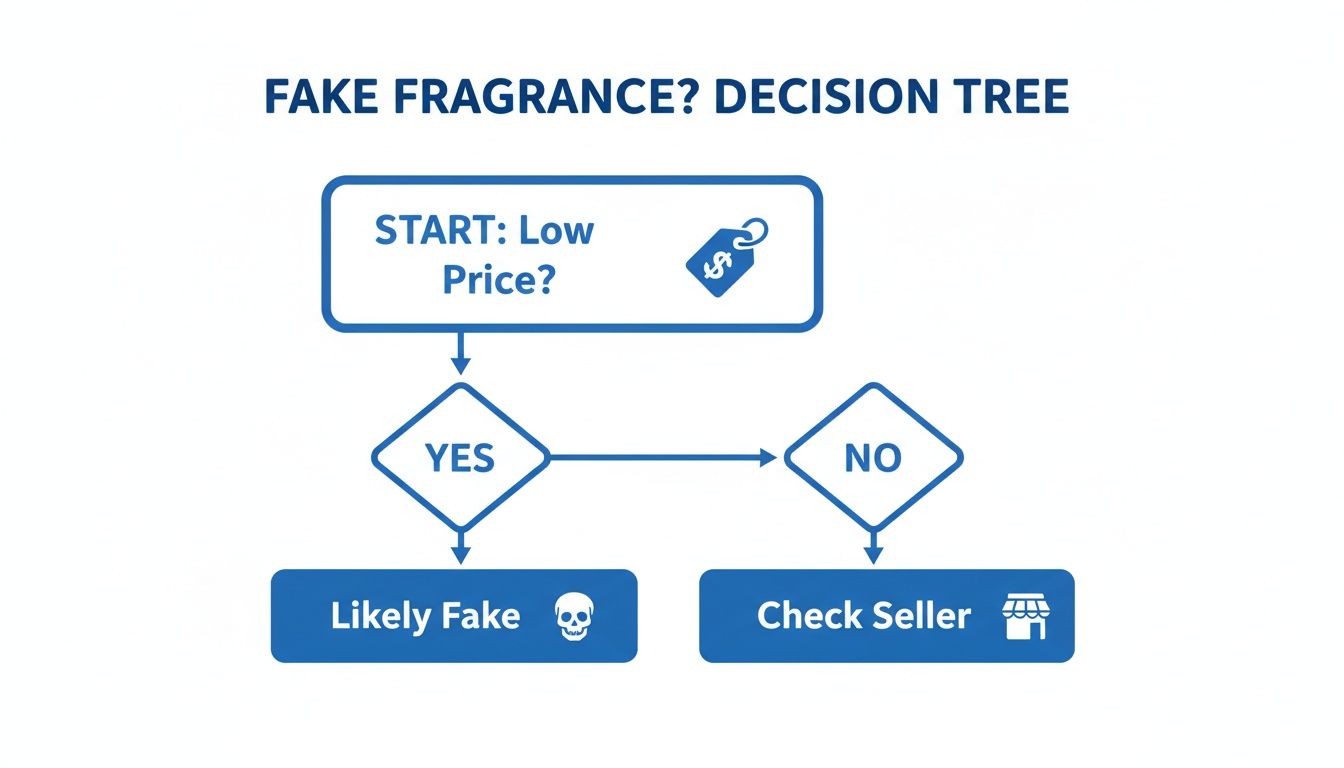
As you can see, a crazy-low price is the most immediate giveaway. It should either be an instant "no" or, at the very least, make you investigate the seller with extreme prejudice.
Sometimes you just need a quick cheat sheet. Use this table as a handy reference to compare the tell-tale signs of a genuine fragrance against the common red flags of a counterfeit.
| Characteristic | Authentic Fragrance (What to Look For) | Fake Fragrance (Red Flags) |
|---|---|---|
| Cellophane Wrap | Tight, seamless, and professionally sealed. A clean first kiss. | Loose, messy, or has a thick, clumsy seam. Total turn-off. |
| Box Quality | Sturdy, high-quality cardboard with crisp, embossed text. | Flimsy material, blurry printing, or embarrassing spelling errors. |
| Bottle Design | Heavy, smooth glass with a seamless, flawless finish. | Lightweight, rough seams, or visible imperfections. |
| Cap | Fits snugly, often magnetic, clicks into place with a satisfying sound. | Loose, plastic-y feel, doesn't close securely. |
| Batch Codes | A perfect match on both the box and the bottle. | Mismatched, missing, or printed on a cheap sticker. |
| The Scent | A complex story with top, middle, and base notes that evolve. | Flat, overwhelmingly alcoholic, and disappears like a bad date. |
| The "Juice" | Consistent color, crystal clear, no sediment. Pure elegance. | Discolored, oily, or has debris floating inside. Yikes. |
This table covers the most common giveaways, but remember that counterfeiters are always getting better. The key is to check for multiple inconsistencies, not just one.
Choosing an authentic fragrance isn't just about brand loyalty—it's about the entire seductive experience. A genuine perfume is a piece of art, carefully composed with distinct top, middle, and base notes that unfold beautifully on your skin over hours. Fakes are the opposite: often flat, harsh, and gone in a flash.
Here’s what you're really risking with a counterfeit:
The real secret to spotting a fake fragrance is learning to appreciate the details. It’s about feeling the solid weight of the bottle in your hand, admiring the crispness of the font on the box, and trusting that first spritz. It’s a full-on sensory investigation.
This guide will walk you through every single clue, from the cellophane wrapper right down to the scent’s final, lingering note. For even more in-depth articles on the ever-evolving world of counterfeit detection, you can read more insights on combating counterfeits. By the time we're done, you'll be able to spot a treasure from a trick with confidence.
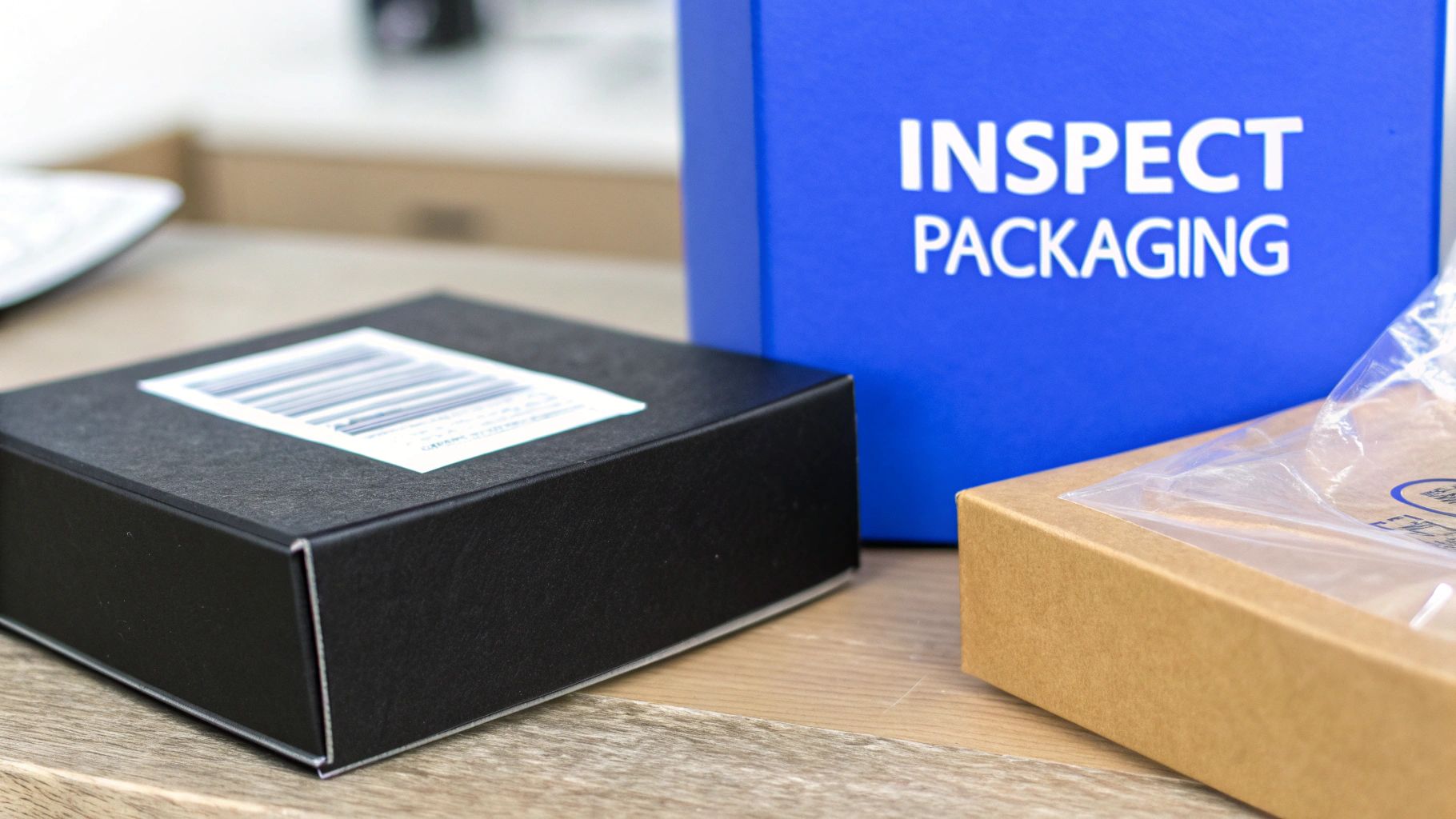
Your investigation into a fragrance's authenticity starts long before you ever smell it. It begins with the box—the very first thing you see and touch. Luxury brands are absolutely obsessed with presentation; they see the packaging as an extension of the scent itself. It’s the first impression, the opening line, and counterfeiters almost always mess it up.
Think of it as the fragrance’s first line of defense. Authentic packaging is designed to be flawless, sturdy, and perfectly tailored. The moment you hold it, your instincts should tell you something.
That clear plastic wrap, the cellophane, is your first major clue. It's a detail counterfeiters love to rush, and it almost always shows. A genuine fragrance will be wrapped in thick, crisp cellophane that’s folded flawlessly around the box, like a professionally wrapped gift.
Look for a single, neat seam where the wrap is heat-sealed. It should be clean and precise, with no sloppy glue or messy tape anywhere in sight. If the wrapping is loose, crinkly, or has a wide, ugly seam with visible adhesive, that’s a massive red flag. It’s the equivalent of showing up to a black-tie event in a wrinkled suit—a clear sign of carelessness.
Once you slide the cellophane off, really feel the box. An authentic fragrance box feels substantial. It's built from high-quality, sturdy cardstock made to protect the precious bottle inside. It’s not just a container; it's a small piece of protective art.
Run your fingers over the surface. The text and logos should be crisp, with sharp edges and often a slight embossment you can feel. Fakers almost always use cheaper, flimsy materials, resulting in weak boxes that feel like they could be easily crushed.
Here’s a quick checklist for the box itself:
A genuine fragrance box whispers quality. A fake one screams its cheapness through blurry text, flimsy cardboard, and clumsy wrapping. Trust your sense of touch just as much as your sense of smell.
Now, flip the box over. You should see a barcode—it absolutely has to be there. While you can scan it with your phone, be warned: counterfeiters are savvy enough to copy real barcodes from genuine products. So, a successful scan doesn't automatically mean it's the real deal.
What's more telling is how the barcode is presented. It should be printed cleanly right onto the box, not on a sticker that looks like it was slapped on as an afterthought. Also, check the bottom of the box for an etched or printed batch code. We’ll dive deeper into that later, but it’s crucial that it exists.
Inside, there should be another structure, often made of cardboard, designed to hold the bottle securely. It should be a snug, perfect fit. If the bottle rattles around, it’s a sign that the packaging wasn’t designed with the precision of an authentic product. Every detail matters, and for luxury brands, perfection is the standard.
Once you've sized up the box, it's time for the main event—the bottle itself. This is where the truth really comes out. A genuine fragrance bottle is a piece of art, a carefully sculpted object designed to feel as luxurious as the scent inside.
The moment you pick it up, it should feel heavy, substantial, and perfectly balanced. This isn't just a container; it's a statement. Counterfeiters almost always skimp here, using cheaper, lighter glass that feels fragile and insignificant in your hand.
Run your fingers along its surface. An authentic bottle is crafted from high-quality glass, resulting in a completely smooth and seamless finish. If you feel any rough edges, seams, or see tiny air bubbles trapped within the glass, you're almost certainly holding a fake.
Get hands-on, because the bottle is your playground for investigation. The weight is one of the most immediate giveaways. The perfume industry, projected to be a $55.9 billion market by 2025, is built on this perception of quality, and flimsy bottles simply don't cut it. In my experience, these simple visual and tactile checks can expose up to 80% of fakes instantly.
For instance, an authentic 30ml bottle from a brand like Chanel or Gucci should weigh around 50-70 grams. A fake often weighs 20-30% less and just feels wrong in your palm. If you want to dive deeper, you can learn about the trends shaping the perfume market and how brands are fighting back.
Pay close attention to the base of the bottle. A genuine bottle has a thick, sturdy base that provides stability. Fakes often have thin, uneven bottoms that might even make them feel a bit wobbly. The details matter, and luxury is found in that flawless execution.
A real fragrance bottle should feel like a precious object. If it feels like something you'd win at a carnival, trust your gut. Counterfeiters can mimic a shape, but they can't replicate the feeling of quality craftsmanship.
Oh, the cap. This is a detail counterfeiters consistently get wrong, and it’s a beautifully simple test for authenticity. A real cap is engineered to perfection. It should slide on smoothly and click into place with a satisfying, secure sound.
Many high-end brands use magnetic caps that snap into place with an authoritative thunk. Others are precisely weighted to feel heavy and luxurious. Pick it up, feel its heft, and test the fit.
Here’s what to look for in a cap:
Think of the cap as the crown on your fragrance. It should feel every bit as premium as the bottle it protects.
Finally, let's talk about the atomizer—the part that delivers that magical mist. The sprayer, or nozzle, is a surprisingly complex piece of engineering, and it’s another area where fakes fall completely flat.
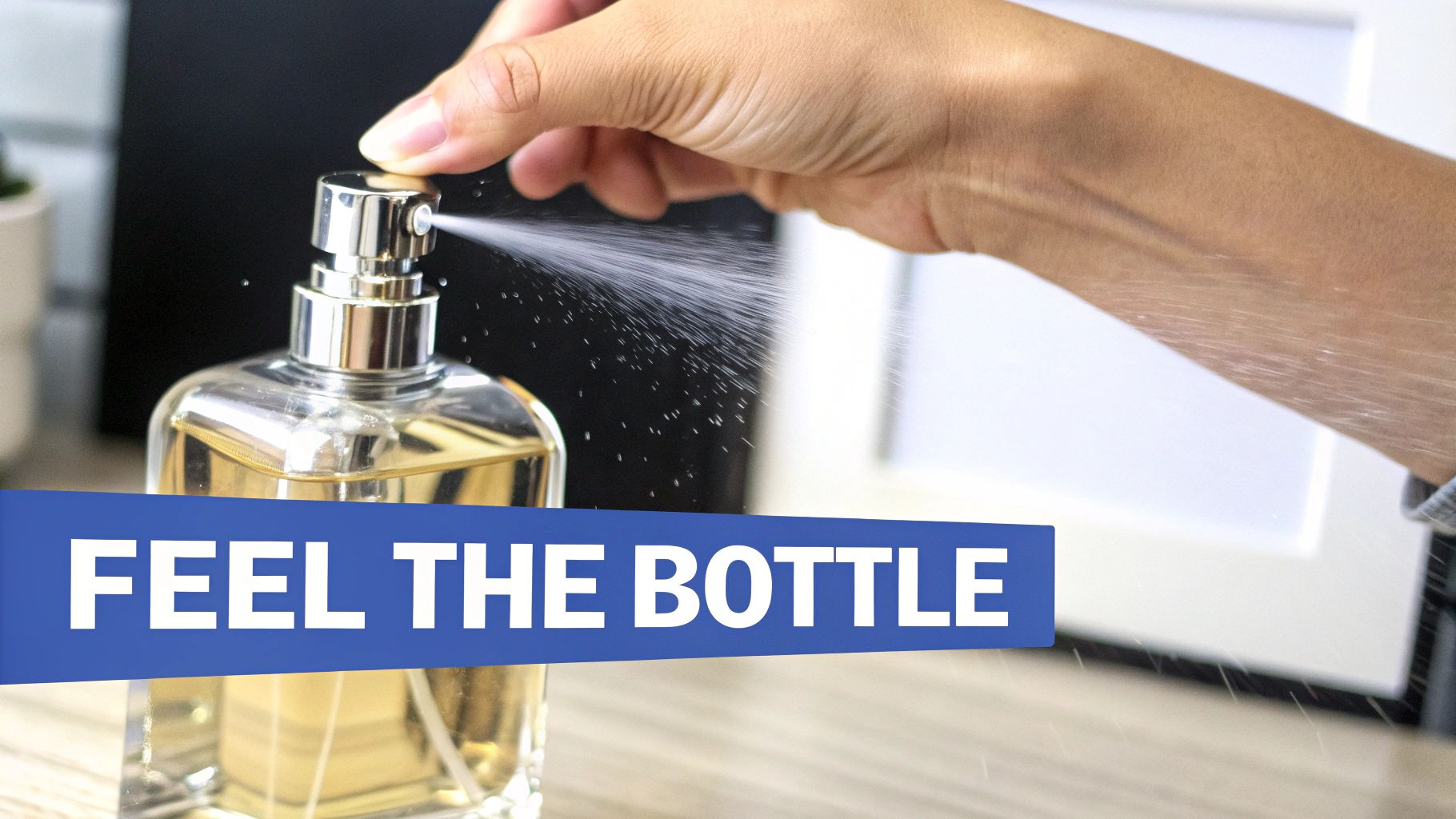
An authentic sprayer delivers a fine, even, cloud-like mist that distributes the fragrance perfectly. Give it a test spritz. The pump action should be smooth and consistent from the very first press.
Counterfeit sprayers, on the other hand, often fail spectacularly. They might sputter, squirt out a weak stream of liquid, or even leak around the collar. This is because they use cheap, poorly made components that just can't handle the pressure or deliver a controlled spray.
Look closely at the spray tube—the little plastic straw inside the bottle. On a genuine fragrance, this tube should be almost invisible and cut to the perfect length to just touch the bottom corner. Fakes often have thick, obvious tubes that are too long, causing them to bend awkwardly at the base. It’s a tiny detail, but it’s one that screams "imitation."
Alright, let’s get into the real detective work. Now that you've given the bottle a once-over, it's time to dig a little deeper. Every genuine fragrance has an identity card of sorts, a unique fingerprint known as a batch code. This isn't just a random jumble of letters and numbers; it's a critical piece of the puzzle that confirms your perfume's story.
This code is your direct link back to the manufacturer. They use it for quality control, tracking production lots, and pinpointing the exact day your fragrance was bottled. For you, it’s one of the most powerful tools in your arsenal for spotting a fake. It’s the kind of detail counterfeiters often get lazy with, and their sloppiness is your advantage.
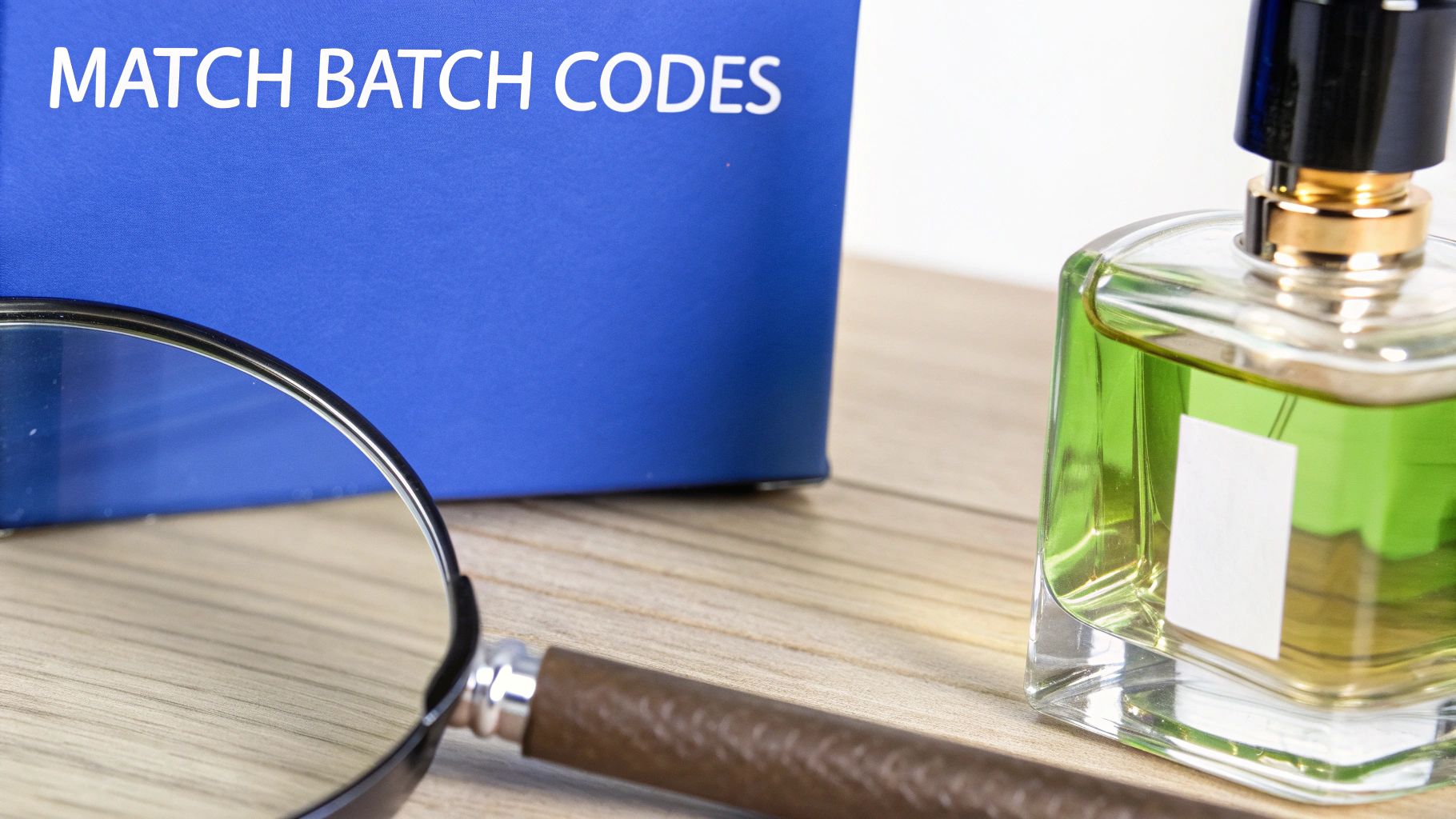
Here’s the one thing you absolutely can’t overlook: the batch code on the bottom of the box must perfectly match the batch code on the bottom of the bottle. No exceptions. No "almosts." This is a non-negotiable tell.
Counterfeiters might print a random code on the box and completely forget the bottle, or the other way around. Sometimes they even use two different fake codes. An authentic brand, however, maintains meticulous consistency. Those codes are twins, born at the exact same moment.
How the code is applied is just as revealing. On a real bottle, the code is almost always etched or laser-engraved right into the glass. Run your finger over it; you should feel the slight indentation. On the box, it's typically embossed or printed with sharp precision.
A batch code printed on a cheap, transparent sticker and slapped onto the bottom of the bottle is an immediate deal-breaker. It’s the counterfeiter’s version of a bad fake ID.
So, you've found the codes, and they match. Excellent. The next step is to see if the code itself is legit. This is where online batch code checkers come in handy. Websites like CheckFresh or CheckCosmetic let you punch in the brand and the code to find its production date.
But a word of caution is needed here. These sites are helpful, but they aren't foolproof. Here’s what you need to know:
Think of these checkers as a supporting tool, not the final word. If the code checks out and every other sign looks good, you're probably in the clear. But if it returns an error or a suspiciously old date (like 10+ years ago), it’s just another red flag to add to your list.
While you're checking out the bottom of the bottle, take a moment to admire the rest of the label. Just like with the box, luxury brands demand absolute perfection in their printing. The text on a real bottle is flawless—crisp, clean, and perfectly centered.
Every single word, from the brand name down to the fluid ounce information, should be sharp and easy to read. The ink should be uniform, with no signs of smudging, bleeding, or fading around the edges.
Common counterfeiting mistakes to watch for include:
These are the tiny imperfections that give away a product made without care. A genuine Tom Ford or Versace bottle would never leave the factory with a single letter out of place. This level of scrutiny might feel obsessive, but it’s exactly what’s needed to ensure the story your fragrance tells is one of true, unadulterated luxury.
We’ve scrutinized the box and inspected the bottle, but now it’s time for the most telling test of all. This is where the liquid itself gets to prove its worth. A real fragrance is like a story that unfolds on your skin, a symphony that evolves over hours. A fake? It’s a one-note imposter that shows up loud and leaves without saying goodbye.
Ultimately, this comes down to the experience. An authentic perfume has a beginning, a middle, and an end. A counterfeit just screams its opening line and then fades to a whisper of alcohol and regret.
Think of a genuine perfume as a beautiful piece of music. It opens with the bright, sparkling top notes—things like citrus or light florals. This is the first impression, the hook that draws you in, and it typically lasts for about 15-30 minutes before gracefully making way for the heart of the song.
Next up are the middle notes, also known as the heart. This is the main theme, the core personality of the fragrance. You'll get richer florals, spices, or green notes that linger for a solid 2-4 hours. Finally, the fragrance dries down to its deep, sensual base notes—musk, vanilla, sandalwood—that can stay with you for 6-12 hours or even longer.
Fake fragrances don't bother with this complex structure. They usually blast you with a harsh, synthetic version of the top notes and call it a day. There’s no development, no depth. After an hour or so, you're left with a faint chemical smell or, worse, just the sharp tang of cheap alcohol.
This isn't just about what your nose is telling you; it's backed by science. Advanced chemical analysis has shown that fake perfumes are missing the key compounds that give real fragrances their depth and staying power. It turns out that counterfeits can have up to 15-25% fewer of the terpenes and esters responsible for a scent’s performance. These shortcuts in the chemical makeup are precisely why the scent collapses so quickly. You can even explore the fragrance market insights to see how premium ingredients define the entire industry.
A genuine fragrance is a story that unfolds on your skin, revealing new secrets over hours. A fake is a headline with no article—loud, brief, and ultimately unsatisfying.
Let's talk about two crucial terms in the fragrance world: longevity (how long the scent lasts) and sillage (the scent trail you leave behind). Both are directly tied to the concentration of fragrance oils.
If your brand-new "EDP" has all but vanished by lunchtime, you have a problem. Fakes are notoriously weak because they’re made with diluted, low-quality ingredients that just don't have the stamina. The sillage will be nonexistent, too. Instead of leaving a captivating trail, a fake scent barely clings to your skin before disappearing completely.
Before you even spray it, take a good look at the liquid inside the bottle—what we call the "juice." Hold it up to a light source. It should be perfectly clear and consistent in color. High-end brands use top-tier dyes that create a stable, beautiful hue without any cloudiness.
Be on high alert for any fragrance that has:
This final check is your last line of defense before that liquid touches your skin. Trust what you see and what you smell—your senses will almost always know the difference between a masterpiece and a knockoff.
Let's be honest, the thrill of the hunt is part of the fun. But when that hunt leads you down a dark alley of shady websites and too-good-to-be-true marketplace listings, the prize is rarely a treasure.
The most powerful secret to never getting burned by a fake fragrance? Be incredibly selective about where you shop from the very beginning.
That rush you feel seeing a new Dior or Chanel for 80% off is tempting, we get it. But that feeling is usually your gut screaming a warning. If a deal feels unbelievable, it’s because it is. Counterfeiters thrive in the shadows of unauthorized third-party sellers and fly-by-night websites with no contact information and even sketchier return policies.
So, where do you turn? You look for the green flags—the signs of a retailer who is as obsessed with authenticity as you are. A reputable seller isn't just a shop; they're a curator committed to delivering a genuine luxury experience, from the first click to the final spritz.
Here’s what sets the good ones apart:
Choosing a reputable retailer is like choosing a good partner—you want transparency, reliability, and a guarantee that you're getting the real thing every single time. It's about building trust, not chasing a risky thrill.
This is where places like Gotham Fragrances come in. By working directly with authorized suppliers and implementing a rigorous authentication process, we ensure every bottle that leaves our hands is the genuine article.
If you do end up with a suspected fake from another source, it's vital to act. For more information, check out this practical guide on how to report counterfeit products. Your journey should always end in delight, never disappointment.
Even the most seasoned fragrance collectors get tripped up sometimes. When you're shopping online, it's easy to feel a little lost, but knowing the answers to a few common questions can turn you into a pro at spotting fakes. Let's tackle some of the biggest curiosities out there.
We get it—you want the thrill of a great deal, not the disappointment of a counterfeit. This is your final debrief before you head out, armed with the knowledge to protect both your wallet and your signature scent.
If only it were that easy. While scanning a barcode might pull up the correct product, counterfeiters have gotten incredibly good at cloning them directly from authentic boxes. A successful scan, unfortunately, is no guarantee of authenticity.
Your focus should be on the batch code. Think of it as the fragrance's unique fingerprint. It should be etched or engraved—never just a sticker—onto both the box and the bottle. Most importantly, those two codes must match perfectly. This is a far more reliable tool for verification than a simple barcode.
First, don't panic. The moment you suspect you're holding a counterfeit, contact the seller right away. Be prepared with clear photos documenting every flaw you've spotted, from the mismatched batch codes to a flimsy cap or blurry text.
A reputable seller will always have a straightforward return policy and will work with you to resolve the issue. If you bought from a big marketplace like eBay or Amazon, use their buyer protection program to file a dispute. Don't hesitate to report the seller, either—you'll be helping protect the next person from getting duped.
This is a common concern, and it doesn't automatically mean you've got a fake on your hands. Fragrance houses sometimes reformulate their most popular scents. This can happen due to new industry regulations on ingredients or simply to modernize a classic formula, leading to subtle changes between batches.
How a fragrance is stored also plays a massive role. An older bottle that's been sitting in the sunlight will smell different from a brand new one that's been kept in a cool, dark place. The best way to know you're getting the real, intended version of a scent is to buy from a trusted dealer who lives and breathes fragrance.
At Gotham Fragrances, we take all the guesswork out of it for you. Every single bottle we sell is guaranteed 100% authentic, so you can focus on finding a scent you love, not on playing detective. Discover your next obsession with complete confidence at Gotham Fragrances.