

In the delicious debate of parfum vs toilette, the real difference boils down to one powerful, seductive element: fragrance oil concentration. Think of a Parfum as the most potent, intimate, and long-lasting version of a scent—a slow burn that lasts all night. Its counterpart, Eau de Toilette, is a lighter, brighter first impression; a flirty wink from across the room. Understanding this is the secret to picking the perfect fragrant weapon for any moment.
Choosing a fragrance is a personal game, a dance between your body chemistry and your deepest desires. Those labels on the bottle—Parfum, Eau de Toilette—aren't just fancy French words; they’re your roadmap to how a scent will perform on your skin. They hint at longevity, intensity, and the kind of unforgettable statement you're about to make.
Here's a playful way to think about it: an Eau de Toilette (EDT) is like a cheeky glance across the room. It’s vibrant, captivating, and makes an immediate impact. A Parfum, however, is the deep, unforgettable conversation that follows, lasting well into the night and leaving them wanting more.
The secret is the percentage of pure perfume oil blended with alcohol. This sultry ratio is what dictates everything, from how long the scent lingers to the intoxicating trail it leaves behind you.
So, what really separates these two fragrance powerhouses? It all comes down to the numbers, darling. An EDT is designed for a lighter, flirtatious touch, while a Parfum is crafted for a deeper, more enduring presence.
Here's a quick breakdown to guide your choice:
Parfum (Extrait de Parfum): This is the most concentrated and luxurious form you can get. With a fragrance oil concentration of 20-30%, it's a rich, potent elixir that truly melts into the skin. This is the scent that becomes a part of you, a secret shared only with those who get close.
Eau de Toilette (EDT): Lighter and more refreshing, an EDT contains a 5-15% concentration of perfume oil. Its higher alcohol content makes it project more forcefully at first, creating a vibrant burst of scent that's perfect for a more casual, playful feel.
Parfum is an intimate whisper that lasts for hours, meant for those who lean in close. Eau de Toilette is a cheerful announcement, designed to charm the entire room upon arrival.
This fundamental difference in oil concentration is the starting point for everything else, from performance to price.
For a quick visual breakdown, this table cuts straight to the chase, helping you make an instant assessment based on what matters most to you.
| Characteristic | Parfum (Extrait de Parfum) | Eau de Toilette (EDT) |
|---|---|---|
| Fragrance Oil | 20-30% | 5-15% |
| Scent Profile | Deep, rich, and complex | Light, fresh, and airy |
| Impression | Intimate and luxurious | Bright and invigorating |
| Best For | Evening wear, special occasions | Daytime use, casual settings |
| Longevity | 6-8+ hours | 3-5 hours |
| Application | A dab on pulse points | A light spritz |
Grasping this core distinction is your first step toward mastering the art of fragrance. It empowers you to build a scent wardrobe that perfectly matches your mood, the occasion, and the seductive story you want to tell.
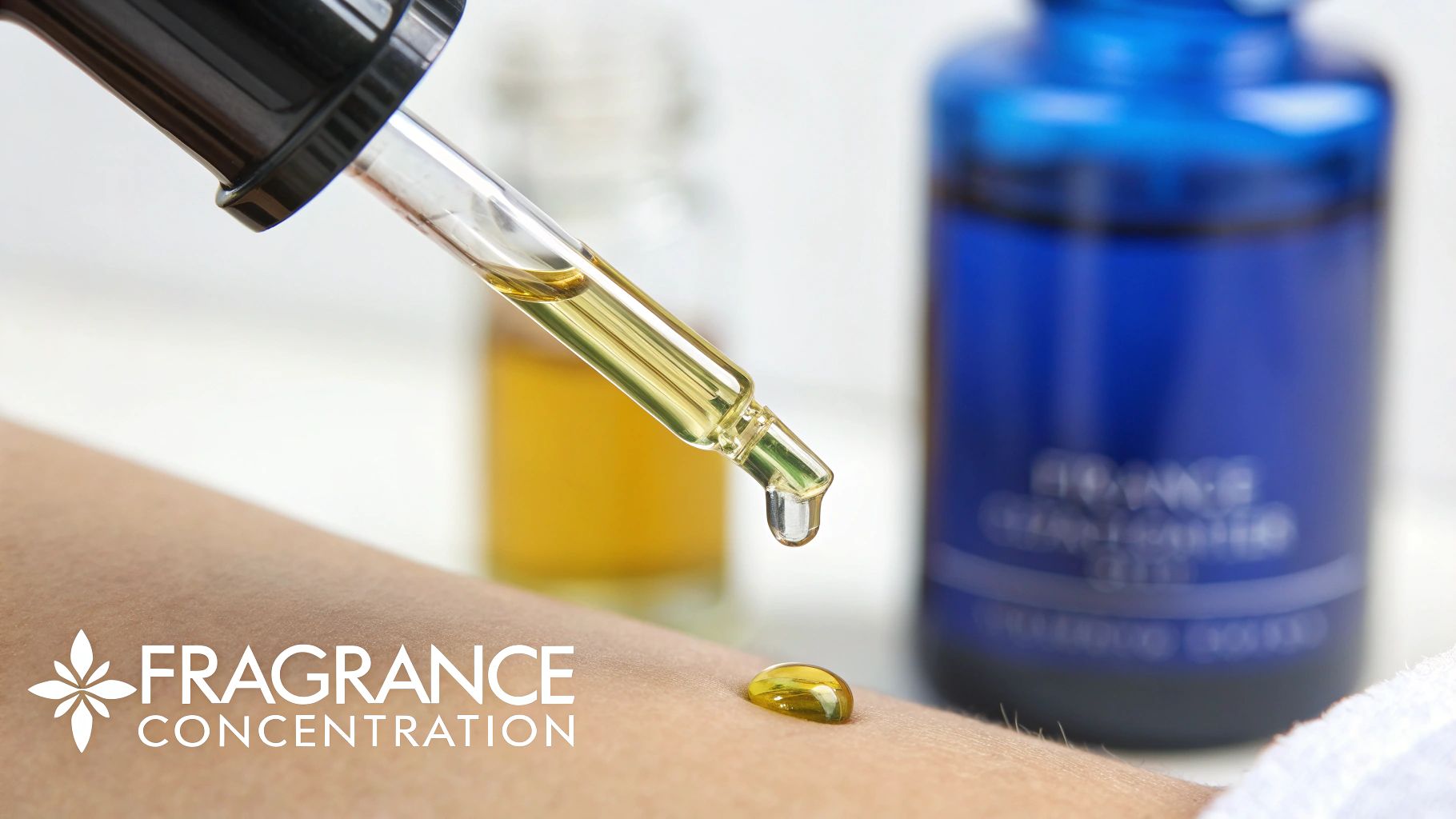
Let's get right into the heart of what makes a fragrance tick. The real difference in the parfum vs toilette debate isn’t just the scent profile, but how that scent comes alive. It all boils down to the ratio of pure perfume oil to the alcohol base—a crucial balance that dictates everything from its initial impression to its final, lingering whisper on your skin.
Think of the alcohol as the launchpad. When you spritz a fragrance, the alcohol is designed to evaporate quickly, leaving the precious perfume oils behind to work their magic. The percentage of those oils is what determines the story your scent is about to tell.
In the fragrance world, concentration is king. It doesn’t just influence the strength; it shapes the entire personality and behavior of the scent. This is where the paths of the light, breezy Eau de Toilette and the deep, sensual Parfum truly split.
An Eau de Toilette (EDT) typically contains a lighter 5-15% concentration of pure perfume oil. This means it has more alcohol, but that's by design, not a flaw. The higher alcohol content gives the fragrance a powerful initial projection, creating a vibrant, impossible-to-ignore first impression.
It’s like a firework. An EDT bursts open with bright, energetic top notes—think zesty bergamot or fresh-squeezed citrus—that are perfect for daytime wear or warm weather. Of course, this dazzling display is meant to be temporary, eventually softening into a more subtle skin scent after a few hours.
The higher alcohol content in an Eau de Toilette acts like a megaphone for the top notes, announcing your arrival with a fresh, energetic burst before gracefully fading.
This structure is what makes EDTs feel so airy and refreshing. They're crafted for a lively experience, one you can reapply during the day without it ever feeling heavy or overwhelming. It’s the ideal choice for a daily signature that’s present but never overpowering.
A Parfum, on the other hand, is all about slow, intimate seduction. Packing a rich 20-30% concentration of perfume oils, it has far less alcohol. This completely changes the game. Instead of blasting off the skin, a Parfum clings to it, creating a personal scent aura rather than a loud projection.
The lower alcohol content means the fragrance evaporates much, much slower. The oils have time to meld with your skin's warmth, developing into a unique scent that evolves beautifully over hours.
This slow release allows the heart and base notes—the deeper, sexier elements like sandalwood, musk, or amber—to really take center stage. The experience is richer, more complex, and ultimately far more personal.
This profound difference in performance is why a Parfum feels so opulent and lasting. It isn't just a scent you wear; it's an experience that becomes part of your presence for the entire day or night. The battle of parfum vs toilette isn't about which is better, but which story you want your fragrance to tell. Are you aiming for a bright, captivating introduction, or a deep, mysterious narrative that lasts until dawn?
Let’s get into the two qualities that really define how a fragrance performs: longevity and sillage. Think of longevity as the staying power of your scent—how long it lingers on your skin. Sillage is its scent trail, that invisible, alluring signature you leave behind when you move through a room.
This is where you see the true difference between a Parfum and an Eau de Toilette. One is a marathon runner, the other is a sprinter, and picking the right one is all about matching its energy to your day. This is the core of the parfum vs toilette showdown and dictates everything from the first spray to the last fading note.
A Parfum is like a slow, deliberate seduction. It isn't about shouting for attention when you walk in; it's about creating a magnetic aura that invites people to lean in just a little bit closer. Thanks to its high concentration of perfume oils, a Parfum is the undisputed champion of longevity.
It clings to the skin gracefully, staying with you for a good 6-8 hours, sometimes even longer. The experience is intimate and changes over time. The top notes blend with your body heat, slowly giving way to deeper, richer heart and base notes as the hours go by. This makes it the perfect partner for events where your scent needs to last from dusk till dawn.
A Parfum’s sillage is subtle and personal. It doesn’t enter the room before you do. Instead, it creates an intimate scent bubble, noticeable only to those lucky enough to be in your immediate circle.
This discreet yet persistent character is what gives it such a luxurious feel. It’s the right choice for a long wedding reception, a romantic anniversary dinner, or any moment when you want your fragrance to be a shared secret, not a public announcement.
If Parfum is a slow burn, Eau de Toilette (EDT) is a brilliant flash of lightning. It’s a sprinter, built to make a vibrant and memorable entrance. An EDT bursts onto the scene with a bright, energetic character that immediately gets noticed.
Its higher alcohol content helps the fragrance project more powerfully right after you apply it, creating a wider and more noticeable sillage for the first couple of hours. This initial impact is its superpower, making it feel fresh, clean, and invigorating. This dazzling performance, however, is designed for a shorter run, typically lasting a lively 3-5 hours before it settles into a soft skin scent.
The charm of an EDT lies in its versatility and fresh demeanor. It’s your reliable go-to for daily wear, a sunny afternoon adventure, or anytime you need a quick shot of fragrant confidence.
When you look at what people are buying, it’s clear that scents with staying power come out on top. The global perfume market, defined by its higher fragrance concentration, has become the dominant segment in the industry. Parfum captured a market share of 33.98% globally in recent years, showing a strong preference for products with superior longevity. This is driven by its ability to last between 6 to 8 hours, making it the top choice for those who want a lasting fragrance experience. You can discover more insights about the perfume market's performance here.
Understanding this dynamic between longevity and sillage is the key to building a great fragrance wardrobe. The choice in the parfum vs toilette comparison isn't about which is better, but which one fits the story you want to tell and the moments you want to create.
Now that we’ve covered the technical side of fragrance concentrations, let's get to the fun part: picking the right scent for the right moment. Choosing between a Parfum and an Eau de Toilette isn’t about following rigid rules; it’s about setting a mood. It’s about deciding if you want to be a bright, sparkling conversation starter or a deep, unforgettable mystery.
Your fragrance collection should be as versatile as your life. You wouldn't wear a heavy coat on a summer day, and the same logic applies here. A deep, smoldering Parfum might not be the best fit for a casual sunny afternoon. Every scent has its perfect moment to shine.
Think of an Eau de Toilette as your go-to daytime accessory. Its bright, airy character and lively initial burst make it the perfect partner for sunlit hours. It’s the scent of effortless confidence and playful charm.
An EDT is designed to be present but not overpowering, which makes it an impeccable choice for professional settings where subtlety is valued. It gives off a crisp, clean aura that suggests you're polished and put-together without screaming for attention. It's also your best friend for casual weekend plans, whether you're at a farmers' market or enjoying rooftop drinks. Its refreshing nature just works in those relaxed, social moments.
When the sun goes down, the Parfum comes out to play. A Parfum is your signature for the night, an intimate statement meant for moments that count. Its rich, complex layers and closer sillage create a magnetic pull that’s both seductive and sophisticated.
This is the one you reach for when dressing for a romantic dinner, a formal wedding, or a glamorous gala. Because it lasts for hours and evolves beautifully with your body heat, you can apply it once and know it will carry you through the evening. It becomes part of your presence, a subtle whisper that lingers long after you’ve left the room.
This flowchart can help simplify the choice between a scent with all-day allure and one with a fresh, vibrant burst.
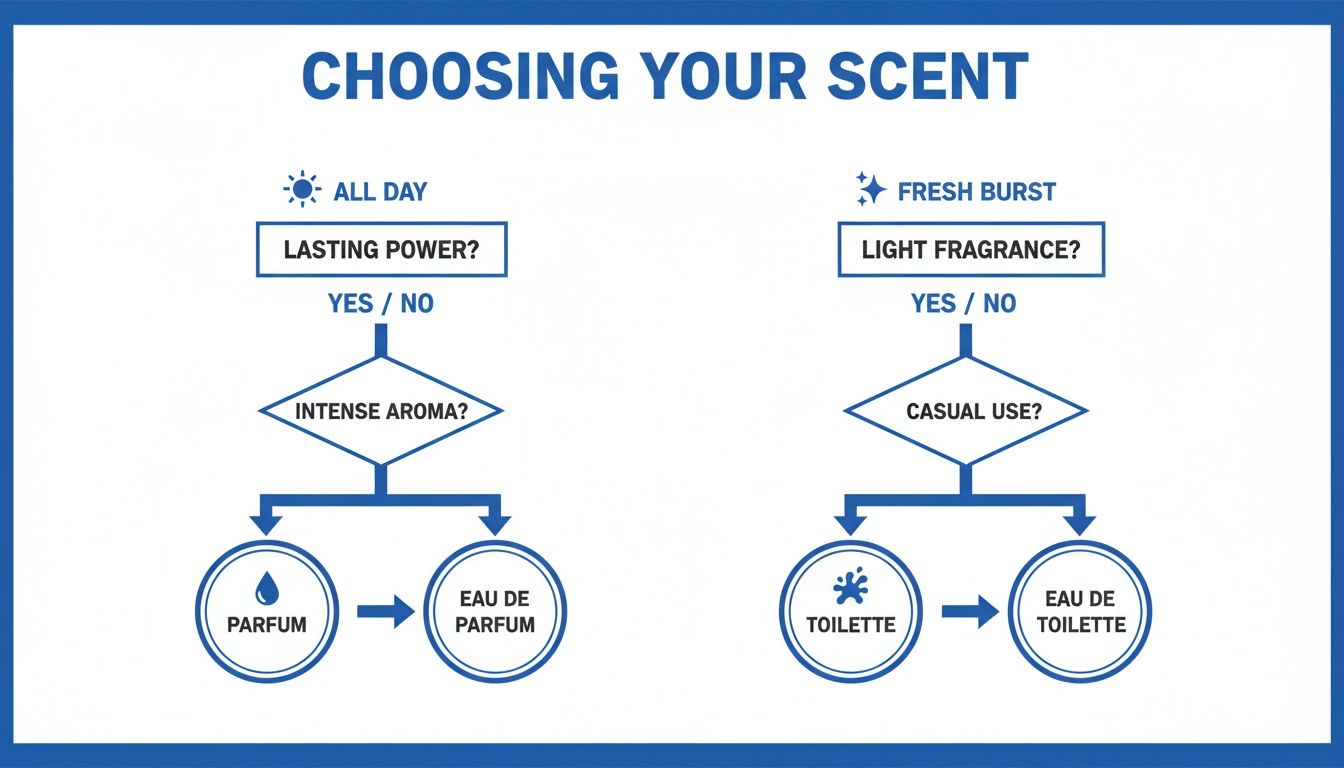
As the visual shows, a Parfum is your best bet for an enduring presence, while a Toilette is ideal for making an immediate, refreshing impact.
Just like you swap out your wardrobe when the weather changes, your fragrance choices should adapt, too. The temperature dramatically affects how a scent performs and feels on your skin, making seasonal pairing a true art form.
Spring & Summer Scents:
Autumn & Winter Fragrance:
Think of your Eau de Toilette as your linen shirt—light, breathable, and perfect for the heat. Your Parfum is like a cashmere sweater—rich, comforting, and essential for the cold.
When building out your fragrance wardrobe, don't forget that scent can be applied in more ways than one. Beyond traditional sprays, products like the Morfose Milk Therapy Hair Perfume offer a unique way to extend your scent's reach.
Ultimately, mastering the parfum vs toilette decision comes down to intuition. It's about asking yourself: Who do I want to be today? What story do I want my scent to tell? Having both options in your collection gives you the freedom to answer that question perfectly, no matter what the day brings.
Let's talk about the price of passion. When you’re staring down two seemingly identical bottles in the parfum vs. toilette debate, the price tag can feel like the final boss. A Parfum almost always has a higher sticker price, and it's only natural to wonder if it's truly worth splurging. The short answer? It’s an investment in artistry and performance.
That higher price point isn’t just pulled out of thin air; it directly reflects the quality and concentration of the ingredients inside. A Parfum is packed with a greater percentage of precious and often rare perfume oils. Crafting this potent elixir is simply a more costly process, resulting in a fragrance that's richer, deeper, and far more complex. Think of it as the difference between a fine, aged wine and a simple table wine—both are enjoyable, but one offers a much more profound experience.
This is where the numbers start to get interesting. While the upfront cost of a Parfum is higher, its incredible potency means you use significantly less. A single, delicate dab on the pulse points is often all you need for an entire day or evening of wear.
An Eau de Toilette, on the other hand, with its lighter concentration, often requires several spritzes for the same initial impact and may need a re-up later in the day. Over time, this means you might burn through a bottle of EDT much faster than you would a bottle of Parfum.
A Parfum is an investment in intensity. Because it’s so potent, a single bottle can last significantly longer than an EDT, often making the cost-per-wear surprisingly economical.
When you break it down, the luxury Parfum isn't just a purchase; it's a long-term relationship. It’s the scent that sees you through countless special moments without needing a replacement anytime soon.
The choice between Parfum and Eau de Toilette also comes down to your personal goals for your collection. An EDT is the perfect wingman for fragrance exploration. Its more accessible price point allows you to build a varied collection, letting you experiment with different scent families and switch things up based on your mood or the season. It’s a smart, versatile choice for daily wear and discovering new favorites.
A balanced fragrance wardrobe often includes both. You have your reliable, everyday EDTs for work and casual outings, and then you have that one special Parfum you reserve for moments that call for something more. This dynamic approach ensures you always have the perfect scent for any occasion.
This appreciation for high-quality formulations is a global trend. Europe has solidified its position as the world's leading perfume market, recently capturing over 35% of global market share. Within the premium segment, which held the largest revenue share at over 57%, European consumers consistently show they are willing to invest in high-quality, long-lasting fragrances. You can explore more data on the global perfume market and its trends to see how quality drives consumer choice.
Ultimately, deciding if a luxury Parfum is worth it comes down to what you value. If you’re seeking a signature scent that feels like a second skin, evolves beautifully over hours, and offers exceptional longevity from just a single drop, then yes—it’s an investment in quality that pays dividends in confidence and allure. It's the scent you choose when you want to feel absolutely unforgettable.
Still have a few questions swirling around in the captivating world of parfum vs toilette? You’re not the only one. Let's tackle some of the most common curiosities, giving you the kind of answers that will help you navigate your scent journey with complete confidence.
Think of this as your personal guide to mastering the art of fragrance.
Absolutely. In fact, you definitely should try it. Layering is the ultimate move for creating a bespoke scent that is uniquely yours. It’s your chance to play perfumer and craft a signature that no one else can replicate.
The secret to a perfect pairing is all in the application. Always start with the richer, more potent concentration—the Parfum. Apply it first to your pulse points like your wrists, neck, and behind the ears. The warmth of your body will help the fragrance bloom. Just give it a moment to settle in.
Next, follow up with a light mist of the complementary Eau de Toilette. You can apply this over a broader area, like your clothes or even your hair, to create a beautiful, multi-dimensional scent aura.
This one might surprise you, but the richer Parfum is often the gentler option for sensitive skin. It feels a bit counterintuitive, but the reasoning is simple: an Eau de Toilette has a much higher percentage of alcohol. Alcohol can be incredibly drying and is a common culprit behind skin irritation.
Because Parfums have a higher concentration of perfume oils and less alcohol, they tend to feel smoother and are less likely to provoke a reaction. It's a richer, kinder touch on the skin.
That said, everyone’s skin chemistry is different. The golden rule in the fragrance world is to always patch-test a new scent. Just apply a little to a discreet patch of skin and wait a few hours to make sure it agrees with you before you go all in.
While your favorite scent doesn't have a strict expiration date like milk, its character can definitely change over time. The biggest enemies of your precious perfume are heat, light, and air. These are the villains that break down those delicate fragrance molecules and alter the scent.
Proper storage is non-negotiable if you want to keep your fragrance in pristine condition. Don't leave it on a sunny windowsill or in a steamy bathroom. The best home for your collection is a cool, dark, and dry place, like a closet or a dresser drawer—ideally kept in its original box.
Think of your fragrance like a fine wine; treat it with care, and it will reward you with lasting beauty.
Ever spray on your signature scent, only to feel like it has vanished an hour later? Don’t worry, it’s not you, and your fragrance is definitely still there. This common phenomenon is called olfactory fatigue, or as some playfully call it, "nose blindness."
Your brain is hardwired to be on high alert for new smells—it's an old survival mechanism. After being constantly exposed to your own perfume, your brain smartly decides it's not a threat and starts to filter it out to focus on other things. It’s actually a sign that the scent has truly become part of your personal aura.
Rest assured, while you may no longer consciously notice it, others can still enjoy the beautiful scent trail you're leaving behind. To reset your senses and catch a fresh whiff, try smelling something neutral like coffee beans or the clean skin inside your elbow. It works like a charm.
Ready to find the perfect scent that tells your story? Explore our curated collection of luxury fragrances at Gotham Fragrances and discover your next signature scent today. Find your unforgettable fragrance at Gotham Fragrances.