
Ever found yourself lost in the intoxicating world of fragrances, whispering what does eau de toilette mean? Put simply, an Eau de Toilette (EDT) is a lighter, more playful style of fragrance, concocted with 5% to 15% pure perfume oil. This concentration creates a fresh, bright scent that’s less of a shout and more of a tantalizing whisper—perfect for making a lasting impression, day or night.
Think of an Eau de Toilette as the perfect first date—it’s captivating and charming, leaving a delightful impression without coming on too strong. It strikes that flawless balance between a noticeable, head-turning scent and an effortless subtlety, making it a versatile secret weapon for just about everyone.
Whether you're just starting your fragrance affair or you're a seasoned connoisseur, an EDT is a non-negotiable staple. Its unique composition makes it the perfect partner for all sorts of delicious encounters.
An Eau de Toilette has this magnetic appeal that’s both approachable and impossibly chic. It’s the secret to an understated, everyday elegance that can elevate your personal style from routine to radiant. Here's why you might reach for one:
An Eau de Toilette is designed to be a delightful experience, not a declaration. Its charm lies in its airy presence, a whisper of scent that invites people closer rather than announcing your arrival from across the room.
Once you understand the "why" behind this popular fragrance type, you can unlock its true potential. It's more than just a scent; it’s an accessory to your allure.
Every great scent has a backstory, and Eau de Toilette's is woven through centuries of luxury, romance, and a bit of royal intrigue. The name might sound a little too practical for something so alluring, but don't let that fool you—its origins are anything but. Let’s slip back to the lavish, whispering courts of 17th-century France to understand where the magic began.
Long before daily bathing was the norm, scented waters were the ultimate status symbol for the elite. These fragrant blends were used for everything: perfuming skin, scenting gloves, and adding a flirtatious touch to secret letters. This was the dawn of personal fragrance as a deliberate act of style and seduction, a world away from the simpler aromatic rituals of ancient times.
The journey from ancient scented oils to the modern spray bottle we lust after today was a long and fragrant one. A pivotal moment came in the 14th century with the creation of the first known alcohol-based perfume, ‘Hungary Water,’ a legendary elixir supposedly gifted to the Queen of Hungary. This innovation was a game-changer, setting the stage for lighter, more diffusive scents that could dance in the air.
Later, the term Eau de Toilette itself emerged, literally translating to 'grooming water.' It referred to the morning ritual of using scented cloths and waters for cleansing and refreshing the body. This practice evolved from the French word ‘toile,’ meaning cloth, which perfumers would infuse with intoxicating scents for months at a time. The result was a tool for both hygiene and personal allure. You can learn more about this fascinating evolution from cloth to bottle, a process that turned a grooming necessity into the accessible luxury we adore today.
What began as a practical tool for the aristocracy slowly blossomed into a symbol of elegance and personal expression. The history of Eau de Toilette is a reminder that fragrance has always been about more than just smelling good—it's about feeling utterly irresistible.
Parfum, Eau de Parfum, Eau de Toilette, Cologne—what’s the real story behind these tempting labels? It all boils down to one simple, yet crucial, factor: the concentration of pure perfume oil mixed with its alcohol and water base. This single percentage dictates a fragrance's intensity, its character, and exactly how long it will linger on your skin like a delicious secret.
Think of it like this: A potent Parfum is like a dramatic, black-tie love affair—intense, rich, and completely unforgettable. An Eau de Parfum (EDP) is more like a passionate weekend escape. But an Eau de Toilette (EDT)? That's the effortlessly chic and playful daytime romance, sparkling with bright, flirtatious energy.
The higher the concentration of fragrant oils, the more powerful its initial impression will be and the longer the scent will last. It's the reason some fragrances feel like a subtle whisper while others make a grand entrance, turning every head in the room.
The concept of a lighter, more refreshing scent isn't new; it has been refined over centuries, evolving from scented cloths to the modern fragrance bottle we know today.
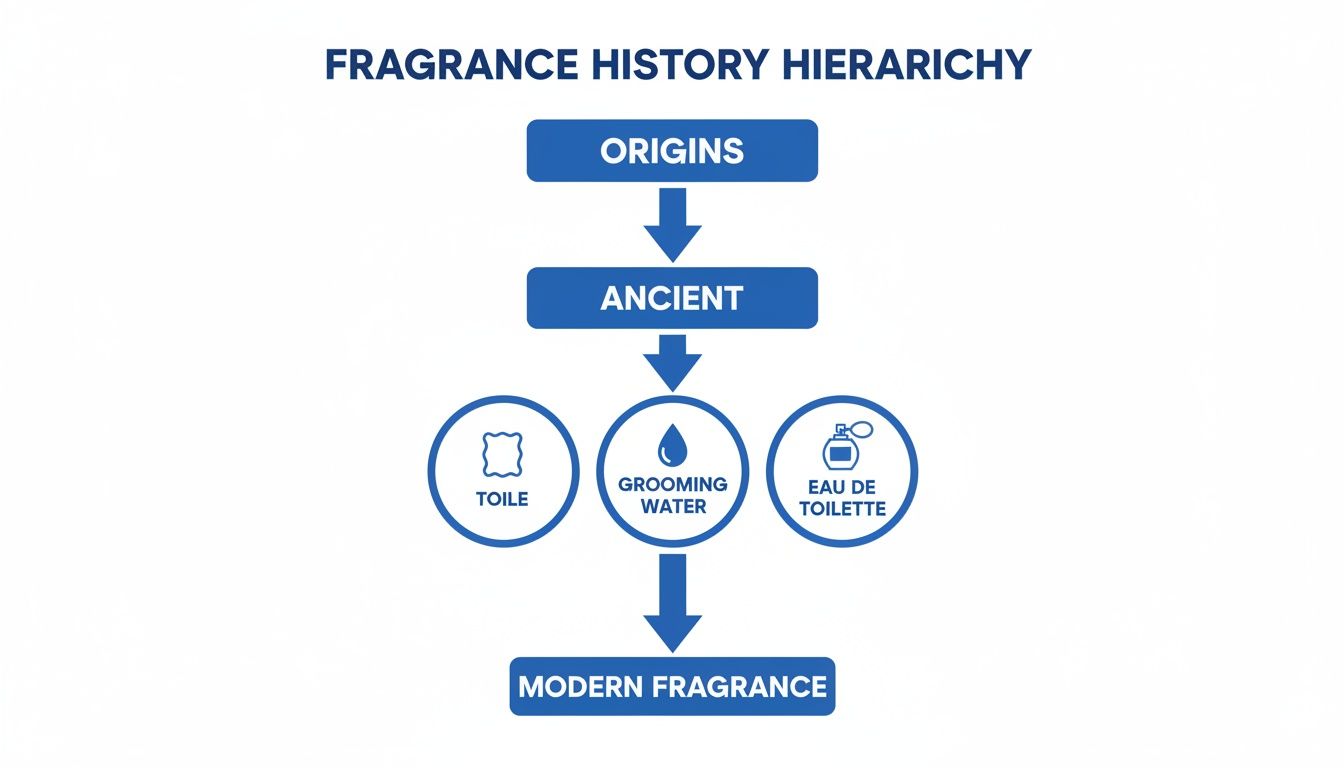
This visual journey shows just how deep the roots of a light, everyday fragrance go.
Getting a handle on these differences is the key to choosing the perfect fragrance for any mood or moment. An EDT, with its typical 5-15% perfume oil concentration, is specifically designed for a lighter, more refreshing experience that’s all about drawing people in.
This lower concentration directly impacts two main things:
To make this even clearer, let's break down the four main types side-by-side.
| Fragrance Type | Perfume Oil Concentration | Longevity (Approx.) | Best For |
|---|---|---|---|
| Eau de Cologne (EDC) | 2-4% | 1-2 Hours | A quick, refreshing splash |
| Eau de Toilette (EDT) | 5-15% | 3-5 Hours | Daytime, office, casual seduction |
| Eau de Parfum (EDP) | 15-20% | 5-8 Hours | Evening events, date nights |
| Parfum (Extrait) | 20-30% | 8+ Hours | Special occasions, making a statement |
As you can see, each concentration has its own time and place. Mastering this spectrum ensures your scent always tells the exact story you want it to, whether it's one of subtle charm or unapologetic glamour.
Figuring out the right moment for an Eau de Toilette is the secret to mastering your fragrance wardrobe. Think of an EDT as your go-to for just about everything—it’s effortlessly chic, always appropriate, and never tries too hard. It’s the perfect choice for so many situations where a heavier, more intense scent might feel like it's overstaying its welcome.
An EDT truly comes alive during the day. Its bright, crisp character is perfect for professional settings, where you want a clean, subtle scent that signals confidence without screaming for attention. It’s your secret weapon for making a killer first impression that feels both polished and completely natural.
Warm weather and heavy fragrances don't always mix. Heat amplifies scent, which is precisely why an Eau de Toilette is the ultimate pick for sunny vacations, beach days, or a playful weekend brunch. Its lighter formula blossoms beautifully in the heat, creating a refreshing, magnetic aura instead of a dense, heavy cloud.
An Eau de Toilette is your signature for everyday glamour. It's the fragrant equivalent of the perfect little black dress or your favorite pair of jeans—it just always works.
Its composition hits that sweet spot of luxury, typically blending 5-15% perfume oils that give you a gorgeous scent for a solid 3-5 hours. This modern balance has a surprisingly long history, evolving from ancient scented oils into the very first alcohol-based perfumes back in 14th-century Europe. You can dive deeper into the rich history of fragrance concentrations and see how we ended up with the versatile EDT we know and love today.
But beyond its fantastic performance, an EDT also offers incredible value. Because of its lighter concentration, brands often sell EDTs in larger bottles for a better price than their EDP counterparts. This smart positioning makes it wonderfully easy to build a diverse wardrobe of iconic designer scents without breaking the bank, so you can switch up your signature as often as you change your mood.
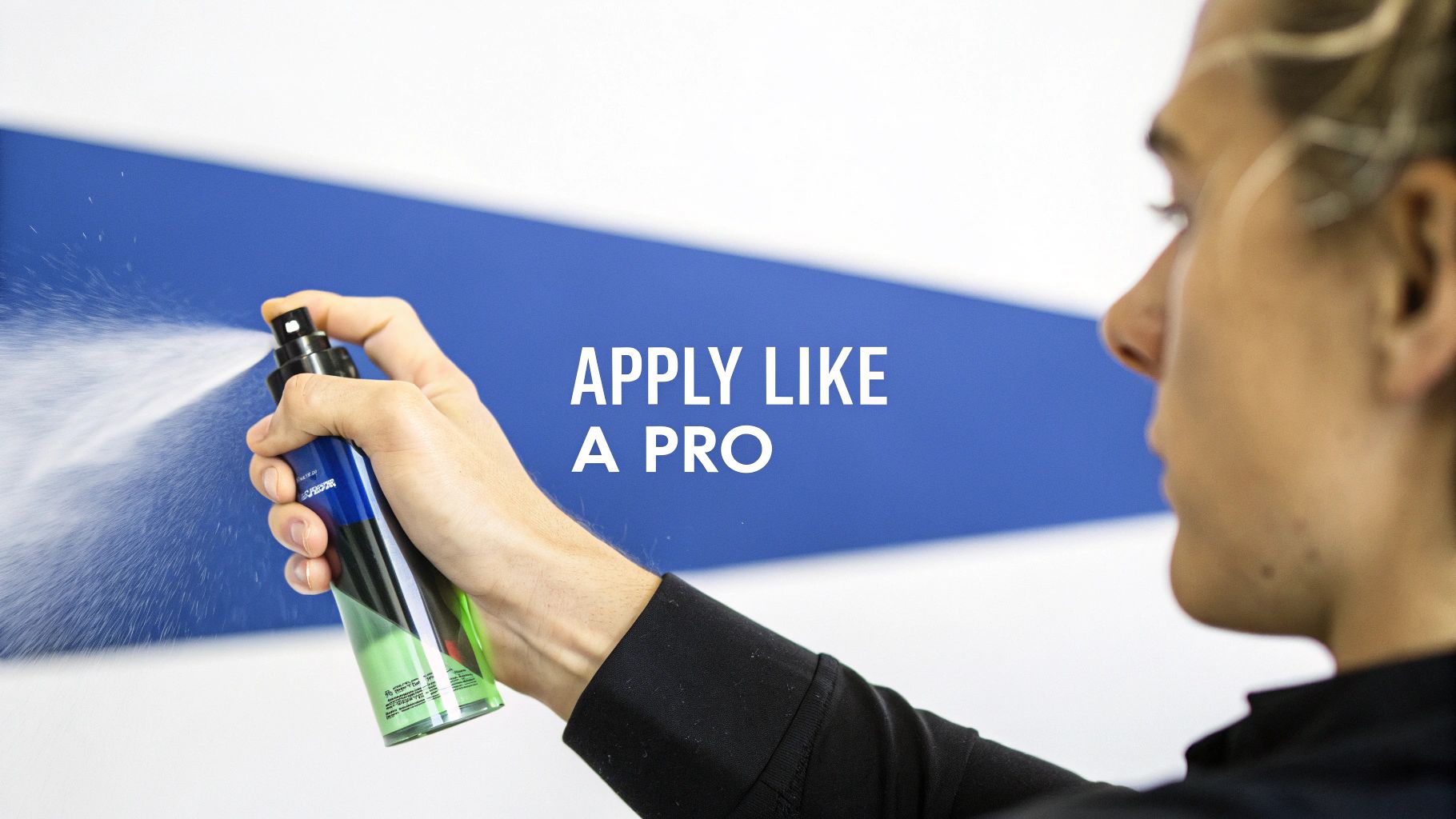
You’ve found the perfect Eau de Toilette—now it's time to wear it like you mean it. Applying fragrance is a subtle art, and a few key techniques can elevate its performance, turning a simple spritz into an unforgettable signature.
First, let's bust a common myth: never, ever rub your wrists together after applying. That friction crushes the delicate top notes, dulling the scent's intended sparkle before it even gets a chance to fully bloom. Be gentle with your fragrance; treat it like a lover.
For maximum impact, you want to apply your EDT where your body generates the most heat. These pulse points act like tiny personal diffusers, gently warming the fragrance oils and releasing the scent into the air all day long, creating an intoxicating aura.
Think beyond just the wrists. Your most effective spots for creating a captivating scent trail include:
Applying fragrance isn't just a routine; it's a ritual. It's the final, invisible touch that completes your look and telegraphs confidence and charm before you even say a word.
To give your scent something to cling to, always start with moisturized skin. Applying an unscented lotion first creates the perfect canvas, helping the fragrance molecules adhere and seriously boosting its longevity.
For a softer, more whisper-light aura, try the classic 'spray and walk' method. Just spritz the fragrance into the air in front of you and walk right through the mist. This playful technique ensures you're enveloped in a subtle, even veil of scent that is intimate and inviting, making sure you captivate for all the right reasons.
Now that you know the ins and outs of Eau de Toilette, it's time for the best part: finding your scent. Think of a great fragrance as an invisible accessory—a personal calling card that announces your presence and hints at your personality before you even say a word. Discovering the right one is a delicious journey of self-expression.
This is your chance to translate your personality into a bottle. Your scent should feel like a natural extension of who you are, whether you're drawn to the electric energy of citrus or the classic romance of a floral bouquet. The goal is to find something that just feels like you. If you're looking for a little guidance, an AI Fragrance Concierge can offer surprisingly personal recommendations.
Your signature Eau de Toilette should perfectly capture your personal style. To get you started, let's explore the main scent families and some iconic examples that bring each one to life.
Fresh & Citrusy: These are bright, zesty, and full of life. They're perfect for someone spontaneous and adventurous. A timeless example is Dolce & Gabbana's Light Blue, which basically smells like a perfect, sun-drenched Italian holiday romance.
Floral & Romantic: From soft, delicate peonies to rich, intoxicating jasmine, these scents are made for the elegant and graceful. Chanel's Chance Eau Tendre is a beautiful, modern whisper of romance in a bottle.
Spicy & Oriental: Warm, sensual, and a little bit mysterious. If you see yourself as bold and captivating, this fragrance family is calling your name. Yves Saint Laurent's Black Opium is the ultimate seductive choice here.
Woody & Earthy: Grounded, confident, and effortlessly sophisticated. These scents feel warm and stable, like a cozy fireplace or a walk in the woods. Dior's Sauvage is a magnetic blend of raw freshness and noble, earthy woods.
Still have a few questions swirling around about what Eau de Toilette means for your daily scent ritual? We get it. We’ve pulled together the most common curiosities from fragrance lovers to give you the inside scoop. Think of this as your final masterclass in the art of smelling incredible.
Of course. The secret is all in the seduction of the application. For a scent that truly clings to you, spritz it on right after a shower when your skin is still a bit damp and moisturized. This gives the fragrance something to hold onto.
Aim for your pulse points—the classic spots like your wrists and the sides of your neck work wonders, but don't forget the crooks of your elbows and even behind your knees for a little surprise. Just remember the number one rule of fragrance: never rub your wrists together. Let it dry down naturally to preserve the delicate notes.
A pro tip? Keep your bottle in a cool, dark place. Bathroom steam and direct sunlight are the sworn enemies of any fragrance, causing the delicate oils to break down and fade much faster.
Because an Eau de Toilette has a lower concentration of pure perfume oils (5-15%), it often has a higher alcohol content than its richer cousin, the Eau de Parfum. For many people, this actually makes it less likely to cause a reaction.
That said, if your skin is notoriously fussy, it's always a good idea to patch-test any new fragrance. Just a quick spritz on a small, hidden area will tell you everything you need to know before you commit to a full wear.
This one is all about purpose and punch. An Eau de Toilette is designed purely for its scent—it's there to make a statement and create a magnetic aura.
Aftershave, on the other hand, is a post-shave treatment first and a fragrance second. It has a much, much lower fragrance concentration (usually just 1-3%) and is packed with skin-soothing ingredients like aloe or witch hazel to calm irritation. One is for allure, the other is for recovery.
Ready to discover an Eau de Toilette that feels like it was made just for you? Dive into the incredible collection at Gotham Fragrances and find your next signature scent at a price you'll love. Your new obsession is waiting at https://www.gothamfragrances.com.