

So, when does perfume expire? The quick answer is that most fragrances have a lifespan of 3 to 5 years after you first spray them. But don't think of it like milk going bad—perfume is more like a fine wine. Its story only truly begins once you've unleashed it from the bottle.
That gorgeous bottle on your vanity isn't just a pretty accessory; it’s a living composition of delicate oils and essences, and it has its own secret clock. From the moment you press the atomizer and introduce it to the air, its evolution begins. This isn't a bad thing at all—it's part of the magic.
Some fragrances actually mellow and deepen over time, their sharp edges softening into a richer, more intimate version of their former selves. Once you understand how your perfume ages, you can protect its integrity and ensure every spritz is as captivating as the first. It’s not about fighting time; it’s about working with it.
Think of a new perfume as a vibrant, whirlwind romance. The initial spray delivers a rush of bright, flirtatious top notes—like citrus or light florals—that are designed to capture your attention immediately. Over the years, these volatile notes are often the first to fade, like the initial thrill giving way to a deeper connection.
What remains are the heart and base notes, the true soul of the fragrance.
This infographic breaks down the core concepts of a perfume's lifespan, from its natural evolution to the role that concentration plays in its longevity.
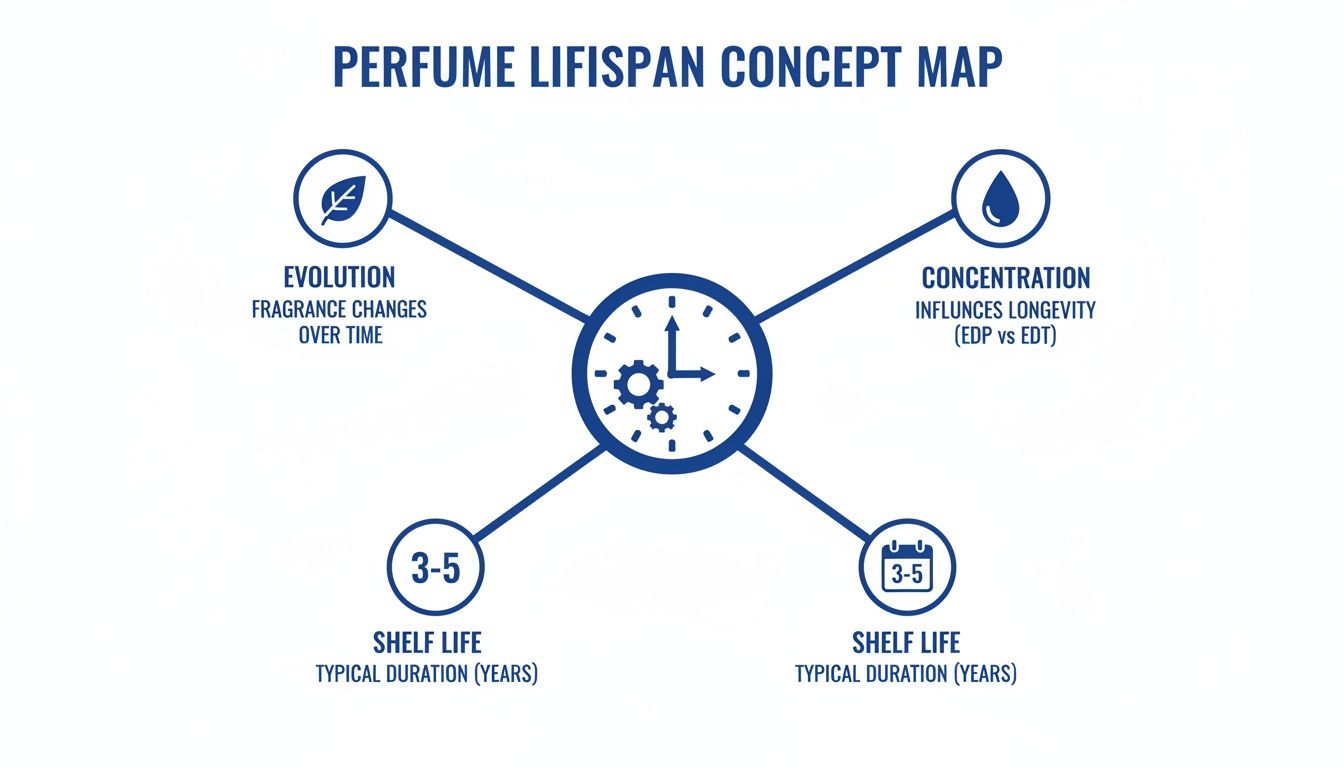
As you can see, a perfume's journey is a balance between its inherent 3-5 year lifespan, how it naturally changes over time, and how its concentration dictates the pace of that change.
Not all fragrances are created equal. Their concentration of pure perfume oil is the key to their staying power—both on your skin and in the bottle.
A higher concentration of perfume oil often means a longer, more stable shelf life. The precious oils are better preserved by the composition, allowing the fragrance to age more gracefully over time.
Understanding this is essential for collectors and everyday users alike, as it directly impacts the quality of your investment. Industry standards suggest that perfumes typically maintain their original character for about 36 months—or three years—from the first spray.
This timeline is especially important when you're investing in high-end fragrances from retailers like Gotham Fragrances, where bottles from prestigious designers like Chanel, Dior, and Tom Ford represent a real commitment. You can explore more insights on perfume shelf life to better protect your collection.
To give you a practical takeaway, here’s a quick look at how different fragrance types generally stack up.
This table offers a quick summary of the typical shelf life you can expect from different perfume concentrations once you've started using them.
| Fragrance Type | Concentration | Average Shelf Life |
|---|---|---|
| Parfum (Extrait) | 20-30% | 5+ years |
| Eau de Parfum (EDP) | 15-20% | 4-5 years |
| Eau de Toilette (EDT) | 5-15% | 3-4 years |
| Eau de Cologne (EDC) | 2-4% | 2-3 years |
As you can see, the richer the concentration, the longer your fragrance is likely to maintain its intended character. A pure Parfum could easily last you more than five years, while a lighter Eau de Cologne might be best enjoyed within two or three.
Every great romance has its villains, and the love affair you have with your favorite scent is no different. Lurking in plain sight are three seductive saboteurs conspiring to steal the very soul of your fragrance. Meet Light, Heat, and Air—a trifecta of troublemakers that can turn your beloved perfume into a ghost of what it once was.
But don't worry. Understanding your enemies is the first step to defeating them. By learning how these elements operate, you can become the ultimate protector of your fragrant treasures. You'll ensure every spritz remains just as intoxicating as the day you first fell in love.
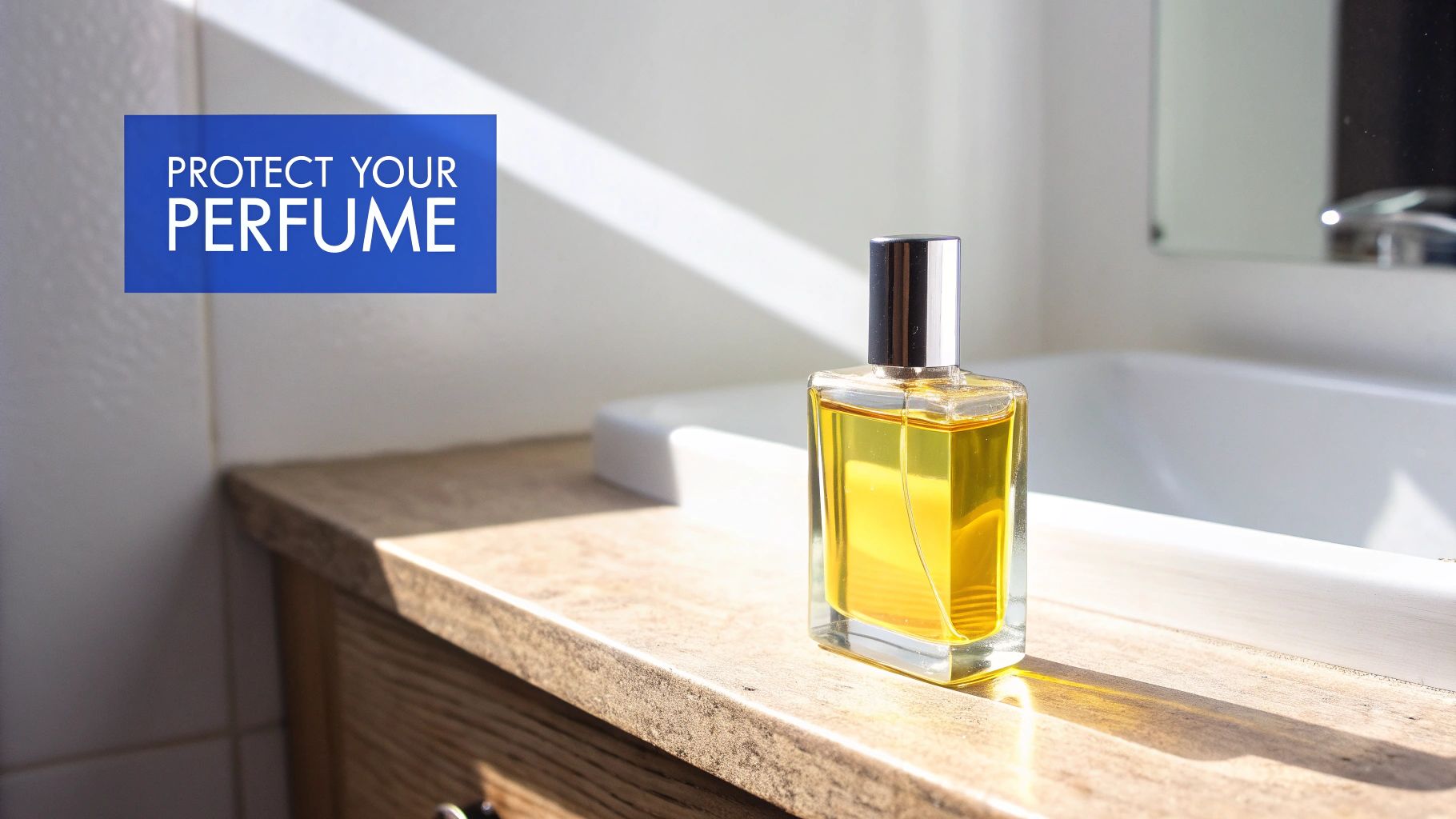
Think of light, especially direct sunlight, as a silent, invisible thief. Its UV rays are notorious for breaking down the delicate molecular structures that give a perfume its complex aroma. It's a slow, methodical process that gradually bleaches the life right out of your fragrance, causing it to fade and lose its vibrancy.
This is exactly why you'll often find perfumes housed in dark, opaque, or colored glass bottles. That deep amber or cobalt blue isn't just for show; it's a shield, a valiant attempt to protect the precious liquid from its number one nemesis. Leaving a clear bottle of perfume on a sun-drenched windowsill is like leaving a love letter out in the rain—its essence will inevitably wash away.
If light is a thief, heat is a reckless accelerator. It doesn't just damage your perfume; it supercharges the process, throwing the chemical reactions inside into overdrive. Heat is especially cruel to the volatile top notes—those bright, initial sparks of scent like citrus and fresh florals—causing them to burn out far too quickly.
This makes your steamy bathroom, with its constant temperature swings, the absolute worst place to keep your collection. A perfume subjected to that kind of environment is like a flower forced to bloom under a scorching sun; it will wilt prematurely, its delicate balance thrown into chaos.
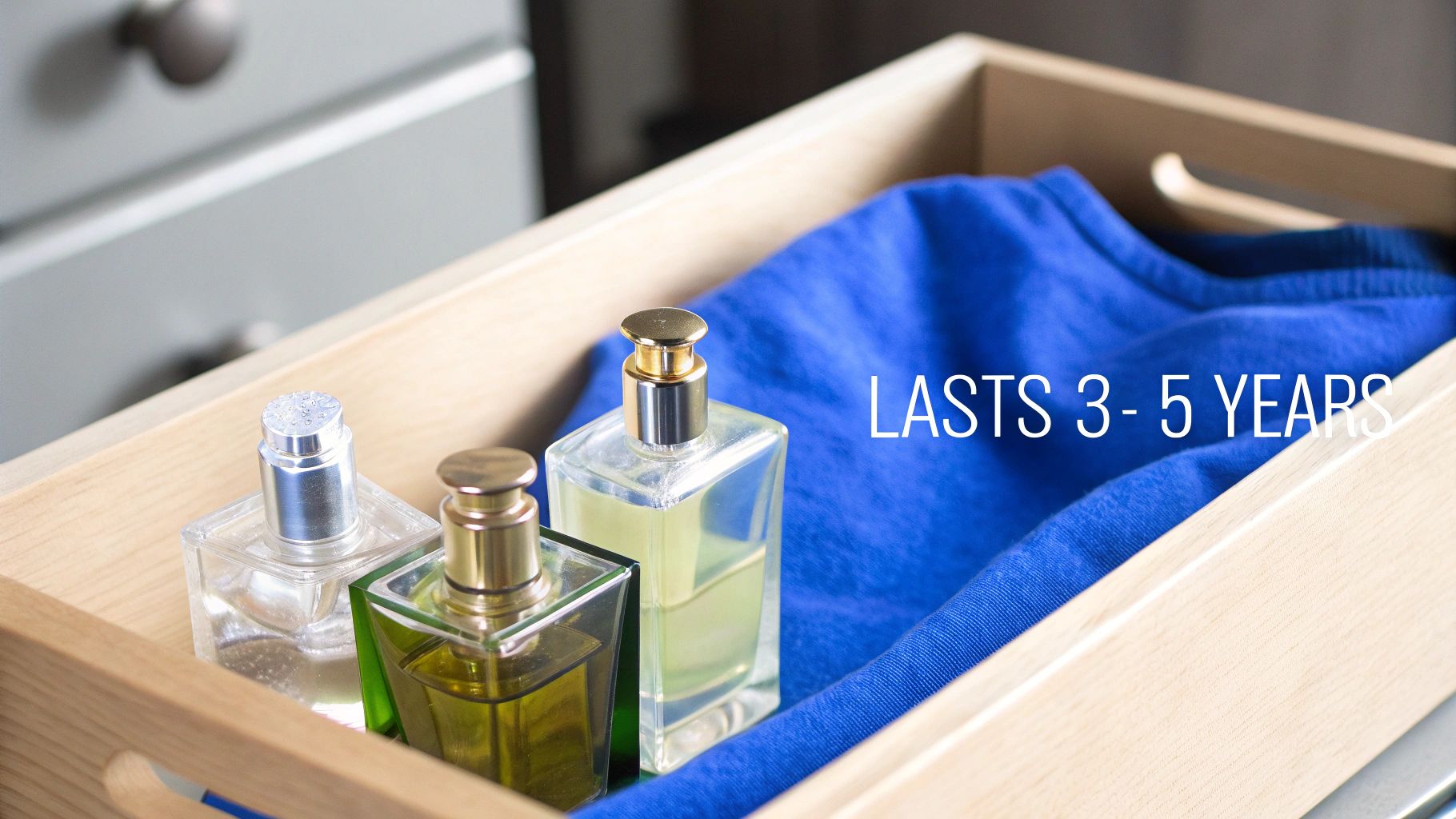
A stable, cool environment is the secret to a long-lasting love story with your scent. The ideal temperature for perfume storage is consistently between 55-72°F (12-22°C), far from the dramatic shifts of a bathroom or car.
Keeping your bottles in a cool, dark drawer or closet is like giving them a private, climate-controlled boudoir where their beauty can be preserved.
The final saboteur is air, or more specifically, oxygen. Every single time you spray your perfume, a tiny amount of air gets inside the bottle. This kicks off a process called oxidation. The easiest way to think about it is that your fragrance is slowly "rusting" from the inside out.
Oxidation corrupts the aromatic compounds, altering the scent profile and often introducing a sour, metallic, or overly alcoholic smell. This is the moment a perfume truly "expires" in an olfactory sense—when its intended character has been irrevocably changed.
Here’s how these three villains work together to age your scent prematurely:
Understanding this trio of threats is your greatest weapon. By keeping your perfume away from light, heat, and excessive air exposure, you're not just storing it—you're preserving a memory, an emotion, and a piece of art. You are ensuring its story can unfold gracefully, on your terms, for years to come.
So, you and your favorite fragrance have been together for a while now. Is it still the same scent you first fell in love with, or has the spark started to fade? Just like any relationship, your perfume will give you little hints when things are changing. Learning to read them is the key to knowing when it's time to move on.
Forget batch codes and timelines for a second. Your own senses are your best tools here. A simple look and a quick sniff can tell you everything you need to know about whether a perfume is past its prime. Let's walk through the three biggest clues that it might be time to say goodbye.
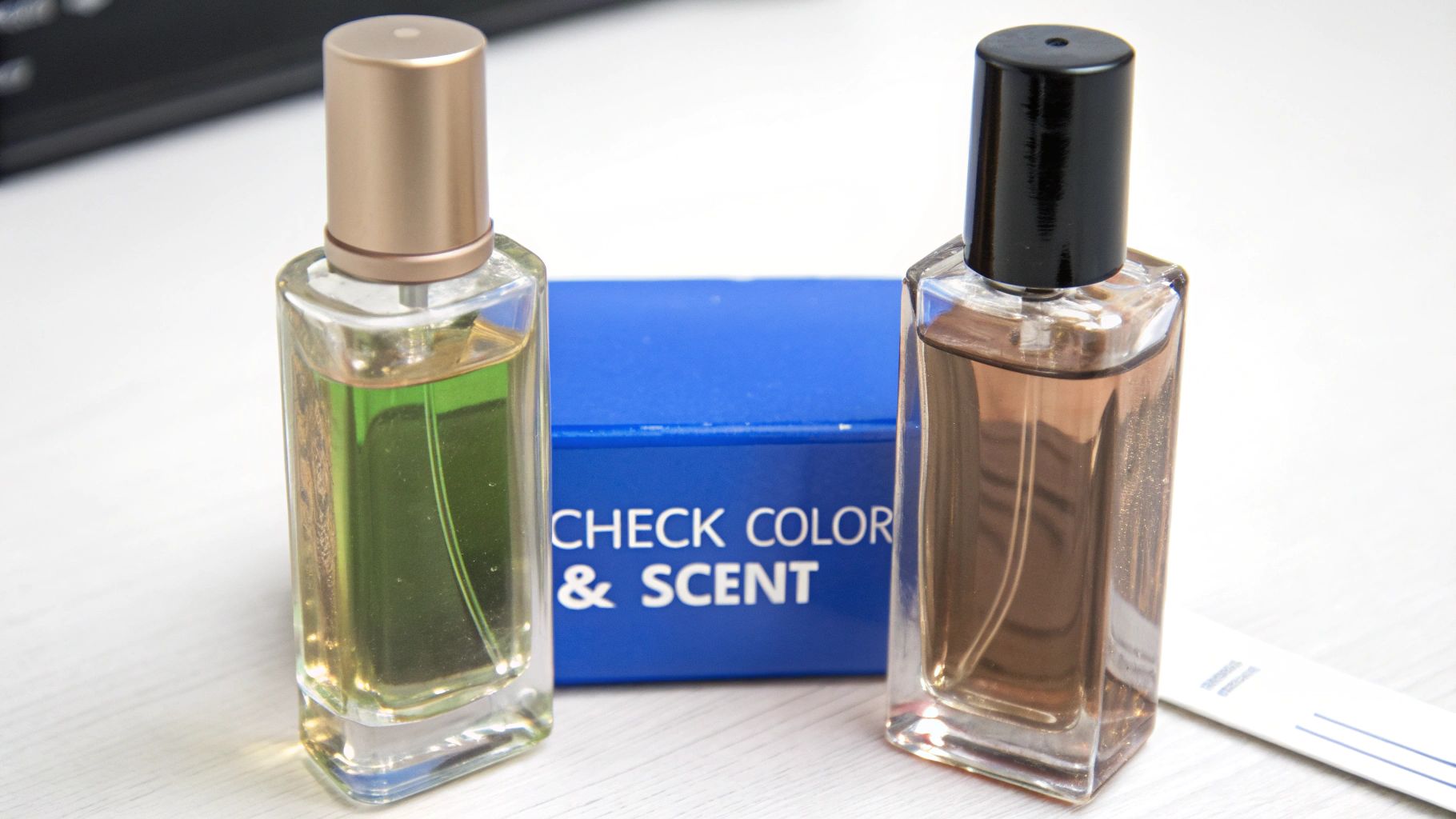
The very first clue is often one you can see. Perfumes are designed to be beautiful, and a noticeable change in the liquid’s color is a massive red flag. Has that crystal-clear juice turned a murky, cloudy yellow? Or has your favorite amber fragrance deepened into a suspicious, syrupy brown?
This darkening is a direct result of oxidation—the same process that turns a cut apple brown. Exposure to light and air breaks down the delicate ingredients. While a slight deepening can happen naturally with age, a dramatic shift usually means the chemical structure has been compromised. Think of it like a vibrant painting left in the sun, its colors slowly bleaching into a dull, faded version of the original.
This is especially true for fragrances that rely heavily on natural ingredients, which can be less stable than synthetics. The growing fragrance ingredients market shows a huge demand for natural essential oils, but these pure components often have shorter shelf lives. It's a fascinating challenge for perfumers, who have to use specialized packaging and storage to preserve the potency of these beautiful—but fragile—ingredients.
This is the big one. Your nose knows. The most heartbreaking sign that your perfume has turned is when its beautiful aroma becomes a shadow of its former self or, worse, something totally unpleasant.
A turned perfume often loses its bright, sparkling top notes first. What’s left is a harsh, alcoholic opening, sometimes followed by a sour, metallic, or even vinegary smell. It’s like listening to a beautiful song with all the high notes missing—the balance is just gone.
This happens because the most volatile molecules—the citruses, light florals, and fresh herbs—are the first to break down and evaporate. Instead of that initial, intoxicating burst of joy you remember, you get a scent that smells like bruised flowers or a faded, forgotten photograph of the fragrance you fell for.
To really know for sure, you need to perform the Top Note Test. It’s the most reliable way to tell if your perfume is still in its prime.
But don't be too quick to judge a scent that has simply changed over time. Some perfumes, especially those rich in vanilla, resins, or patchouli, can actually mature beautifully, becoming deeper and richer. The key is distinguishing between a graceful evolution and a total breakdown. If the scent is still pleasant but just different, you might have a wonderfully aged vintage on your hands. If it makes you recoil, it’s time to let it go.
Your perfume is more than just a product; it’s an accessory, an aura, a declaration. It deserves to be treated with the same care as your finest silk lingerie or a string of pearls. Preserving its captivating essence isn't a tedious chore—it’s a seductive ritual, a way to honor the artistry and investment held within that gorgeous bottle.
Think of it as giving your fragrance its own private boudoir, a sanctuary where its beauty is shielded from the harsh realities of the world. By mastering a few intimate secrets, you can extend the life of your favorite scents, ensuring they continue to mesmerize for years to come. Let’s pull back the curtain on how to properly cherish your liquid treasures.
The first rule of fragrance preservation is location, location, location. Your perfume craves stability—a cool, dark, and dry environment where it can rest undisturbed. The steamy, ever-changing climate of a bathroom is its worst nightmare, a place where heat and humidity conspire to accelerate its aging.
Instead, tuck your bottles away in a bedroom drawer or a chic closet organizer. This protects them from their three greatest enemies: light, heat, and moisture. Proper storage is crucial for extending the life of your favorite scents. You can discover more optimal storage practices for fragrant products to keep all your scented treasures at their best.
Just like a fine wine, your perfume thrives in a cellar-like environment. The ideal temperature range for storing your collection is between 55-72°F (12-22°C). This consistent coolness slows the chemical reactions that cause a scent to degrade, keeping it fresh and vibrant.
By giving your perfume a tranquil home, far from the drama of fluctuating temperatures and damaging sunlight, you’re essentially putting its aging process on pause.
How you interact with your perfume matters just as much as where you keep it. Every touch, every spritz, is part of its story. One of the most common myths is that you should shake a perfume bottle before using it, like a cocktail. Please, don't.
Shaking the bottle does nothing to "mix" the ingredients; they are already perfectly blended. What it does do is introduce and agitate air bubbles, forcing more oxygen into the liquid and speeding up the dreaded oxidation process. Think of it as gently waking your fragrance, not jolting it out of bed.
Another simple yet vital act of care is to always replace the cap. Leaving a bottle open is like leaving a love letter exposed to the elements. The cap is its guardian, protecting the precious juice from evaporation and minimizing its exposure to corrupting oxygen. It’s a small gesture that makes a world of difference.
Ready to become the ultimate protector of your perfumes? It all comes down to a few simple dos and don'ts. Mastering these will ensure you know exactly when a perfume might be past its prime and how to delay that moment for as long as possible.
Here's a quick guide to treating your fragrances like the treasures they are.
| Do This (The Seductive Secret) | Don't Do This (The Fragrance Faux Pas) |
|---|---|
| Store it in the original box inside a cool, dark drawer to add an extra layer of protection from light. | Display bottles on a sunny windowsill or under bright vanity lights, which will bleach the scent. |
| Keep the cap on tight after every use to prevent oxygen from sneaking in and starting the oxidation process. | Leave the bottle uncapped on your dresser, allowing alcohol and precious top notes to evaporate. |
| Use a travel atomizer for trips instead of taking the whole bottle, minimizing the risk of breakage and exposure. | Store your collection in the bathroom where steam and heat will rapidly degrade the delicate molecules. |
| Apply perfume to clean skin to avoid contaminating the bottle with oils or other products on your hands. | Shake the bottle vigorously before spritzing, which introduces air and accelerates the aging process. |
By adopting this "boudoir treatment," you transform simple storage into a mindful act of preservation. You're not just organizing your collection; you are curating an experience, ensuring that every time you reach for a bottle, the scent that emerges is as breathtaking as the artist intended. Cherish it, and it will continue to captivate for years.
Ever felt like you need a secret decoder ring to understand the markings on your perfume box? You're not alone. Those cryptic letters and numbers aren't just for show—they’re the secret language telling you your fragrance's life story.
Learning to read them is the ultimate power move for any scent lover. This insider knowledge gives you the confidence of knowing exactly when your perfume was born, ensuring every bottle you buy is fresh and ready to go. It’s time to unlock that next level of fragrance expertise.
Think of the batch code as your perfume’s official birth certificate. This alphanumeric sequence, usually stamped or printed on the bottom of both the bottle and its box, reveals the exact date and location of its creation. It's how manufacturers track a specific production run.
While it won't give you a hard expiration date, it tells you something far more valuable: its age. Knowing your bottle was produced recently gives you peace of mind that its journey is just beginning.
So, how do you crack the code? The easiest way is to use an online batch code checker. Websites like CheckFresh and Cosmetics Wizard are your best friends here. Just enter the brand and the code, and they’ll instantly translate it into a production date.
A fresh bottle is a fresh start. Checking the batch code ensures you're starting the 3-5 year countdown from the moment you spray, not from a date years in the past when it was just sitting on a shelf.
This simple step empowers you as a buyer. The global luxury perfume market is booming, projected to reach a staggering $111 billion by 2032. This incredible growth means a constant flow of new inventory, making it easier than ever to purchase freshly produced bottles. You can learn more about how luxury perfume market trends impact product freshness.
Beyond the batch code, there's another tiny symbol that holds a big secret. Look for a small icon of an open jar with a number followed by an "M" inside (e.g., "24M" or "36M"). This is the Period After Opening (PAO) symbol.
This little icon is your personal guide to the perfume's optimal lifespan after you've introduced it to air. It's the manufacturer’s recommendation for how long the fragrance will remain at its peak quality once you've unsealed it.
By pairing the batch code with the PAO symbol, you get the complete picture. You’ll know how old the perfume was when you bought it and how long you have to enjoy its magic after that first, fateful spritz. This combination of intel turns you from a casual user into a true fragrance authority, putting you in complete control of your collection's destiny.
You've got questions, we've got answers. Think of this as your personal cheat sheet, where we spill the tea on all those nagging curiosities about how long your favorite fragrances really last. Let's dive right in.
Generally, yes, it’s safe—but is it still the scent you fell in love with? A perfume that's "turned" isn't going to harm you, though the changed chemical makeup could cause some minor irritation, especially if your skin is on the sensitive side.
The real tragedy is what happens to the scent itself. That magical aroma you adored will likely be gone, replaced by a sharp, sour, or overly alcoholic smell. Before you spray it all over, do a little patch test on a piece of paper. If it still smells right and your skin gives the okay, you're probably fine. Just maybe skip spritzing it on that favorite silk dress, as the aged, discolored liquid could leave a stain.
Think of an unopened bottle of perfume as a time capsule. As long as it's sealed and tucked away somewhere cool and dark, it can stay perfectly preserved for years and years.
Because it hasn't been exposed to its arch-nemesis, oxygen, the aging process is dramatically slowed down. The 3-5 year countdown doesn't really kick in until that first spritz introduces air into the bottle. This is exactly why getting a fresh bottle from a retailer you trust is so important for starting your fragrance journey on the right note.
Don't just break up with a fragrance you once adored! Even if it’s no longer a match for your skin, that beautiful scent can find new life elsewhere around your home.
This way, you get to keep enjoying a scent tied to good memories, just in a new and creative way.
It absolutely does. A perfume's concentration is one of the biggest clues to its staying power, both on your skin and in the bottle. Richer formulas with a higher percentage of pure perfume oils, like a Parfum or an Eau de Parfum, tend to have a much longer and more stable shelf life.
On the other hand, lighter formulas like an Eau de Toilette have a higher alcohol content, which makes them more prone to evaporating and breaking down faster. It's also worth noting that fragrances built on deep, heavy base notes—think amber, patchouli, and rich woods—often age like a fine wine, sometimes becoming even more complex and beautiful over time.
Ready to find a new fragrance love, knowing your bottle is perfectly fresh and ready to make an impression? At Gotham Fragrances, we guarantee every perfume is the start of a beautiful story. Browse our collection and discover your next signature scent with total confidence.