
✦ GOTHAM FRAGRANCES — All Name Brand Colognes & Perfumes!
Free Shipping on all orders over $80.00
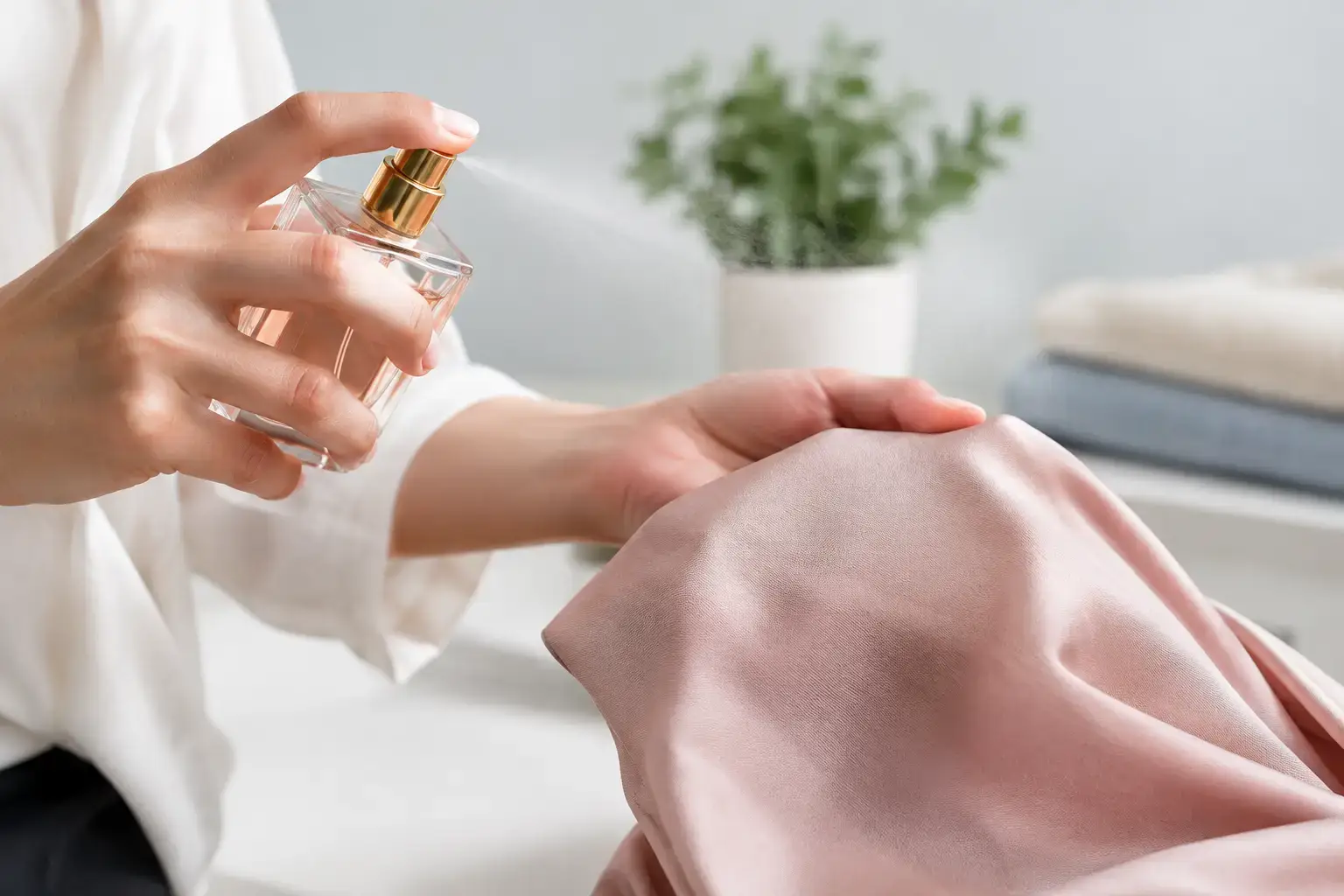
A beautiful fragrance should leave an impression, not a mark on your favorite silk blouse or crisp white shirt. So, does perfume stain fabric? It can. Most perfumes will not visibly stain every material, but the oils, colorants, and alcohol in certain formulas can leave behind dark spots, oily rings, or discoloration – particularly when sprayed directly onto delicate or light-colored clothing.
The good news is that fragrance stains are often preventable, and many fresh marks can be treated successfully with a careful approach. The key is understanding what is in the fragrance, what fabric you are wearing, and why rubbing or rushing to wash the item can make the problem worse.
Perfume is a composed blend of aromatic oils, alcohol, water, and sometimes dyes or other stabilizing ingredients. The alcohol in an eau de toilette or eau de parfum usually evaporates quickly. What may remain on fabric are the fragrance oils, which create the lasting scent you love on skin but can also behave like other oil-based products when they land on fibers.
A pale, fresh citrus fragrance may be less likely to leave a visible mark than a rich amber, vanilla, oud, patchouli, or resinous composition. This is not a rule, but deeper scents often contain a higher concentration of heavier materials. An intensely colored juice may also pose more risk than a clear one, especially on white, ivory, and pastel garments.
Fabric matters just as much as the scent. Natural and delicate materials, including silk, satin, wool, linen, suede, and leather, require extra caution. They can absorb fragrance oils unevenly or react poorly to moisture and cleaning products. Cotton and many washable synthetic blends are generally more forgiving, though a direct spray can still create a noticeable spot.
Even a clear fragrance can leave a temporary mark when it is applied too closely. Overspraying saturates one area before the alcohol has time to disperse, and the result may look like a dark, damp circle. Body lotion, sunscreen, deodorant, and laundry residue can also interact with perfume, making a stain more likely to appear.
Eau de parfum typically contains more aromatic concentrate than eau de toilette, which is one reason it can offer a longer, more luxurious wear. That concentration may also mean more oils settling on fabric if you spray it directly onto your clothing. Extrait de parfum and perfume oils deserve the most care because they are especially rich and are designed to cling to skin.
This does not mean you need to reserve your favorite statement scents for casual clothes. It simply means application technique matters. A sophisticated fragrance wears best when it becomes part of your presence rather than the center of your outfit.
Act quickly, but gently. The first instinct is often to rub the spot with water or a napkin. Resist that urge. Rubbing can push oils deeper into the fibers, spread the mark, and damage delicate textiles.
Start by blotting the area lightly with a clean, dry white cloth or paper towel. Use a white material rather than a colored towel, which can transfer dye. Press from the outside edge of the stain toward the center to keep it contained.
For washable garments, place a clean cloth behind the stained area and dab a small amount of mild liquid laundry detergent diluted with cool water onto the spot. Let it sit briefly, then blot with cool water. If the care label permits, wash the garment according to its instructions. Do not place it in the dryer until you are certain the stain is gone. Heat can set an oil-based mark and make removal more difficult.
If the perfume stain remains after washing, a small amount of rubbing alcohol may help dissolve the oily residue on sturdy washable fabrics such as cotton or polyester. Test it first in an inconspicuous area, then dab sparingly with a clean cloth. Avoid soaking the fabric, especially if it has a vivid color or a delicate finish.
For silk, wool, velvet, suede, leather, rayon, or a cherished garment labeled dry clean only, skip home remedies. Take the item to a professional cleaner and explain that the spot came from perfume. This gives them useful information about the type of stain and helps them choose the right treatment.
The same advice applies to vintage clothing, embellished eveningwear, tailored jackets, and anything with an uncertain care label. A quick DIY fix may cost more in the long run if it leaves a water ring, faded patch, or altered texture.
The most elegant solution is also the simplest: apply fragrance to skin before getting dressed. Spray your pulse points from several inches away, then allow the fragrance to dry completely for a minute or two. Your wrists, the sides of the neck, inner elbows, and behind the knees are classic choices. Warm skin helps a scent develop naturally, revealing its top, heart, and base notes throughout the day.
Avoid rubbing your wrists together. It will not make fragrance last longer, and it can disturb the opening notes while moving oils onto cuffs and sleeves. A light, intentional application tends to feel more refined than a heavy cloud of scent.
If you enjoy fragrance in your hair, do not spray a traditional alcohol-based perfume directly onto freshly styled strands. Alcohol can be drying, and overspray can drift onto collars or shoulders. Instead, spray once into the air and walk through the mist, or apply fragrance to a hairbrush before brushing through dry hair. Keep in mind that this technique is best for occasional wear rather than daily use.
Clothing can hold scent beautifully, particularly on scarves, coats, and knitwear, but it is wiser to treat this as an exception rather than your default. If you choose to scent a durable garment, spray from a greater distance and test an inconspicuous area first. Dark outerwear and washable cotton are usually safer candidates than silk, linen, white fabrics, or anything with a delicate finish.
A few common cleaning shortcuts can turn a small perfume spot into a permanent issue. Avoid hot water, which can set oils into fabric, and avoid harsh bleach unless the garment label explicitly allows it and the fabric is suitable. Bleach may remove color from the garment while doing little to address the fragrance oil.
Do not use heavily scented cleaners to cover the problem. They can leave their own residue and make it harder to identify whether the original stain has lifted. Skip vigorous brushing as well, particularly on silk, wool, and textured materials.
It is also wise to avoid applying perfume directly to pearls, costume jewelry, watch straps, or leather accessories. Fragrance can dull finishes, affect adhesives, and leave residue over time. A polished routine protects the details that complete your look.
There is a practical advantage to applying fragrance on clean, moisturized skin: it often helps the scent wear more evenly, reducing the temptation to keep reapplying it to your clothes. Use an unscented lotion first if your skin is dry, then choose two to four sprays based on the fragrance concentration, the occasion, and your own preference.
A bright eau de toilette for a daytime meeting may call for a lighter hand. A warm, enveloping eau de parfum for an evening out can feel appropriately memorable with a slightly closer application to the skin. The goal is not to make your fragrance fill every room. It is to create a personal trail of sophistication that feels unmistakably yours.
At Gotham Fragrances, we believe luxury should fit into real life – including the care of the wardrobe that helps you express your individuality. Choose authentic scents that suit your style, apply them with intention, and let the fragrance evolve where it was meant to: on your skin, close enough to be discovered.
A perfume stain is an inconvenience, not a reason to avoid wearing the scents that make you feel confident. A little care before you dress preserves both your clothing and the timeless pleasure of a well-chosen fragrance.
Post Tags :
Share :